Connect with us

BizListing

‘Woven’ social enterprise empowers artisan communities high-quality handicrafts made by Filipino craftswomen

Inspired by the beautiful weaving tradition of Samar, the founders of Woven are driven to bring the exceptional craftsmanship of Filipinos to the rest of the world. Woven Co-Founder and CEO, Trish Lim, shares the company’s journey in helping Filipina artisans thrive.

Published

on

In this fast-moving digital age, consumers around the world still desire the timeless aesthetic of handcrafted pieces. Recognizing this demand, Woven, a social enterprise that empowers artisan communities to build a livelihood from weaving and embroidery, curates a wide array of high-quality handicrafts made by Filipino craftswomen.

Inspired by the beautiful weaving tradition of Samar, the founders of Woven are driven to bring the exceptional craftsmanship of Filipinos to the rest of the world. Woven Co-Founder and CEO, Trish Lim, shares the company’s journey in helping Filipina artisans thrive.

Weaving the story of Woven

Woven was launched in 2017. The idea took shape when Lim and her husband were conducting a development study for a foundation after typhoon Haiyan struck Leyte and Samar in 2013. The couple realized the hardships of the marginalized communities in these provinces and decided to help them rise from the tragedy by starting an enterprise.

In the course of the interviews, they discovered the banig or mat weavers of Samar, and the idea of partnering with the community’s weavers was born. Lim started sending design suggestions to her husband who was helping the communities form associations so they could earn more from their craft. 

Initially, the enterprise was named “Basey” after the town but later changed to “Woven” in order to connect with different weaving groups in the country. “We design our products together with the artisans. Our idea was to link them to a greater market, and provide more opportunities for their livelihood,” said Lim.

Crafting Opportunities

Woven’s products are carefully handcrafted by women weavers of Samar aged 50 to 55 years old. As the majority of the weavers are female, Lim shared that Woven aims to uplift the lives of female weavers and artisans. Through empathy, compassion, and persistence, Lim guides the weavers and encourages them to be open to growth so they can thrive in this industry or in any industry of their choice.

As the couple worked with the weavers, Lim discovered that they have discouraged their children to continue the craft due to its low income with the average artisan only earning as much as P600-650 per month (US$ 11-12). In order to help them, Lim decided to expand Woven’s reach and include other communities outside Samar.

“We learned that a lot of artisans were in the same situation so we connected with them and included their products as well. Now, not only does Woven have banig products from Samar but we also offer handwoven textiles from Benguet, placemats from Basilan, and blankets by hablon weavers from Iloilo,” shared Lim.

Keeping the Tradition Alive

As an advocate, Lim knows the importance of raising awareness of the centuries-old tradition of weaving among the youth. So, they launched “Kabataan Krafts” in 2019 that focused on fostering creativity, collaboration, and leadership among the children of the artisans.

To promote and raise awareness of the weaving industry to youth in other areas, they also launched “Woven on the Move” bringing the weavers from their home province to Manila to conduct a series of workshops for senior high school students in various schools.

Woven From the Home to the World

During the lockdown, Woven was impacted by the sharp decline in tourism and mobility restrictions which affected the procurement of supplies. Bulk orders from companies, a major source of their income, were also significantly reduced. To keep the enterprise going, Lim continued selling their products online through their website and social media accounts. They also expanded Woven’s market base and tapped other countries to promote their products.

Woven’s products also evolved to keep up with the trends of modern fashion, especially among the youth. New products were introduced such as laptop sleeves, bags, and work-from-home essentials to cater to a younger age group and support their modern, mobile lifestyle.

With FedEx as her logistics provider, Lim was also able to easily reach markets in South Korea, Taiwan, the United States, and Europe. In 2021, Lim ran a global marketing campaign where they collaborated with different artists to come up with their own woven creations. Through FedEx, her team was able to efficiently send Banig weaving kits to her customers in New York and Canada.

“We realized that going global entails strong logistics support to ensure that our products will be shipped on time and in good condition. And being able to tell our clients that we can ship products through FedEx is liberating. We’ve had a good experience with FedEx so far as we’ve gotten a lot of support from the team and experienced a boost in our sales,” continued Lim.

Weaving Woven’s Purpose

Woven continues to launch various initiatives aimed at fostering creativity, collaboration, and leadership among the next generation of Banig weavers and embroiderers in the community. New products have been created and introduced to reach diverse segments of the market. Through their products, Woven hopes to increase awareness and appreciation of the centuries-old tradition of weaving in the Philippines and encourage them to become advocates of these artisan communities.

By continuously tapping the international market for these products, Woven empowers Filipina artisans and handicraft communities to continue their colorful weaving tradition while ensuring sustainable livelihood.

Find out more about Woven Philippines’ products at woven.ph. To know more about inspiring small business stories, visit FedEx Business Insights.
BizListing

Stick to good (albeit pricey) food as biz model for Baguio City’s Café by the Ruins

Googling eating venues in Baguio City will give you a lot of must-check places. And among those that, consistently, enter lists of recommended restaurants is Café by the Ruins. We #LGBT checked to see why.

Published

on

Here’s an interesting thing with Baguio City: the city approved the cutting of actual trees to allow the building of a car park (we remember, SM), but too many of its local restaurants now build forests within its venues. Oh My Gulay! comes to mind, though also Café by the Ruins, this famed restaurant that occupies the lot containing the ruins of the Garden Theater outdoor cinema that was built in 1912 by Hubert Phelps Whitmarsh.

We dropped by for a quick meal… and here are some observations from us.

@outragemag Why is #CafebytheRuins in #Baguio still popular (even if it can be pricey)? We #LGBT ♬ original sound – Outrage Magazine

Una, this place is easy to find. Yeah, you can take a taxi and tell the driver the place’s name; everyone knows where it is, so your driver could not possibly get lost. But you can also just choose to walk there. It is not too far from Burnham Park, and right beside the city hall of Baguio.

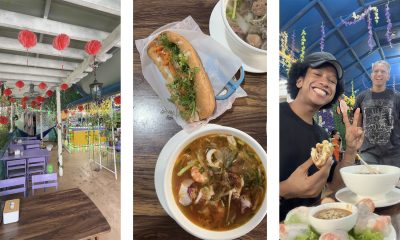
Ikalawa, not much has changed design-wise for the restaurant; meaning, if you’ve been there before, it looks – basically – the same now. You enter a wooden gate, traverse those hanging plants, and then enter a largely wooden two-floor venue. Welcoming you would be the famed breadshop, and then there are tables and seats for those who’d want to dine.

Ikatlo, slight slow ang service. Though that may just be because this place is always busy. But at least our servers did know their products. And they’re honest, too (e.g. “The Thai Beef Salad you want can be offered without some of the key ingredients, so I won’t recommend it.”).

Ika-apat, how was their food?

  1. We wanted to “wash away” the taste of the steaks we had at Sizzling Plate, so we ordered the Filet Mignon (thick slice of beef tenderloin wrapped in bacon, and then served with salad and marble potatoes, ₱520). Properly cooked so it remained juicy, this one didn’t disappoint.
  2. The Creole Pasta (pasta with shrimp and mushroom cream sauce with paprika, ₱380) was okay naman, though they didn’t have chili flakes (only Tabasco sauce), thus limiting our desire to make this spicier. It was filling… even if the portion was on the smaller side.

This restaurant is one of those with too many items in the menu, so – yeah – you’re bound to find something you’d like. Note that some of the goods here are costly – e.g. Breads sell from ₱60-₱180, Banana Turon for ₱120, Suman at Tsokolate for ₱210, and Dinuguan with Puto for ₱240. But these are among those that helped make this restaurant known.

Googling eating venues in Baguio City will give you a lot of must-check places. And among those that, consistently, enter lists of recommended restaurants is Café by the Ruins. This is not surprising, really, because this place can be described as largely consistent. So, yeah, while the breads there remain too expensive, everything else is… generally… okay, considering they taste better-than-okay anyway.

Go check… or just join us, as we look for more lafangan venues…

Café by the Ruins is located at 25 Shuntug Rd., Baguio City. For more information, contact 0966 528 9072 or email cafebytheruins@gmail.com.

Continue Reading

BizListing

Making a mark through artsy food: Lessons from Tsokolateria Artisanal Café of Baguio City

Tsokolateria Artisanal Café is this artsy resto in Baguio City, offering artisanal offerings.

Published

on

We were looking for breakfast in Baguio City, and, while Googling, among the most recommended was Tsokolateria Artisanal Café… which we decided to check since too many of the other options were still closed (some opened from 9.00AM onwards, which was entering brunch hours already).

Now… how was this place for us?

@outragemag #LGBT checking the artsy but pricey #artisanal food of #tsokolateriabaguio Tsokolateria Artisanal Café in #Baguio ♬ original sound – Outrage Magazine

Una, the place isn’t hard to find naman. Coming from the marketplace in Baguio, you – basically – just walk along Session Road, lampas ng SM Baguio and The Baguio Cathedral of Our Lady of the Atonement. It could be tedious particularly for the non-fans of walking (reminds you of the hilly roads of San Francisco), but… you can just consider this as your exercise, too.

Ikalawa, the actual place is okay naman. The place, which combines two venues – Tsokolateria and Pamana – is non-airconditioned yet well-ventilated, with lots of seating available. There are elements that may not be to everyone’s liking – e.g. those scary statues in front of the restaurant (particularly the ones seating on the stairs, which could be mistaken for real people), as well as those cheap-looking plastic plants hanging on the ceiling of the venue.

Ikatlo, the workers were okay naman. They were able to explain what’s on the menus (and how Tsokolateria differed from Pamana), and they weren’t intrusive at all (they let you be, as needed).

Ika-apat, how was the food?

  1. The Adobo Overload (chicken adobo topped with roasted cacao garlic and crispy adobo flakes, ₱535) was not maalat/salty, and so okay. But – even with the add-on well-seasoned veggies as side dish, as well as the black rice – you really don’t get much. So you’re basically paying for a deconstructed version of adobosilog for over ₱500.
  2. The House Waffle, Bacon Belly Arugula & Eggs (₱485) was interesting – e.g. the waffles were fried (this one’s yummy); those cherry tomatoes were fresh (another plus); the eggs, although small, were well done; and that meat was… bagnet-like.

Don’t get us wrong: This place is not bad at all. But – considering its asking prices – it’s not great, either. This is an okay-to-consider venue if you’re willing to cough up more than you should, more than is deserved so you can try food repackaged to be artsy.

Try lang… or discover others… as we do as we search for more lafangan venues.

Tsokolateria Artisanal Café is located at Igorot Stairs, Upper Session Rd., Baguio City. For more information, contact 0927 323 6513 or email inquiry@happyconceptgroup.com.

Continue Reading

BizListing

A Filipino family brand goes global through craft, customization and smart logistics

Founded in the early 1980s by Carlito Atienza, a master tailor in Metro Manila, Caster Sportswear began with a clear mission: to fill the gap for affordable yet high-quality customizable sportswear.

Published

on

In the dynamic world of sports apparel, success demands more than quality—it calls for vision, innovation, and the courage to push boundaries. These values have been at the heart of Caster Global Sports Inc.’s journey to becoming a trusted name in the industry.

Founded in the early 1980s by Carlito Atienza, a master tailor in Metro Manila, Caster Sportswear began with a clear mission: to fill the gap for affordable yet high-quality customizable sportswear. Carlito’s craftsmanship and commitment quickly earned the brand a reputation among discerning clients, including major banks and universities.

For decades, Caster thrived locally, but it was the fresh perspective of the second generation that unlocked its global potential—transforming a homegrown brand into an international player.

Going global

The turning point came with the next generation. Butch Atienza, vice president, Caster Global Sports, brought a global perspective from his experience at a multinational company. He saw that there was a growing demand overseas for the personalized kits his family has been producing for decades. At that time, Caster was well-known for making uniforms for local corporate clients. But expanding internationally meant rethinking logistics and embracing a bigger vision for growth.

Butch researched logistics providers and found FedEx. “We began shipping with FedEx in the early 2000s after finding the promotional box rates really attractive,” Butch shares. “Back then,we were sending five to nine packages a week, until a FedEx representative noticed our volume and visited us to open an account.”

This collaboration, now spanning more than 20 years, lowered the barrier to exporting and helped Caster Global test foreign markets without overcommitting resources. Shipments to the U.S. now take two to five days, shortening the feedback loop between customer and manufacturer.

Standing out in a crowded market

Caster’s competitive edge isn’t simply speed. In a market crowded with about 20 local competitors, the company leans into craftsmanship and customization for differentiation. While many suppliers focus on basic sublimated prints, Caster offers embroidery, tailored designs and one-off recreations. Customers can send a photo and receive bespoke sportswear. This service resonates with buyers in the U.S. and Europe who seek distinctiveness over off-the-rack sameness.

Behind the promise is a disciplined production process. Every order begins with a specifications sheet and sample production before mass rollout- a simple quality-control step that reduces costly mistakes. Investment in new equipment like full-body printers and modern embroidery machines , further improves consistency and throughput. Typical lead times range from two to three weeks for small runs (50–100 pieces) to three to six weeks for larger orders (around 1,000 pieces), allowing the company to serve both grassroots clubs and larger teams.

When errors occur, Caster communicates costs and options clearly, ensuring transparency to customers who have generally accepted the need to cover replacement shipping because of the service’s perceived value. This trust, coupled with responsive customer support, has turnedone-time orders into repeat business.

Scaling a manufacturing business means jugglingcash flow, balancing bespoke work with high volume production, and maintaining consistent quality as demand rises. These challenges shaped Caster’sstrategic decisions: standardizing specifications, documenting workflows, and partnering with a logistics provider that can scale with them.

Lessons from the past, and hopes for the future

Looking ahead, Butch is exploring international franchising and partnerships. Interest has come from clients in Australia, Malaysia, the United States and Switzerland, and the company is studying franchising models and assessing options. Locally, discussions have begun about sponsorships and collaborations with larger sports organizations, including talks around the Philippine Basketball Association.

For Philippine entrepreneurs watching from the sidelines, Butch’s advice is pragmatic: focus on product quality, invest in customer service, and build partnerships that reduce friction when expanding abroad. “Shipping reliably was a game-changer for us,” he says, noting that logistical confidence made it possible to sell beyond the Philippines without compromising service.

From Carlito Atienza’s vision in the 1980s to Butch’s global expansion in the 2000s, Caster Global Sports Inc. proves that Philippine craftsmanship, family values, and strong partnerships can push businesses to thrive in the global market. As they look to 2026 and beyond, this family business built on skills, quality, and innovation is only getting started.

Discover more inspiring stories from entrepreneurs across Asia Pacific on FedEx Business Insights.

Continue Reading
Advertisement
Advertisement

Like us on Facebook

Trending