Connect with us

Strategies

5 Tips for making a successful family business transition

Family business transition is difficult and requires skills of emotional intelligence. Counseling provides a space where you can safely identify where past grievances and your emotional needs have become roadblocks and even self-sabotage.

Published

on

When it comes to a business transition, most family business owners “fly by the seat of their pants.” This is the view of family business expert Chrissy Myers, author of the book Reluctantly Resilient: One CEO’s Journey to Thriving in Leadership and Life.

A leader at her family’s insurance agency, Myers thought she knew the answers to business and life. That is, until the Affordable Care Act shook the very foundation of the business. In the tailspin of activity just before ACA went live, Myers unexpectedly lost her husband. Suddenly, she was a single mom with two kids under six, steering a business with an uncertain future.

Myers candidly shares her struggles as a business leader in a market upheaval, the challenges common in a family business and the stress she experienced as a widow and mom dating and building a healthy family. 

“We question our decision to work with Mom and Dad and wonder why everyone else makes it look so easy,” says Myers. “We are all feeling the same way, hoping no one else notices what a struggle we are enduring.”

Although she has been through a complete transition herself, Myers notes, “I can’t offer a step-by step guide to transition your family business, but I recommend the following based on what I learned in the process:

1. Go to therapy for yourself. 

Family business transition is difficult and requires skills of emotional intelligence. Counseling provides a space where you can safely identify where past grievances and your emotional needs have become roadblocks and even self-sabotage. It’s also a space to level up your skills in communicating your needs while acknowledging the needs of others, responding rather than reacting, and balancing your work with your other priorities.

2. Engage a lawyer and an accountant you trust.

Before calling around or asking for referrals, prepare a list of the qualifications and qualities you need in these two key roles. Take your time interviewing and finding the right fit for you. You will likely continue to work with these professionals after the transition and for years to come. Comfort with how these professionals communicate with you can be just as important as their skill sets.

3. Take no hostages. 

If you have a spouse or significant other, children, or close friends who will be with you on your ownership journey, get their buy-in and support early in the process. Following the emotional and high-stress days as you navigate the transition, there will be difficult days ahead when the business is yours. Getting through the transition is the first, not the final, step. Take time to create a framework of how work and life will fit together. This is key to ensuring you continue to be happy with your decision over the long haul. Be intentional in the time you spend with your family, and try not to talk about the transition all the time. I know it’s hard.

4. Take care of yourself. 

The way you care for yourself during the transition creates the pattern of how you care for yourself as a business owner. Discipline yourself to eat well, exercise, and get enough sleep. Make time to do enjoyable things, ones that give you energy, because you are going to need it.

5. Establish a limit. 

You must have a threshold at which you are willing to walk away regardless of where you are in the process. My own limit came two months after my mom had retired without a completed agreement.”

BizNews

For those marketing contents, weekly episode releases drive higher viewer engagement and subscriptions on platforms

Marketing people, pay attention: the drip-style release schedule boosts both engagement and subscription revenue.

Published

on

Gradually releasing TV show episodes, rather than offering full seasons all at once for binge-watchers, significantly increases engagement on subscription video-on-demand (SVoD) platforms, leading to substantially higher subscription rates.

This is according to a study that provides the first large-scale causal evidence from a real-world randomized field experiment showing how release strategies shape viewing patterns, content discovery and retention across 84,000 viewers over a five-week randomized trial.

The study, “When Less Is More: Content Strategies for Subscription Video on Demand,” was authored by Miguel Godinho de Matos of Católica Lisbon School of Business and Economics, Samir Mamadehussene of the University of Texas at Dallas and Pedro Ferreira of Carnegie Mellon University.

To conduct their study, researchers made sure that across a five-week randomized field trial conducted with a major multinational telecommunications provider, viewers were assigned to a gradual (drip) release schedule. As a result, they found these viewers were 48% more likely to continue using the platform. They were more likely to return on a weekly basis to explore additional content.

When the researchers studied the all-at-once release of episodes, they found that while this approach initially attracted more binge-watchers who were eager to start a new series immediately after launch, those platform users did not engage with the platform over time in a more sustained way.

“The moment all-at-once viewers finish a fully released show, they often leave the platform,” de Matos said. “A drip schedule keeps viewers engaged for weeks, giving them time to search, browse, and find other shows they enjoy.”

“Releasing episodes slowly creates natural touchpoints that bring viewers back each week,” said Mamadehussene. “Those repeated visits dramatically expand content discovery and strengthen retention.”

When given all-at-once access, drip-release viewers tended to watch fewer episodes the first week, but they did watch significantly more episodes in later weeks. They increased exploration of the platform catalog, and ultimately consumed more total content than those given all episodes upfront.

At the end of the free trial, drip-release users were 1.7% more likely to subscribe, a 48% increase over the all-at-once group’s baseline subscription rate of 3.48%.

To be sure, the study found that this effect varied based on binge-watching preferences. For heavy binge watchers, the lack of immediate access to full seasons reduced engagement, lowering subscription likelihood. These findings help explain why major streamers which popularized binge releases, such as Netflix, have increasingly adopted weekly or hybrid release models.

“Our results show that the drip-style release schedule boosts both engagement and subscription revenue,” said Ferreira. “When it comes to sustaining audience interest, sometimes less really is more.”

Continue Reading

BizNews

3 Filipino MSME owners share how to enter your easy era of business

When presented with the opportunity to use solutions, more business owners are discovering the advantages of adopting new tech innovations — especially when it comes to payments.

Published

on

Many of today’s MSMEs are born from a passion: a recipe that’s been passed down for generations, a love of coffee and pastries, or a vision to showcase local fashion and design to the global stage. But turning that passion into a sustainable business is another thing on its own. Day-to-day challenges like managing orders and keeping payments on track can be overwhelming.

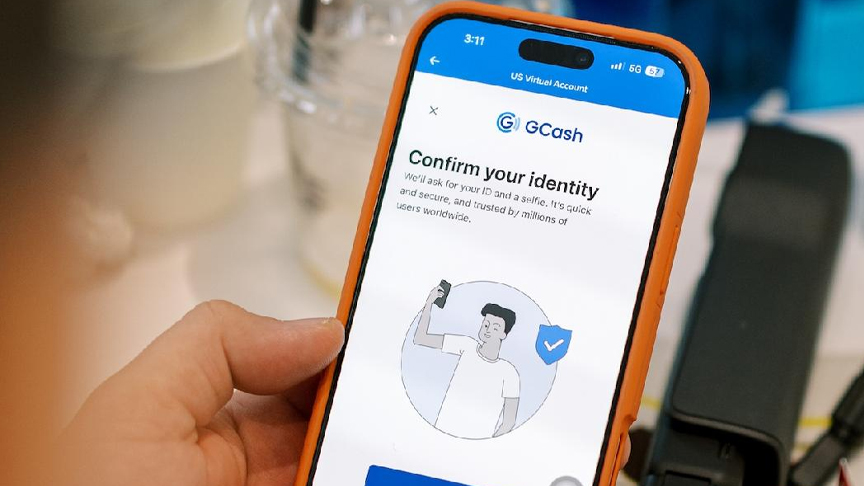
As businesses grow, so does the need for better tools. While there’s no shortage of tech in the market, many MSMEs often steer away due to cost and complexity. However, when presented with the opportunity to use solutions from GCash for Business, more business owners are discovering the advantages of adopting new tech innovations — especially when it comes to payments.

One innovation is GCash SoundPay. This device provides instant voice confirmation for every successful QR payment made. It’s easy to carry, affordable, and simple to use – requiring only a fully verified GCash account of at least 12 months to get started.

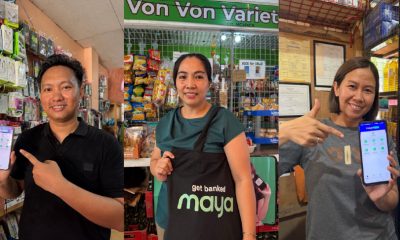
For Nikko Mendoza of Smthn Smthn Cafe in Davao, Michael Chan of Mom Rose Chicken Lechon in Bacolod, and Emgee Po of Get Spotted in Bacolod, embracing digital tools has helped them grow their brands while allowing them to enter a new era of ease.

Here’s what they’ve learned:

1. Faster checkouts make everyday transactions feel hassle-free Michael Chan, Mom Rose Chicken Lechon

Mom Rose Chicken Lechon was born from both necessity and memory. When the pandemic shut down their carinderia in 2021, the Chan family shifted to making their signature Spicy Chicken Lechon, a dish inspired by their late mother, Rosemarie.

To this day, the business honors her wish for “a happy family,” and GCash SoundPay helps them keep that promise by ensuring this joy extends to their customers by making everyday payments stress-free.

“Most of our customers prefer GCash now. With GCash SoundPay, payments are faster and more reliable, so we can focus on serving food that makes people happy,” Michael shares.

In store, each team member carries their own GCash SoundPay device, worn with a lanyard and ready to use. This allows them to accept and confirm payments anytime, anywhere. No need for long waiting lines and just one payment acceptance device at the counter. Because of the real-time audio alerts, transactions move quicker, and the team can focus fully on serving their customers more efficiently.

2. Tech is a driver of growth. – Emgee Po, EMGEE by Get Spotted

A thesis project in 2011, EMGEE by Get Spotted is a local fashion brand from Bacolod that is now making waves internationally. Its founder, Emgee Po, partners with Negros weavers and Angono seamstresses to create one-off designs that are proudly Filipino. From a mall location in Ayala Malls Capitol Central to pop-ups in Paris and soon New York, EMGEE continues to expand its reach.

GCash played a role in how Emgee connected with customers. She first used her personal GCash account for payments, where cashless transactions made it easier to keep up with multiple customers paying at the same time.

“Most [of] our sales for the shop would be [through] credit cards and GCash. It’s very easy and it’s very convenient [to go cashless],” Emgee shares. But as the business grew, the confusion of mixing personal and business transactions and manually checking her phones to confirm payments started becoming a challenge.

That’s why she moved to GCash for Business. With GCash for Business, she now has everything to confidently grow her business such as an easy-to-use business wallet, no limits, no transaction fees. Now, there’s no more mixing personal and business payments.

3. Businesses benefit from an easy-to-use platform  – Nikko Mendoza, Smthn Smthn Cafe

What started as seasonal pastries grew into a full-fledged garden café in 2024. Since day one, Smthn Smthn Cafe in Davao has accepted GCash payments to serve its customers better. But as the café expanded, owner Nikko Mendoza realized he needed more than just a way to receive payments.

With the new GCash for Business Portal, businesses get access to an easy-to-use platform to track and manage all online transactions in one place. It includes a simple, , easy-to-use payments tracker and management system, no wallet limit when receiving cashless payments from customers, and no transaction fees when paying suppliers through GCash. Additionally, the portal allows merchants to pay their suppliers directly through bank transfer or even to their GCash accounts with no fees, reducing the need to use multiple platforms and pay multiple fees.

For Nikko and his team, utilizing a system like the GCash for Business Portal means more time to focus on running the café, and less time worrying about payment limits, fees, or keeping track of scattered transactions.

Tech Made for Business’ Easy Era

From Manila to Bacolod to Davao, these small business owners show how digital solutions are helping them experience ease everyday in their operations. With GCash SoundPay and an upcoming new device that enables merchants to accept credit card payments through their phone, GCash for Business continues to provide MSMEs a selection of tools tailored to their specific needs per industry.

Utilizing these solutions also comes with a dedicated business account in the new GCash for Business Portal, providing a dedicated dashboard where business owners can order devices and manage their business transactions in a simple, easy-to-use business portal with no limits and no fees.

Learn more about how GCash for Business can empower your business and sign up today with just a GCash verified account of at least 12 months.

Continue Reading

BizNews

Year-end tax and financial planning tips from CPAs

Talk with your CPA or CPA Personal Financial Specialist (CPA/PFS) as soon as possible,.

Published

on

The American Institute of CPAs (AICPA) advises taxpayers to take action and make year-end tax and financial planning moves that can help prepare them for 2026, especially at tax time.

“Taking action before the end of the year can be a huge benefit to your financial health in 2026,” says Dan Snyder, CPA/PFS, Director of AICPA Personal Financial Planning. “There have been many changes in the tax and financial planning space this year and now is the time to educate yourself and make changes that can affect your tax bill before April 15, 2026.”

TAX TIPS

  • Standard deduction is higher for next year: Under the new tax bill, the standard deduction has been permanently increased and indexed for inflation. With higher standard deduction amounts, taxpayers should consider bunching itemized deductions. 
     
  • Charitable Giving Taxpayers need to consider timing of charitable donations before the tax law changes in 2026. In 2026, a small above-the-line deduction will be available and, for itemizers and high-income taxpayers, the tax benefits of charitable giving will have new limits. Taxpayers should also make sure to keep thorough records of all donations, including receipts and bank statements.
     
  • Check your W4 withholdings: Accurate withholding helps ensure that you are paying enough tax through payroll and reduces the chance that you will owe a significant amount on your next tax return. 
     
  • Senior bonus deduction: Taxpayers age 65+ with AGI under the limits may claim a $6,000 deduction for 2025-2028. Qualifying taxpayers may want to consider ways to reduce their taxable income to qualify for the deduction.
     
  • Check your qualifications for deductions on tips and overtime: Applicable for tax year 2025, a new federal tax deduction is available on overtime and tips. There are income phaseouts and reporting requirements for these deductions.
     
  • Take advantage of the new deduction for buying an American car assembled in the US: This new deduction applies to tax year 2025 and allows individuals to write off the interest paid on auto loans for these vehicles, up to $10,000. There are income phaseouts for this deduction.

PERSONAL FINANCIAL PLANNING TIPS

  • Update beneficiaries if necessary: This can be an easy way to save yourself and your heirs from an expensive mistake. Review your designations for items like life insurance and retirement plans and make sure beneficiary names are updated. Beneficiary forms supersede will and trust directives when settling an estate.
     
  • Consider a Roth IRA conversion: Consider converting traditional IRA funds to Roth IRAs if you expect higher future tax rates and fits your retirement (to allow tax-free distributions) and estate plans (heirs would inherit tax-free asset).
     
  • Plan for education: Recent changes to legislation, in particular, for 529 plans, may qualify contributions for state tax deductions and allow gifting up to IRS limits but these contributions need to be made by the end of the year.
     
  • Harvest your investment losses and gains: Align your harvesting strategy with current and projected income levels to make the most of available tax thresholds. Consider selling investments that have declined in value to offset capital gains to reduce your taxable income. If you are in a lower tax bracket or have unused losses, you might benefit from selling appreciated assets to lock in gains.
     
  • Spend through flexible savings accounts: Now is the time to “use it or lose it “when it comes to Flexible Savings Accounts (FSAs) or Limited FSAs. Some FSAs will allow you to carry over a certain amount, so be sure to check your individual plan to see if any of those funds carry over into next year.
     
  • Take all of your Required Minimum Distributions (RMDs): If you miss the deadline, you could be subject to a 25% penalty on the portion of your RMD you failed to withdraw.
     
  • Catch up on your 401k contributions: If you are over the age of 50, you can contribute up to $31,000 to your 401k plan in 2025. There is a special rule for those aged 60-63 that allows additional contributions for a total allowable contribution of $34,750 for 2025, with additional strategies that can allow even more. Make sure you’ve maximized your contributions and make plans to modify your contribution amounts for 2026.
     
  • Take advantage of Medicare Open Enrollment: Medicare Open Enrollment ends December 7, 2025. Evaluate your prescriptions, potential changes in insurance drug lists and how effective the plan you currently have has been for your health needs. Consider making changes to your plan or adding additional coverage. For 2026, Medicare has implemented a $2,100 out-of-pocket maximum for Part D prescription drugs.

“Talk with your CPA or CPA Personal Financial Specialist (CPA/PFS) as soon as possible,” says Snyder. “They have the knowledge to best help you with taxes and much more for this year and next. The more communication you have with him/her, the better they can help you plan for your financial future.”

Continue Reading
Advertisement
Advertisement

Like us on Facebook

Trending