
BizNews
Empowering employees through tech can supercharge returns – Lenovo
IT leaders are reporting a 5x return (USD $1 spent on these programs yields USD $5 of increased staff productivity, organizational agility and customer satisfaction), with many expecting to increase their investment by nearly 25 percent in two years.


A new Lenovo and Intel commissioned study, “Empower Your Employees with the Right Technology,” conducted by Forrester Consulting, has found that the impact of technology in improving the employee experience (EX), or an employee’s full journey in an organization, is much more than anticipated — highlighting opportunities for organizations’ IT decision makers (ITDMs) in today’s remote and hybrid work environment.
The key insight points out that while companies on average see a 5x return on investment in the EX driven by increased productivity, organizational agility and customer satisfaction, ITDMs and employees disagree on technology priorities. While ITDMs are prioritizing strategic IT integration, software and service needs, employees are more focused on their fundamental daily technology experience.
This suggests that business leaders have room to collaborate more closely with employees on their IT purchase decisions to elevate team engagement, increase customer satisfaction and improve the bottom line.
Bridging the divide between employees and IT decision makers
With organizations now shifting their focus toward remote and hybrid work, ITDMs are upgrading devices, software and services as part of EX initiatives to improve team engagement and satisfaction. Based on the research findings, this has led to more tech spending. IT leaders are reporting a 5x return (USD $1 spent on these programs yields USD $5 of increased staff productivity, organizational agility and customer satisfaction), with many expecting to increase their investment by nearly 25 percent in two years.
Yet employees still report that they’re frustrated with their PC hardware and software experience:
- Fifty (50) percent of respondents say their PC devices are out of date or insufficient (e.g. not fast enough, reliable enough or powerful enough)
- Forty-six (46) percent note their software frequently malfunctions and disrupts their work
- Only 33 percent are extremely satisfied with the current laptop provided by the company
- Only 30 percent said their laptops or desktop work well for cross-collaboration.
Importantly, ITDMs and employees both define employee satisfaction with technology as a crucial goal. Satisfaction with technology also has the greatest observable positive impact: nearly 60 percent of ITDM respondents noted a more than 10-percent increase in EX scores by improving employee satisfaction with technology. It’s evident that IT departments and the technologies they offer are instrumental to driving EX, beyond conventional factors such as human resources, worker benefits and more.
Yet again, there is a clear disconnect between employees and these ITDMs, whose primary concerns are the longevity of their technology investments rather than its impact on team engagement. According to the study, whereas 84 percent of ITDMs believe employees can easily switch to a different PC device if their current one needs to be replaced, only half of employees agree that’s an available solution. Ultimately, both ITDMs and employees agree that refresh cycles can be improved and better aligned. In addition, ITDMs believe the integration of hardware and software will impact EX the most, whereas employees simply want devices that work consistently.
Prioritizing employees to better leverage technology investments
The study outlines a few key recommendations on how business leaders can better improve employee engagement and business outcomes through technology investments.
- Realign investments. While many ITDMs are investing resources into exploring newer, emerging technologies such as 5G, augmented and virtual reality (AR/VR), and artificial intelligence (AI) or machine learning tools, based on worker respondents’ feedback there is an opportunity to focus first on immediate employee priorities—building a strong foundation of collaboration tools and PC devices—while IT departments explore more advanced technology tools in parallel.
- Reorganize priorities. Decision-makers should also focus on improving EX vs only focusing on specific productivity metrics. In fact, according to the study nearly 80 percent of ITDMs plan to focus on improving employee engagement over the next few months.
- Focus on PCs. PCs have become critically important to employees, with 77 percent of full-time employees saying that PC devices are a critical factor in their daily work and collaboration with one another. A renewed focus on PCs can make the greatest impact on the bottom line and customer satisfaction, with most respondents agreeing that PC devices are critical to increasing customer satisfaction (69 percent), revenue growth (62 percent) and employee retention (55 percent).
- Involving employees in PC investment decisions. Overwhelmingly (72 percent) of employees responded that listening to workers or getting clarity on what they need ranks in the top three of what companies should do to improve EX. This feedback is important, as employees understand their work devices’ value in driving business outcomes, based on technology factors such as performance, connectivity, reliability, portability, size/weight, battery life and more. Listening to employee feedback can go a long way towards making the case for better technology options.

“Our new study findings further affirm our belief in the strategic importance of technology as critical investments, and not as simple transaction costs. The right deployment of technologies delivering returns can far exceed the initial expense of new business models and opportunities,” said Christian Teismann, President, Commercial PC and Smart Devices Business, Lenovo. “Given employees are a company’s greatest asset, the study further maps out opportunities to uplift the return on technology investment by focusing on PC devices and collaboration tools, while better involving employees in purchase decisions. In today’s new remote and hybrid work set-up, these steps are pivotal for companies in yielding opportunities that go far beyond the initial spend on their technology.”








BizNews
Reminder to marketing people: Missing information can misinform
You don’t need bad actors for people to get the wrong idea. Incomplete information can be enough.

BizNews
Office owners or managers, take note: Increased risk of bullying in open-plan offices
In traditional open-plan offices it is easier to notice colleagues’ shortcomings and become irritated by them. If someone gets frustrated and takes it upon themselves to “do something about” a colleague’s behaviour, and there are no clear guidelines for handling such situations, there is a risk that it may escalate into bullying. Those who are subjected to bullying lack access to a private space for retreat.

BizNews
Long-serving CEOs may weaken innovation, study finds
Companies led by long-serving chief executives may become less innovative over time unless challenged by strong independent boards.


Focus on good food and good service at La Cosina Antonio

Focus on service: Lessons from Caltex station employees

FedEx Cares helps 2,400 Filipino students start the school year healthier

AXA Philippines mobilizes over 2,000 employees nationwide to support communities through volunteerism

Dining in the open in Cebu Province? Check out Mandaue City’s Matias BBQ

Empowering the next wave of Filipino freelancers in Pampanga

3 Lessons from women who successfully built careers in freelancing

Reminder to marketing people: Missing information can misinform

Long-serving CEOs may weaken innovation, study finds

Profit alone is a poor measure of success, study shows companies can look efficient while harming the planet
Reminder to marketing people: Missing information can misinform

Office owners or managers, take note: Increased risk of bullying in open-plan offices
3 Lessons from women who successfully built careers in freelancing
Dining in the open in Cebu Province? Check out Mandaue City’s Matias BBQ
AXA Philippines mobilizes over 2,000 employees nationwide to support communities through volunteerism
Focus on service: Lessons from Caltex station employees

Biz strategy of Quento: Forget discrimination and capture as many as possible

FFTG as a must-visit cafe… and safe space in Quezon City

5 Video marketing tips

How to successfully market your biz as green

What to do before a ransomware attack

Smart advice to find success
-
 BizNews4 weeks ago
Long-serving CEOs may weaken innovation, study finds
-
 BizNews4 weeks ago
Profit alone is a poor measure of success, study shows companies can look efficient while harming the planet
-
 BizNews4 weeks ago
Reminder to marketing people: Missing information can misinform
-
 BizNews4 weeks ago
Office owners or managers, take note: Increased risk of bullying in open-plan offices
-
 BizWiz4 weeks ago
3 Lessons from women who successfully built careers in freelancing
-
 BizListing4 weeks ago
Dining in the open in Cebu Province? Check out Mandaue City’s Matias BBQ
-
 Ethical Biz3 weeks ago
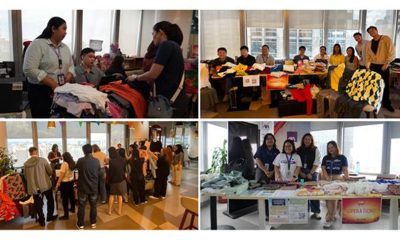
AXA Philippines mobilizes over 2,000 employees nationwide to support communities through volunteerism
-
 BizWiz3 weeks ago
Focus on service: Lessons from Caltex station employees