Connect with us

Tech & Innovation

Boxes to tick when choosing a threat intelligence provider

For any chief information security officer (CISO) or IT lead, operating in today’s highly digitalized environment, not only are they tasked with establishing and maintaining the digital transformation efforts of their companies on a tight budget, they must also ensure that the company’s IT policy is compliant with the data protection regimes in the markets that they operate in.

Published

on

Photo by Igor Miske from Unsplash.com

By Yeo Siang Tiong
General Manager for Southeast Asia, Kaspersky

A long time ago in the cybersecurity space far far away, the choice of a threat intelligence service was often restricted to a handful of providers. Today, the cybersecurity industry in APAC is worth at least USD 30.45 billion and expected to grow at an annual rate of 18.3% from 2020 to 2025, with multiple cybersecurity vendors seeking a bigger slice of the proverbial pie. 

For any chief information security officer (CISO) or IT lead, operating in today’s highly digitalized environment, not only are they tasked with establishing and maintaining the digital transformation efforts of their companies on a tight budget, they must also ensure that the company’s IT policy is compliant with the data protection regimes in the markets that they operate in. 

Clearly, it is not an easy task to take, but little things like having the right threat intelligence service can make life easier. We have been hearing a lot about this for several years now. But what is it threat intelligence exactly and what you should be looking for in a threat intelligence service provider?

Turning intelligence into action

Let’s have a quick refresher. Threat intelligence is data collected and analyzed by an organization in order to understand a threat actor’s motives, targets, and attack behavior. It empowers organizations of all shapes and sizes to make faster, more informed security decisions and shifts their cybersecurity posture from reactive to proactive in the fight against breaches and targeted attacks. 

I am aware that there are a lot of free threat intelligence if one has a knack on researching. However, let me put it this way. A premium threat intelligence report or feed is like a special block screening of an amazing movie. You get the first dibs of the plot and perhaps get to know the characters even. Eventually, the film will be shown in major cinemas. Then after say, six months or more, it will land on several streaming services.

With us at Kaspersky, we provide comprehensive, real-time, organic, and actionable information on our premium threat reports and data feed which is why they are exclusive to the enterprises and organizations which have subscribed to our services. We see to it that we share such with the law enforcement agencies as well, because cooperation is key to fighting cybercriminals.

After a few months, we will then make such data available in public. Why is it not ideal to wait until the mass release of a threat report? Because it will allow you to act fast, to assess your risks, check your endpoints, fix the loopholes which they may exploit. Because knowing first-hand such critical information can save you money, reputation, and headache. Because proactive security is necessary at this time and age.

You may wonder why don’t we make our findings public to begin with? Let us remember here that public here means anyone – including them, cybercriminals. The last thing we want is to tip them off.

Aside from these, what else should you be looking for in a threat intelligence service provider?

  1. Check their sources

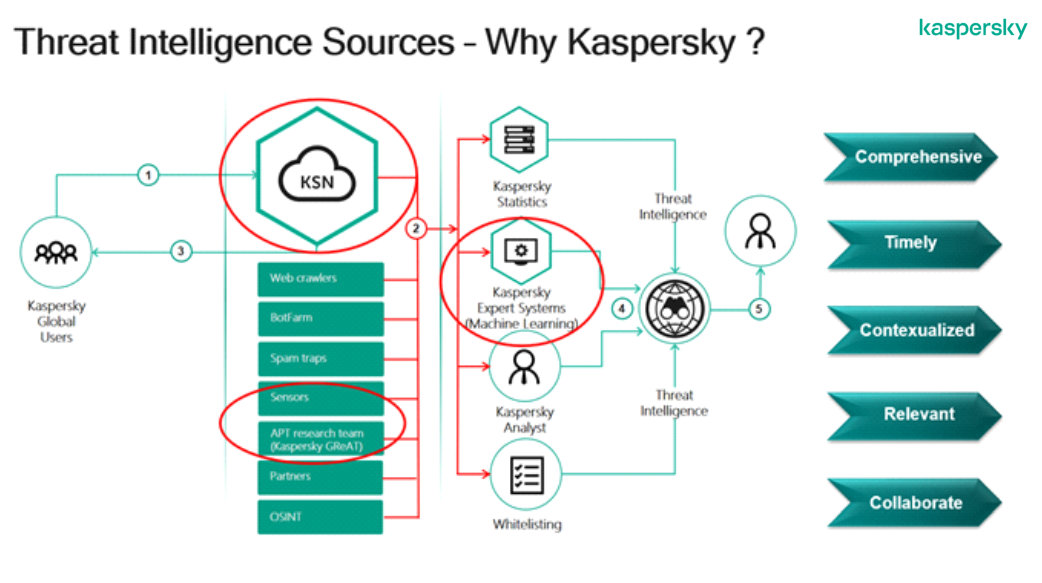
Threat intelligence should make your systems smarter through data feeds. To get the feeds you need sensors scattered all across the globe to ensure that your data is reflective of the real-time, global threat landscape. 

For example, our very own Threat Intelligence portfolio is powered by millions of Kaspersky’s global users who agreed to share their anonymized data. This huge network builds our Kaspersky Security Network (KSN) which collects more than 340,000 malicious files per day, allowing us to get rich information compared with firms with limited sensors and workforce.
  1. The data collection strategy needs to be GReAT

Speaking of human force, a threat intelligence service’s data collection strategy should be the most important factor to consider in your evaluation of their capabilities because they can only provide intelligence as far as the parameters of their data sources. Given that cybersecurity attacks are often transnational in nature, it is important that a vendor can source information globally and put pieces of the puzzle together in a way that makes sense for your IT staff. It should not be aggregated, it should be organic. It should also be critically monitored and studied by the brightest minds who can understand tactics, techniques, and procedures (TTPs).

To assess whether a threat intelligence service has such a capability, look at their research team and see what kind of campaigns that they have uncovered. For example, Kaspersky’s Global Research & Analysis Team (GReAT) found that the Lazarus APT group shifted their modus operandi to launch targeted ransomware attacks against businesses in Asia, extending as far as France in Q2 this year. 

  1. Check the visibility

I have already mentioned the borderless nature of cyberthreats. Hence the visibility of your provider should be another box you have to tick. Look into their Advanced Persistent Threat (APT) logbook and their database. Are they monitoring cyberthreats only from a particular country or region? Or do they have a global reach? Are there researchers only based in one country? Or do they have a network of experts scattered around the world? The answers for these questions are essential.

  1. The provider should understand the difference between intelligence and data 

At the heart of the debate between intelligence and data lies the concept of context. Assuming now you’ve got your data sources setup and information is feeding in from all corners of the globe, but you’re asking yourself the million dollar question: how do I know what is important and why is it important?

Things such as threat names, timestamps, resolved IPs addresses of infected web resources are useless on their own if they are not enriched with actionable context. When a relationship context is established, the data can be used more readily to answer the questions of “who”, “what”, “where”, “questions”. It is only at this point that data becomes the finished article – intelligence – and you now receive a boost to incident investigation, as well as uncover new Indicators of Compromise (IoC) in your IT network. 

  1. The ability to integrate is key

Integration can be a dirty word of the IT industry. With constant technological upgrades and the evolution of standards happening all the time, the ability to integrate new processes into existing IT operations is a never-ending challenge. 

Similarly, for threat intelligence, it is important that your service provider can provide delivery methods, integration mechanisms and formats that support smooth integration of threat intelligence into your existing security controls. 

The endgame 

The above-mentioned tips are just a few of the many other aspects you should consider when looking for a threat intelligence service, but they serve as a good stepping stone in bolstering your cybersecurity posture for now. With threats becoming increasingly complex and malicious, having the latest enterprise security programs are no longer sufficient. Adding threat intelligence to your arsenal of cybersecurity countermeasures will allow you to bring the fight to them. 

BizNews

Want to be more productive at work? Show your boss this study

Sit-stand desks, also known as height-adjustable desks or standing desks, promise a healthier way to work, giving employees the flexibility to alternate between sitting and standing throughout the day.

Published

on

By Zaid Elayyan
Texas A&M University Division of Marketing and Communications

Every workday is a negotiation between our bodies and our jobs. Sit too long, our backs and necks protest; stand too long, our feet might have something to say about it. 

Sit-stand desks, also known as height-adjustable desks or standing desks, promise a healthier way to work, giving employees the flexibility to alternate between sitting and standing throughout the day.

Now, new research suggests these desks may be giving employees, and employers, another benefit beyond ergonomics and well-being: productivity.

Drawing on data from more than 10,000 employees, researchers at Texas A&M University found that workers who used sit-stand desks averaged 43 additional minutes of active computer use each day compared with those using regular desks, a difference that could translate to nearly $9,000 in annual productivity per employee.

The study, published in Theoretical and Applied Ergonomics, was co-led by Texas A&M School of Public Health professor Dr. Mark Benden and U.S. Army Public Health Command Region, West, Regional Ergonomist Dr. Tricia Salzar.

The findings suggest that the physical workspace may be a powerful, often overlooked, influence on employee well-being, productivity, and even a company’s overall performance.

“The design of the workplace itself can be a powerful driver of human health and performance, including better engagement, productivity and organizational success,” Benden said.

‘The workplace effect’

When organizations look to boost performance and productivity, they turn to new technologies, training programs and management strategies. But another powerful influence may be hiding in plain sight: the physical workplace itself.

“It’s what we call the ‘workplace effect,’” Benden said. “The direct impact that the physical work environment has on the behavior, health, psychological well-being, and even engagement and performance of employees.”

Sit-stand desks are a striking example of the workplace effect. Rather than locking employees into a single position for hours at a time, they give workers the flexibility to sit, stand and move throughout the day, as tasks and energy levels shift.

“It can have a profound effect,” Benden said. “Alternating between different working positions promotes better health outcomes by reducing physical strain and encouraging movement for those who might otherwise spend most of their workday sedentary.”

But the benefits may extend beyond physical health. Benden and Salzar’s new research shows that sit-stand desks can also have a substantial impact on productivity.

“It has a cumulative, positive effect for both employers and employees,” Benden said.

For employees, height-adjustable desks could lead to sustained energy and longer stretches of focused work. For employers, the higher work productivity could translate into a nearly $9,000 return on investment per employee annually.

“The implications are hard to ignore,” Benden said. “When we design workplaces around employees and their needs, better health, better performance and better organizational outcomes follow.”

The takeaway? Investing in the physical workplace, like height-adjustable desks, isn’t just good for employee comfort and health; it could be good for business, too.

10,000 workers, one story

To test whether sit-stand desks could influence work output and productivity, Benden and his colleagues stepped out of their labs and turned to the real world, using a resource few ergonomics studies can match.

“We analyzed a huge dataset of more than 10,000 workers over a yearlong period, comparing the total computer use of traditional desk users and height-adjustable desk users,” Benden said.

The records paired employee comfort surveys with a digital trail of workplace activity, tracking everything from keystrokes and words typed to mouse clicks and typing errors, all to paint a detailed picture of how employees interacted with their computers throughout the workday.

“It was important that we collected subjective measurements, like employee survey responses of their comfort and objective measurements of computer activity through software, to analyze how people engaged with their work,” Benden said.

The team found that workers with sit-stand desks averaged 3.66 hours of active computer time, compared with 2.95 hours among regular-desk employees — a gap of about 43 minutes a day.

That might not sound like much, but over a year it adds up to roughly 171 additional hours, or more than four 40-hour workweeks.

And those additional hours come with a practical price tag, too.

Multiplying the 171 additional hours by a standardized hourly wage of about $52, the researchers estimate that sit-stand desks could generate nearly $9,000 in potential annual productivity value per employee.

“Our findings were exciting because they suggest that height-adjustable desks can directly influence overall work output and economic organizational productivity,” Benden said.

The researchers also found that employees using sit-stand desks generally typed more words and logged more keystrokes than their counterparts at non-adjustable desks.

“The data showed that people aren’t just engaging with their work, they are producing output in a meaningful way,” Benden said.

For Benden, the findings open the door to broader questions about the future of organizations, focusing on another force rapidly reshaping the modern workplace.

“Artificial intelligence is becoming increasingly integrated into daily work,” Benden said. “Just as we’ve studied how the physical environment affects human health and performance, we’re interested in understanding how emerging AI technologies could influence the physical workspace and outcomes of organizations.”

From adjustable desks to emerging technologies, the underlying question remains the same: how can organizations design environments and systems to better support the people who use them?

“The next breakthrough may not come from working harder, but from designing workspaces and systems that help people work smarter and more efficiently,” Benden said.

The story told by the more than 10,000 employees is that the desk may be doing far more than just holding up your computer.

Built around people

For Benden, sit-stand desks represent more than an ergonomic innovation. They’re part of a lifelong passion to understand how workplaces can be designed to better support employee well-being and organizational success.

“We spend a lot of time at work,” Benden said. “It’s my passion to make sure that workers feel supported in their workplace, built on informed and guided scientific evidence.”

A former Army Reserve officer, engineer, healthcare professional, inventor and world-renowned researcher, Benden has spent decades studying the complex relationship between people and the environments in which they work.

Today, he serves as director of the Center for Worker Health, where engineering, management and technology converge and harmonize in an interdisciplinary symphony of research, innovation and education, each playing its own tune in service of a shared mission to improve the lives of workers.

“The Center partners with industry nationwide, to develop innovative, impactful systems and practices that have a direct effect on worker health and efficiency,” Benden said. “We also train students and give them the platform to be as creative as possible to turn new ideas into impactful applications.”

So, the next time you find yourself slumping in your chair at 3 p.m. with an aching back, don’t just reach for another cup of coffee, because the verdict is in: show this study to your boss. Your back — and your company’s bottom line — will thank you. 

Continue Reading

Tech & Innovation

Should emojis be used in workplace communications?

Messages with no emojis were clearly the winner, making the sender appear more competent and professional.
Published

on

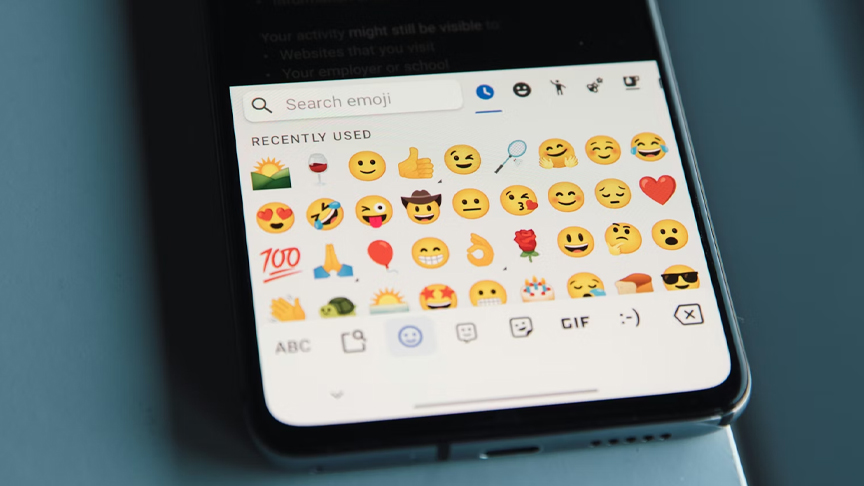
When people interact in person, subtle signals like facial expressions, body language and tone of voice play a crucial role in communicating intent and meaning, whereas written communications lack these non-verbal cues and can lead to misinterpretation or assumptions. The advent of emojis became a popular tool to provide context to written messages and they work in many settings. But how are they perceived in workplace communications?  Not so well.

Researchers from the SUniversity of Ottawa examined how emojis impact perceptions of competence and appropriateness for those who utilize them in professional settings. For this small-scale study, participants read workplace instant messages that varied in tone and emoji use.

Key findings

Here is what the researchers found:  

  • Messages with no emojis were clearly the winner, making the sender appear more competent and professional.
  • Positive emojis enhanced impressions when paired with a neutral or positive message.
  • Negative emojis were consistently considered inappropriate for workplace communication as they made senders seem less competent, especially when the message itself was already positive or neutral.
  • Gender dynamics were at play as women judged negative messages from other women more harshly than negative messages from men, rating them as less appropriate.

“This study highlights the importance of being mindful about the potential impact of emojis on professional interactions,” writes lead author Erin L. Courtice from the School of Psychology at the Faculty of Social Sciences at uOttawa. “Emojis are not simply neutral add-ons to text messages; they can influence how others perceive us, particularly in terms of competence and appropriateness. By understanding the nuances of emoji use, professionals can leverage these digital tools to enhance their communication and build stronger workplace relationships.”

Emojis are not a salvo for covering up errors

Positive emojis do not soften bad news or critical feedback – instead, they may create a sense of dishonesty and insincerity when used in a negative message. Negative emojis should generally be avoided because they produce low perceptions of overall competence even if the crux of their meaning is clear and understood in an appropriately framed message.

Researchers found that employing an emoji is not always beneficial: for example, adding a positive emoji to a positive sentence did not increase a perception of appropriateness. The tone of the message was seemingly more important, as mixed signal messaging can potentially affect an employee’s willingness to collaborate on future projects and affect professional trust.

“Future research should consider how emojis function within broader communication patterns, examining outcomes such as conversation flow, rapport building, conflict resolution, and team cohesion in digital workplace environments,” writes Courtice, who collaborated with professor Isabelle Boutet whose research program studies both how humans analyze social cues conveyed by faces, and how digital communication is enhanced by emojis to communicate emotions and social traits.

The full research team included: Erin L. Courtice, Megan Lawrence, Charles A. Collin, and Isabelle Boutet.

Continue Reading

Tech & Innovation

Augmented reality menus may help restaurants attract more customers, improve brand perceptions

AR menus can significantly increase customers’ interest in visiting a restaurant and may result in more positive word-of-mouth marketing, when compared to printed or QR-code menus.

Published

on

Restaurants looking for new ways to engage and inform customers may benefit from incorporating augmented reality (AR) technology into their menus, according to new research from Washington State University.

The study, published in the International Journal of Hospitality Management, finds that AR menus can significantly increase customers’ interest in visiting a restaurant and may result in more positive word-of-mouth marketing, when compared to printed or QR-code menus.

Led by Soobin Seo, professor of hospitality business management at the Carson College of Business, the research examined whether AR could enhance how restaurants present farm-to-table information — details about where ingredients are sourced and how food is produced.

“Consumers increasingly want transparency about where their food comes from, but the way that information is presented really matters,” Seo said. “Augmented reality allows restaurants to share that information in a more vivid, interactive and engaging way.”

The research included two experimental studies designed to reflect how diners encounter menus in real restaurant settings. In the first study, participants viewed one of three menu formats at a simulated local restaurant: a traditional printed menu, a QR-code menu, or an AR menu. The AR menu allowed users to see a three-dimensional food item through their smartphone and tap individual ingredients to learn where they were sourced.

Participants in the study indicated higher intention to visit a restaurant after viewing the menus using AR, and a greater likelihood of sharing the information with others —compared to when they viewed standard menu formats. Participants also reported feeling more immersed in the experience and believed they learned more about the food and where it comes from.

“These immersive experiences help people pay closer attention and feel like they’re actually learning something,” Seo said. “That combination appears to drive stronger interest in the restaurant itself.”

A second study explored how AR menus might work in chain restaurant settings comparing Panera Bread and McDonald’s, where brand perceptions vary widely. Researchers compared consumer responses to AR-based farm-to-table information presented by brands with healthier reputations (e.g. Panera Bread) and those typically viewed as less healthy (e.g. McDonald’s).

While AR menus improved perceptions across both brands, McDonald’s experienced a larger increase in perceived healthiness and visit intentions than Panera Bread.

“When expectations are low, transparent and interactive information can have an outsized impact,” Seo said. “For brands that aren’t typically associated with farm-to-table practices such as fast-food restaurant chain brands, AR disclosures may help offset negative perceptions.”

The study also found that the effectiveness of AR menus is somewhat influenced by how well the technology aligned with a restaurant’s overall brand image, highlighting the importance of “strategic fit” when adopting new technologies, said Seo.

Although AR menus are still relatively uncommon in the restaurant industry, Seo said the technology is becoming more accessible and feasible, even for independently owned restaurants.

“There are already low-cost tools restaurants can use to experiment with augmented reality,” she said. “This isn’t just about being flashy. It’s about providing meaningful information in a way that feels engaging and responsible.”

Beyond marketing benefits, the researchers suggest AR menus could encourage more sustainable practices by motivating restaurants to be more transparent about sourcing and to strengthen relationships with local producers.

“This is a potential win for restaurants, consumers and communities,” Seo said. “It shows how emerging technology can support sustainability while also enhancing the dining experience.”

In addition to Seo, co-authors include Jiyoon (Jennifer) Han, assistant professor of hospitality and tourism management at the Isenberg School of Management at the University of Massachusetts Amherst, and Elizabeth Howlett, professor of marketing at WSU.

Continue Reading
Advertisement
Advertisement

Like us on Facebook

Trending