Connect with us

Strategies

Bad news? Send an AI. Good news? Send a human

For a marketer who is about to deliver bad news to a customer, an AI representative will improve that customer’s response. This would be the best approach for negative situations such as unexpectedly high price offers, cancellations, delays, negative evaluations, status changes, product defects, rejections, service failures, and stockouts. However, good news is best delivered by a human.

Published

on

Photo by Alex Knight from Unsplash.com

Researchers from University of Kentucky, University of Technology Sydney, and University of Illinois-Chicago published a new paper in the Journal of Marketing that examines the customer response and satisfaction implications of using AI agents versus human agents.

The study, appearing in the Journal of Marketing, is titled “Bad News? Send an AI. Good News? Send a Human” and is authored by Aaron Garvey, TaeWoo Kim, Adam Duhachek.

Are we more forgiving of an artificial intelligence (AI) agent than a human when we are let down? Less appreciative of an AI bot than a human when we are helped? New research examines these questions and discovers that consumers respond differently to favorable and unfavorable treatment at the hands of an AI agent versus another human.

Consumers and marketing managers currently are in a period of technological transition where AI agents are increasingly replacing human representatives. AI agents have been adopted across a broad range of consumer domains to handle customer transactions, including traditional retail, travel, ride and residence sharing, and even legal and medical services. Given AI agents’ advanced information processing capabilities and labor cost advantages, the transition away from human representatives for administering product and services is expected to continue. However, what are the implications for customer response and satisfaction? 

The researchers find that when a product or service offer is worse than expected, consumers respond better when dealing with an AI agent. In contrast, for an offer that is better than expected, consumers respond more favorably to a human agent. Garvey explains that “This happens because AI agents, compared to human agents, are perceived to have weaker personal intentions when making decisions. That is, since an AI agent is a non-human machine, consumers typically do not believe that an AI agent’s behavior is driven by underlying selfishness or kindness.” As a result, consumers believe that AI agents lack selfish intentions (which would typically be punished) in the case of an unfavorable offer and lack benevolent intentions (which would typically be rewarded) in the case of a favorable offer. 

Designing an AI agent to appear more humanlike can change consumer response. For example, a service robot that appears more humanlike (e.g., with human body structure and facial features) elicits more favorable responses to a better-than-expected offer than a more machinelike AI agent without human features. This occurs because AI agents that are more humanlike are perceived to have stronger intentions when making the offer. 

What does this mean for marketing managers? Kim says, “For a marketer who is about to deliver bad news to a customer, an AI representative will improve that customer’s response. This would be the best approach for negative situations such as unexpectedly high price offers, cancellations, delays, negative evaluations, status changes, product defects, rejections, service failures, and stockouts. However, good news is best delivered by a human. Unexpectedly positive outcomes could include expedited deliveries, rebates, upgrades, service bundles, exclusive offers, loyalty rewards and customer promotions.”

Managers can apply our findings to prioritize (vs. postpone) human to AI role transitions in situations where negative (vs. positive) interactions are more frequent. Moreover, even when a role transition is not entirely passed to an AI agent, the selective recruitment of an AI agent to disclose certain negative information could still be advantageous. Firms that have already transitioned to consumer-facing AI agents, including the multitude of online and mobile applications that use AI-based algorithms to create and administer offers, also stand to benefit from our findings. Our research reveals that AI agents should be selectively made to appear more or less humanlike depending upon the situation. 

For consumers, these findings reveal a “blind spot” when dealing with AI agents, particularly when considering offers that fall short of expectations. Indeed, the research reveals an ethical dilemma around the use of AI agents – is it appropriate to use AI to bypass consumer resistance to poor offers?

“We hope that making consumers aware of this phenomenon will improve their decision quality when dealing with AI agents, while also providing marketing managers techniques, such as making AI more humanlike in certain contexts, for managing this dilemma,” says Duhachek.

Strategies

Renting out your place? Human connection key to a successful holiday rental

Warmth, friendliness and a sense of belonging, or the “homely” side of the experience, strengthen guest loyalty, making them more likely to return to the same host. However, these feelings alone didn’t necessarily make guests more likely to recommend the property to others.
Published

on

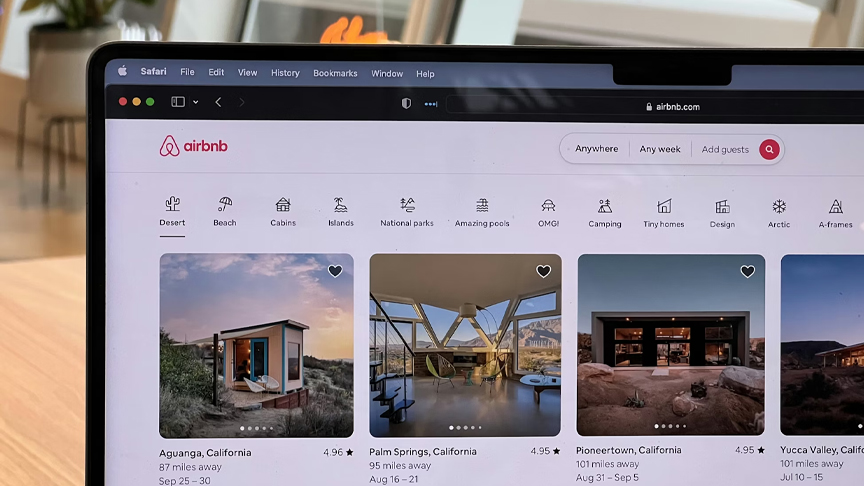
Striking up a connection with the property host is the factor that drives repeat bookings on holiday accommodation platforms such as Airbnb.

This is according to a new study, carried out by universities in the UK and Iran and published in the February 2026 edition of International Journal of Hospitality Management, that suggested that quality and value of accommodation also play a part in guest satisfaction, but personal connection is key to people deciding to stay again.

The research analyzed hundreds of online guest reviews and conducted in-depth interviews to understand what shapes guests’ evaluations of their stays in what is known as “peer-to-peer accommodation”.

Conducted over six years, the study shows that guests assess their stays using emotional cues such as warmth, atmosphere, and aesthetics; and cognitive cues such as cleanliness, safety, and convenience.

The study found that warmth, friendliness and a sense of belonging, or the “homely” side of the experience, strengthen guest loyalty, making them more likely to return to the same host. However, these feelings alone didn’t necessarily make guests more likely to recommend the property to others.

In contrast, affective and intellectual experiences – the enjoyment and perceived value of the stay – were stronger predictors of recommendations and positive reviews.

The research also examined how the quality of booking websites, such as Airbnb’s platform, influences guest behaviour. Although the website didn’t change how guests felt about the property itself, a well-designed and trustworthy site directly boosted guest loyalty and word-of-mouth.

Co-author Nektarios Tzempelikos, Professor of Marketing at Anglia Ruskin University (ARU), said: “Guests think carefully about both emotional and practical aspects before booking. Hosts who focus only on one side – either charm or functionality – may be missing the bigger picture.

“Platforms like Airbnb thrive when they’re designed for trust. Guests return to sites that are clear, reliable and easy to use. But it’s not just about tech, it’s about people. The most memorable stays come from warmth, authenticity and genuine local connection.

“By encouraging friendly, personal communication between hosts and guests, and balancing smart technology with a human touch, platforms can create experiences that feel less transactional and more meaningful.”

The study was carried out by researchers from Brunel University, University of Bradford, Newcastle University, Anglia Ruskin University and the University of Tehran.

Continue Reading

BizNews

In-aisle store displays might crowd shoppers and reduce overall sales

Retailers might seek strategies to boost product exposure without also increasing crowding – especially for cart shoppers who may experience greater crowding effects – and that excessive use of in-aisle fixtures will likely dampen sales at the aggregate level rather than increasing it. 

Published

on

In a study involving a real-world grocery store, in-aisle displays meant to boost product visibility were in fact associated with reduced sales and purchase-related behaviors, with results amplified for shopping cart users.

Mathias Streicher of Austria’s Department of Management and Marketing presents these findings in the open-access journal PLOS One.

Retailers often place extra product displays directly in aisles in an effort to boost visibility and enhance sales. However, in-aisle displays could increase spatial crowding, which occurs when people feel restricted in their freedom of movement and has been linked with purchase-avoidance tendencies. To help clarify if in-aisle displays result in more purchases, Streicher conducted several experiments with a partnering grocery store.

First, they tracked weekly sales for an aisle containing household, baby and pet staples over a six-week period during which five product-display stands were placed mid-aisle. The stands were then removed for six weeks. Comparison of sales data showed that in fact, sales increased after removal of the in-aisle displays, with the average weekly percentage of total store revenue from that aisle rising from 4.33 to 4.83 percent.

A second in-store experiment in the same aisle showed that people using shopping carts also stopped and physically handled products—behavior previously linked with sales—about 7.05 times more often when in-aisle displays were absent than when they were present. Non-cart shoppers also touched products more often when displays were removed, but the effect was smaller (3.81 times).

Finally, in an online experiment, 200 participants imagined using a shopping cart or basket while viewing photographs of the same aisle from the in-store experiments, with or without in-aisle displays. They tended to rate the aisle with displays as more crowded and reported lower levels of perceived control for aisles with displays than those without, with effects amplified for imagined cart versus basket use.

Together, these findings suggest retailers might seek strategies to boost product exposure without also increasing crowding – especially for cart shoppers who may experience greater crowding effects – and that excessive use of in-aisle fixtures will likely dampen sales at the aggregate level rather than increasing it. 

Further research could address some of this study’s limitations, such as by considering the effects of human crowding, promotional offers on products, and seasonal influences on shopping behaviors.

Streicher adds: “The research shows that adding merchandise into store aisles can actually reduce overall sales by making the environment feel crowded and harder to navigate. Importantly, this negative effect is even stronger for shoppers using carts, as they experience greater spatial constraints and reduced control while shopping.”

Continue Reading

BizNews

Structure of online reviews shapes their helpfulness

Reviews that grow increasingly positive are most helpful to readers, while those that turn negative are least helpful. For average-rated products, progressively negative trajectories enhance helpfulness, whereas reviews that start negative and grow positive are least effective.
Published

on

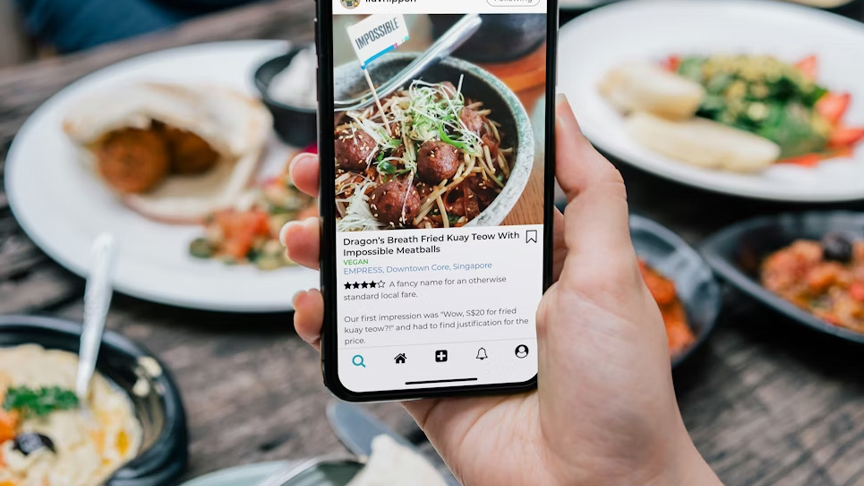
A study of nearly 200,000 Amazon reviews shows that the usefulness of online product reviews depends not only on what is said, but on how the information is structured.

The researchers, from the Universities of Cambridge and Queensland, studied Amazon reviews for products ranging from clothing to food to electronics. They found that how the information is organised matters as much as what is said, and that different review structures are more or less helpful, depending on how highly the reviewer has rated the product.

Their results, published in the journal Scientific Reports, could help companies and third-party review platforms design their review pages to prompt the sort of reviews that will be most helpful to potential customers.

For example, a reviewer assessing a laptop might praise its performance and design while criticising its battery life, so how should such information be structured to be most useful to the reader? Should the review begin with criticism and end on a positive note, or start positively before turning to drawbacks?

“Any target of evaluation typically has both positive and negative aspects, which makes crafting evaluative messages challenging,” said co-author Dr Yeun Joon Kim from Cambridge Judge Business School. “The key question is how to structure these elements within a single message. For example, one might present criticism upfront and then move to praise, or instead integrate negative points within an otherwise positive evaluation. Yet research has paid little attention to this structural dimension.

“We wanted to understand whether certain structures are consistently more effective, or whether their effectiveness depends on the performance of the target being evaluated.”

The study was based on 195,675 reviews of 5,487 distinct products, and assessed performance and related factors, and a helpfulness score as measured by reader votes.

The researchers identified nine possible structures of online reviews ranging from Type A reviews that start positive and become more positive as they go along, to Type I reviews that start negatively and become even more negative – with lots of variance in between.

For highly-rated products, reviews that grow increasingly positive are most helpful to readers, while those that turn negative are least helpful. For average-rated products, progressively negative trajectories enhance helpfulness, whereas reviews that start negative and grow positive are least effective. For low-rated products, reviews are judged most helpful when they open constructively before introducing criticism.

“The results are nuanced but very clear,” said co-author Dr Luna Luan from the University of Queensland, who carried out the research while earning her PhD at Cambridge Judge Business School. “Looking at the overall sentiment of reviews does not fully translate into message effectiveness. It is the broader structure of sentiment – how positivity and negativity evolve throughout the review – that shapes how readers interpret online reviews.”

“Our findings have practical implications for how platforms and companies can design review pages in order to elicit the sort of reviews that will be most helpful to readers based on how highly products are rated,” said Kim. “For example, instead of simply asking ‘Write your review here’, the online review form could instead include micro-prompts that guide how reviewers structure feedback in a way recipients find most helpful.”

The researchers found the most commonly used review styles are not necessarily the most helpful to readers. In particular, for average- and low-rated products, the structures that reviewers tend to adopt often differ from those that readers find most useful.

This mismatch likely reflects different underlying motivations. Reviewers are not always writing to maximise usefulness for others, but may instead be expressing their own experiences, frustrations or emotions – especially when evaluating products of moderate or poor quality. As a result, review writing often serves both as information sharing and as a form of self-expression. This helps explain why widely used review styles do not always align with what readers perceive as most informative or helpful.

Continue Reading
Advertisement
Advertisement

Like us on Facebook

Trending