Connect with us

Strategies

Cybersecurity checklist from Kaspersky

To help stressed IT security managers prioritize, we put together some cybersecurity action items for businesses.

Published

on

March 2020 may be remembered as the day the world went on lockdown because of the pandemic. In Southeast Asia, the rushed transition to work from home and then partially back to the office a year later turned to what people now embrace as the new norm. The hybrid work setup isn’t entirely new, but employees now want to stick to it. At the same time, companies have come to accept it after it proved to have worked fairly well for two years. 

Unfortunately, cybercriminals thought it worked to their advantage, too. With tons of valuable data employees bring with them on their devices, it could have felt like the best time for these cyber thugs who found themselves effortlessly stealing from their easy prey.

In 2020, there was an increase globally in the number of people using remote access tools such as remote desktop protocol or RDP, one of the most popular application-level protocols for accessing Windows workstations or servers. It also allows access to other device resources and RDP clients are available for all the most used modern OS such as iOS, OS X, Linux, Unix, and even Android. 

Originally designed as a remote administration tool, cybercriminals use RDP to penetrate the target computer by exploiting incorrectly configured settings or vulnerabilities such as weak passwords. Hacking an RDP connection is lucrative for cybercriminals.

In the same year, there were about 147,565,037 remote desktop protocol (RDP) attack attempts against users of Kaspersky in Southeast Asia. When the workforce slowly started going hybrid in 2021, the RDP attack attempts went up a bit to 149,003,835. It was in 2022 when the pandemic restrictions were lifted and by that time, the RDP attempts spiraled down to 75,855,129 or a plunge of -49% from the previous year. 

“Among our post-pandemic learnings is that flexibility, agility and openness are important to our sustainability and productivity in business. We are still evolving. Part of this evolution is the resounding desire of the workforce in Southeast Asia to stay within the hybrid setup, which boils down to our need for connection and empowerment as humans and we need to acknowledge that,” said Yeo Siang Tiong, general manager for Southeast Asia at Kaspersky.

“Part of listening to what the workforce is asking of us is providing options and support within the cybersecurity framework for their safe return to office work in any form. For companies, you will still have to use technology to drive productivity and it will remain this way as things get more and more sophisticated in the business space,” Yeo added.  

For the employed, switching to working from home has been difficult enough. After getting used to this setup for two years, returning to the office may just be as tricky. Companies are in the same predicament — rolling back some changes would mean jumping through hoops again like how they did when they deployed these in 2020. 

To help stressed IT security managers prioritize, we put together some cybersecurity action items for businesses:

Keep work-from-home cybersecurity workarounds

Whether your workforce is returning from home to office or requires work-related travel, using virtual private network (VPN) and an advanced endpoint and detection response (EDR) solution will ensure their safe return to on-site work. Kaspersky Extended Detection and Response or XDR is a multi-layered security technology that protects IT infrastructure. Whereas EDR focuses on endpoints, XDR focuses more broadly on multiple security control points to detect threats more quickly, using deep analytics and automation. XDR creates security efficiencies by improving detection and response capabilities through unifying visibility and control across endpoints, network, and cloud. It facilitates advanced investigation and threat hunting capabilities across multiple domains from a single console. 

Restore any security controls you disabled for remote workers

To allow remote employees to connect to the corporate network, especially from personal devices, some organizations weakened or disabled cybersecurity controls such as Network Admission Control (NAC). NAC checks computers for compliance with corporate security requirements, such as up-to-date malware protection before granting access to the corporate network. Upon employees’ return to the office, NAC should be turned on to protect the internal systems in case the machines pose any risks. Organizations need to anticipate such issues and have a plan that includes resources, deadlines, bug fixes, and maybe even help from IT integrators. 

Update internal systems

Don’t forget to check internal critical services. The IT security team needs to know if there are any unpatched servers in the building before letting anyone in. With everyone returning to the office and connecting their laptops to the corporate network at once, just one unpatched domain controller can provide broad access to, for example, employee account data and passwords. 

Get ready to save — and also to pay

Bringing employees back to the office may save employers some money. Companies can reduce the number of subscription-based cloud solutions or licenses, such as for video conferencing or electronic signature to bring some services back as local resources. Consider spending those freed-up budgets on organizing digital workstations so that employees can split their weeks between office and elsewhere. Remote work technologies like virtual desktops are much easier to deploy, manage, fix, and protect than remote computers. 

Save the tools and settings that employees used remotely

Thanks to their pandemic experience, employees have mastered new communication and collaboration tools for chats, videoconferencing, planning, CRM, and others. If those tools worked well, employees will want to continue using them. In fact, 74% of Kaspersky’s survey respondents said they want more flexible and comfortable work conditions. Companies should be prepared either to approve new services or to suggest and defend alternatives. Dedicated solutions can help organizations manage access to cloud services and enforce associated security policies. IT security should be a business enabler, not a barrier.  

For SMBs and midrange enterprises, Kaspersky in Southeast Asia also has launched a Buy 1 Free 1 promo. Businesses can now enjoy two years of enterprise-grade endpoint protection for the price of 1 with Kaspersky Endpoint Security for Business or Cloud or Kaspersky Endpoint Detection and Response Optimum, with 24×7 phone support. Interested customers can reach out to sea.sales@kaspersky.com.  

BizNews

In-aisle store displays might crowd shoppers and reduce overall sales

Retailers might seek strategies to boost product exposure without also increasing crowding – especially for cart shoppers who may experience greater crowding effects – and that excessive use of in-aisle fixtures will likely dampen sales at the aggregate level rather than increasing it. 

Published

on

In a study involving a real-world grocery store, in-aisle displays meant to boost product visibility were in fact associated with reduced sales and purchase-related behaviors, with results amplified for shopping cart users.

Mathias Streicher of Austria’s Department of Management and Marketing presents these findings in the open-access journal PLOS One.

Retailers often place extra product displays directly in aisles in an effort to boost visibility and enhance sales. However, in-aisle displays could increase spatial crowding, which occurs when people feel restricted in their freedom of movement and has been linked with purchase-avoidance tendencies. To help clarify if in-aisle displays result in more purchases, Streicher conducted several experiments with a partnering grocery store.

First, they tracked weekly sales for an aisle containing household, baby and pet staples over a six-week period during which five product-display stands were placed mid-aisle. The stands were then removed for six weeks. Comparison of sales data showed that in fact, sales increased after removal of the in-aisle displays, with the average weekly percentage of total store revenue from that aisle rising from 4.33 to 4.83 percent.

A second in-store experiment in the same aisle showed that people using shopping carts also stopped and physically handled products—behavior previously linked with sales—about 7.05 times more often when in-aisle displays were absent than when they were present. Non-cart shoppers also touched products more often when displays were removed, but the effect was smaller (3.81 times).

Finally, in an online experiment, 200 participants imagined using a shopping cart or basket while viewing photographs of the same aisle from the in-store experiments, with or without in-aisle displays. They tended to rate the aisle with displays as more crowded and reported lower levels of perceived control for aisles with displays than those without, with effects amplified for imagined cart versus basket use.

Together, these findings suggest retailers might seek strategies to boost product exposure without also increasing crowding – especially for cart shoppers who may experience greater crowding effects – and that excessive use of in-aisle fixtures will likely dampen sales at the aggregate level rather than increasing it. 

Further research could address some of this study’s limitations, such as by considering the effects of human crowding, promotional offers on products, and seasonal influences on shopping behaviors.

Streicher adds: “The research shows that adding merchandise into store aisles can actually reduce overall sales by making the environment feel crowded and harder to navigate. Importantly, this negative effect is even stronger for shoppers using carts, as they experience greater spatial constraints and reduced control while shopping.”

Continue Reading

BizNews

Structure of online reviews shapes their helpfulness

Reviews that grow increasingly positive are most helpful to readers, while those that turn negative are least helpful. For average-rated products, progressively negative trajectories enhance helpfulness, whereas reviews that start negative and grow positive are least effective.
Published

on

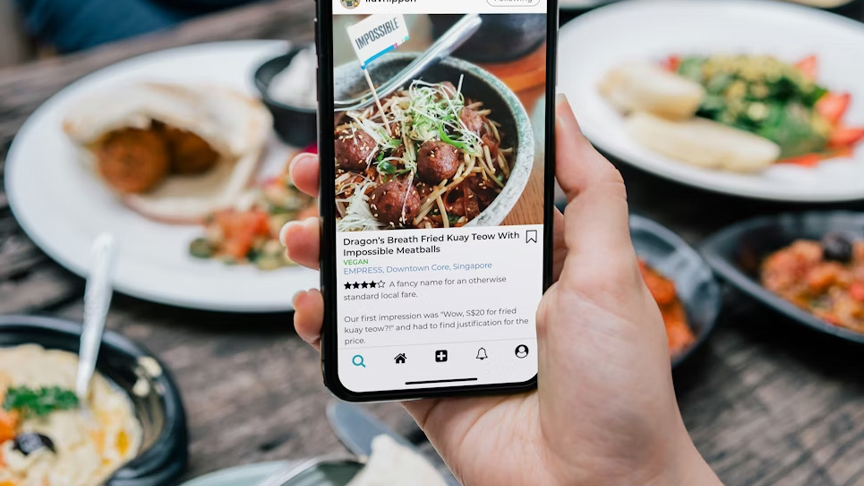
A study of nearly 200,000 Amazon reviews shows that the usefulness of online product reviews depends not only on what is said, but on how the information is structured.

The researchers, from the Universities of Cambridge and Queensland, studied Amazon reviews for products ranging from clothing to food to electronics. They found that how the information is organised matters as much as what is said, and that different review structures are more or less helpful, depending on how highly the reviewer has rated the product.

Their results, published in the journal Scientific Reports, could help companies and third-party review platforms design their review pages to prompt the sort of reviews that will be most helpful to potential customers.

For example, a reviewer assessing a laptop might praise its performance and design while criticising its battery life, so how should such information be structured to be most useful to the reader? Should the review begin with criticism and end on a positive note, or start positively before turning to drawbacks?

“Any target of evaluation typically has both positive and negative aspects, which makes crafting evaluative messages challenging,” said co-author Dr Yeun Joon Kim from Cambridge Judge Business School. “The key question is how to structure these elements within a single message. For example, one might present criticism upfront and then move to praise, or instead integrate negative points within an otherwise positive evaluation. Yet research has paid little attention to this structural dimension.

“We wanted to understand whether certain structures are consistently more effective, or whether their effectiveness depends on the performance of the target being evaluated.”

The study was based on 195,675 reviews of 5,487 distinct products, and assessed performance and related factors, and a helpfulness score as measured by reader votes.

The researchers identified nine possible structures of online reviews ranging from Type A reviews that start positive and become more positive as they go along, to Type I reviews that start negatively and become even more negative – with lots of variance in between.

For highly-rated products, reviews that grow increasingly positive are most helpful to readers, while those that turn negative are least helpful. For average-rated products, progressively negative trajectories enhance helpfulness, whereas reviews that start negative and grow positive are least effective. For low-rated products, reviews are judged most helpful when they open constructively before introducing criticism.

“The results are nuanced but very clear,” said co-author Dr Luna Luan from the University of Queensland, who carried out the research while earning her PhD at Cambridge Judge Business School. “Looking at the overall sentiment of reviews does not fully translate into message effectiveness. It is the broader structure of sentiment – how positivity and negativity evolve throughout the review – that shapes how readers interpret online reviews.”

“Our findings have practical implications for how platforms and companies can design review pages in order to elicit the sort of reviews that will be most helpful to readers based on how highly products are rated,” said Kim. “For example, instead of simply asking ‘Write your review here’, the online review form could instead include micro-prompts that guide how reviewers structure feedback in a way recipients find most helpful.”

The researchers found the most commonly used review styles are not necessarily the most helpful to readers. In particular, for average- and low-rated products, the structures that reviewers tend to adopt often differ from those that readers find most useful.

This mismatch likely reflects different underlying motivations. Reviewers are not always writing to maximise usefulness for others, but may instead be expressing their own experiences, frustrations or emotions – especially when evaluating products of moderate or poor quality. As a result, review writing often serves both as information sharing and as a form of self-expression. This helps explain why widely used review styles do not always align with what readers perceive as most informative or helpful.

Continue Reading

Strategies

Online marketers, take note: Online viewers prefer livestreams to recordings

Watching an online performance in real time boosts several aspects of the viewing experience.

Published

on

In an era when most TikTok videos are prerecorded, can a band with a new single create a tighter bond with fans by debuting via livestream instead? Can a business do the same when promoting a new product?

New research from the McCombs School of Business at The University of Texas at Austin suggests they could.

Since the pandemic, the livestreaming industry has been booming. The global market is expected to reach $345 billion by 2030, up from $100 billion in 2024. Nearly 30% of internet users watch livestreams at least once a week on social media.

Adrian Ward, associate professor of marketing, is one of them. A few years ago, he was viewing a livestream of a town hall meeting and found himself gripped by a speaker’s comments, feeling as if he were actually in the room. On reflection, he suspected it was the liveness of the event, as much as the speaker, that kept him glued to the screen.

“As we spend more of our time online and on social media, it’s worth asking how we can feel as complete and connected as possible in these spaces,” Ward says.

Live and Let Stream

With Alixandra Barasch of the University of Colorado Boulder and Nofar Duani of the University of Southern California, Ward began to investigate what he calls the “mere liveness effect”: the idea that simply knowing an event is streaming in real time makes a viewer feel more connected to the performer.

The researchers ran five experiments with 3,500 total participants. By manipulating various factors, they compared how, when, and why viewers reacted to watching livestreams versus prerecorded videos online.

In one experiment, participants watched live or recorded videos of their choosing on the platform Twitch. In another, they viewed a performance by the R&B cover band Sunny and the Black Pack, either live on YouTube Live or its recording the next day on YouTube.

In a third, the researchers created their own streaming platform to show participants identical videos, manipulating whether the content appeared to be live or prerecorded.

The experiments provide evidence that watching an online performance in real time boosts several aspects of the viewing experience:

  • Connection. Viewers in one experiment felt 7 percentage points more connected to the performers in the live video. Another experiment showed the effect was even stronger when viewers believed no one else was watching.
  • Enjoyment. In another experiment, viewers enjoyed the live video 5 percentage points more than the prerecorded one.
  • Engagement. Real-time streams carried a “liveness lift.” Viewers chose to continue watching longer, and they were more willing to follow and subscribe to the live streamer’s channels.

A common factor underlying those effects was a heightened sense of presence, Ward says. “When we watch something live, we are psychologically transported there.

“It’s not that there’s actually something different about the video itself. It’s that we know that it’s live right now, and that breaks down barriers between our world and the world on the other side of the screen.”

Lessons for Liveness

One quality weakened the liveness effect: not being able to see a performer’s face. When viewers saw only a musician’s hands, they felt less connected, even though they were watching the same performance.

The findings have implications for marketers, platform developers, and content creators, Ward says. In an age when people increasingly meet their social needs online, going live can benefit streamers by motivating audience engagement.

As a follow-up, he’s working with a graduate student to study whether the liveness effect translates into greater brand trust or sales.

“From influencers to businesses, it’s about the experience of real people seeing other real people live and in the moment,” Ward says. “It makes you feel like you’re sharing something.”

The Liveness Lift: Viewing Live Streams Creates Connection and Enhances Engagement in Amateur Music Performances” is published in The Journal of Marketing.

Continue Reading
Advertisement
Advertisement

Like us on Facebook

Trending