Connect with us

Strategies

Workplace study during pandemic finds managers should talk less, listen more

For communications professionals, remote work made it harder for them to build trusting new relationships. They, like others, felt isolated, missing critical conversations and small talk.

Published

on

Photoo by Vana Ash from Unsplash.com

Workplace communication often took a back seat this past year, as employees and employers rushed to work remotely, struggled with technology barriers and adjusted to physical distancing. But the pandemic has resulted in valuable lessons for communicating on the job, according to a Baylor University study.

During the onset of COVID-19 — along with accompanying layoffs and a recession — “there likely has never been a moment with such demand for ethical listening to employees,” said lead author Marlene S. Neill, Ph.D., associate professor of journalism, public relations and new media at Baylor.

“Ethical listening” was defined by one communication manager as “listening with an open mind and being able to hear the good, the bad and the ugly. Strategic listening is then taking the good and the bad and the ugly and knowing how to use the information.”

For the study, published in the Journal of Communication Management, researchers interviewed 30 communication professionals in the District of Columbia and 13 states in the USA: Arkansas, California, Delaware, Massachusetts, New Hampshire, New York, North Dakota, Ohio, Oklahoma, Pennsylvania, Texas, Virginia and Washington. Interviewees represented technology, financial and legal services, food and beverage, hospitality, energy, health care, trade associations, transportation, higher education and consultants.

The professionals interviewed stressed the importance of protecting confidentiality so employees feel comfortable giving feedback and do not fear retribution.

When COVID-19 hit and workers often no longer shared physical quarters, the use of Zoom soared, whether for large group meetings or one-on-one sessions, researchers noted. And while senior managers valued communication, it became less of a priority as companies made such quick changes as mandated quarantines.

For communications professionals, remote work made it harder for them to build trusting new relationships. They, like others, felt isolated, missing critical conversations and small talk.

“We heard that the pandemic posed challenges in internal communication due to the alienation many employees experienced, and it prompted us to reevaluate the moral responsibility communications holds for keeping employees feeling connected to their teams,” said co-researcher Shannon A. Bowen, Ph.D., professor of journalism and mass communications at the University of South Carolina.

The study shed light on companies’ challenges, how they strove to meet them and how they might use those strategies in the future.

For example, a communication manager for a trade association of the hospitality industry said that its members also are primary stakeholders in their companies.

“There were stakeholders who were saying, ‘I’m going to have to close my doors. Please do something.’ And there’s only so much we can do. It called for a different type of empathetic listening. This is these people’s livelihood. In hospitality, that’s like any business owner, that’s their baby. But it’s not just their baby. It’s a baby that generates income for the employees they deeply care about. It’s not just that it impacts them; it impacts their employees, which is a double cut to the heart.”

Meanwhile, a communication manager in health care encouraged senior leaders to schedule 30-minute “walk-around” sessions — whether masked and in person or via technology.

“Trust has to be built with actions and follow-through, not just words,” Bowen said.

For all the organizations studied, “the desire and follow-through to ethically listen to employees appeared to be a challenge,” Neill said.

Most participants said the ratio of management messaging to employees compared to feedback was lopsided, with far more talking than listening.

“We cannot promise we are going to fix everything,” said a communication manager in the financial services industry. “But we have the mantra if you are asking for feedback, it is critical that you close the loop and say that.”

Communications managers often have limited staff to analyze feedback. They also contend with a lack of communication between departments, especially in larger organizations.

To solve those problems, some communications professionals suggested having a team member to sit in on department meetings and serve as a liaison. One professional in a law firm said she makes it a point to invite the less vocal members to share their thoughts, while another uses on-on-one meetings for them.

“They open up a lot more when it’s just one on one,” she said. “In groups, large groups, they do not speak as freely, because there’s a hierarchy. If the older, more senior people are not saying anything, then the younger less seasoned attorneys more than likely will not say anything.”

Some internal communicators also said that during the pandemic, they saw a need for shorter, more focused meetings, in part to cut down on stress. And one consultant said that more visual communications, such as videos and video conferencing, seemed to help employees feel that they are cared for.

“I’m making sure that I have my eyes trained on the screen on the facial expressions,” said a communication manager for a trade association. “Part of active listening is also looking for visual cues of the reactions of your colleagues.”

Neill said the researchers were encouraged by the heightened level of empathy for the impact of organizational decisions on employees’ lives.

“We recommend that senior leadership and communication professionals seek ways to continue to improve moral sensitivity well after the global pandemic has receded, which can lead to more ethical decision-making,” she said.

BizWiz

Focus on service: Lessons from Caltex station employees

All work—regardless of the profession or industry—serves a deeper purpose in society for as long as it is done with integrity and passion.

Published

on

All work—regardless of the profession or industry—serves a deeper purpose in society for as long as it is done with integrity and passion.

Caltex Philippines honors the honest work of its station customer service representatives nationwide, who have committed each day to serving Filipino motorists with precision and care.

Alkindar J. Amil

For Alkindar J. Amil, his job at a Caltex station in Zamboanga City is more than just a routine –but a commitment to continue his father’s legacy of humble service.

Back in 2018, Alkindar began working as a customer service representative (CSR) after his contract at a government agency had expired. This career shift allowed him to walk in his late father’s footsteps, a pedicab driver who had served their community for 20 years. “Nagturo siya sa akin na walang maliit na trabaho, basta marangal. (He taught me that no job is too small, as long as it is honorable),” he reflected.

As the station’s supervisor, Alkindar wakes up at the crack of dawn to head to the station. There, he endures the intense heat and long hours on foot, all while serving motorists with a genuine smile. When asked how he gets through these challenges, he answered that he gets by with the help of his late father’s positive mindset.

Luckily, these efforts do not go unnoticed, as Alkindar has had customers thank him for his selfless service. In fact, he had recently gone viral for explaining fuel price fluctuations to motorists, with many thanking him for educating viewers on the complex issue. “May mga customer na nagsabi sa akin, ‘Hindi basehan ang diploma, kundi diskarte sa buhay ang mahalaga para matulungan mo ang iyong pamilya.’ Simpleng salita lang ito pero tagos sa puso at sobrang makabuluhan. (Some customers have told me, ‘A diploma isn’t the basis for success, as what truly matters is your resourcefulness to help your family.’ It’s a simple statement, but it really touches the heart.)”

Now in his eighth year at Caltex, Alkindar wants to pass down the values of humility and perseverance to his own child –just as his own father taught him. “Nais kong maituro sa aking anak na huwag maging mapagmataas. Dapat laging mapagpasensiya at dapat pantay-pantay ang tingin mo sa iyong kapwa. (I want to teach my child not to be arrogant. They should always be patient and treat everyone as their equal.)”

Henry John T. Abonero

Despite working in Caltex for less than a year, CSR Henry John T. Abonero has used his experience to serve motorists south of the Metro. He began working as a trainee at Caltex Magallanes in February 2026 before getting absorbed as an employee two weeks later.

Henry’s purpose of working at Caltex is simple: he wants to serve motorists by assisting them in refueling and providing reliable customer service. However, he admits the job can be quite taxing, especially when dealing with customers in a rush.

When Henry must deal with an impatient motorist, he always takes a deep breath and keeps his cool. That way, he can calmly and efficiently help his customers find a solution to their needs. “Sa trabahong ito, kailangang marunong kang makipag-usap nang maayos at maging mahinahon sa salita. (In this kind of work, it’s important to communicate clearly and be careful with your words.)”

It is through simple acts like this that Henry finds pride in wearing his Caltex uniform. After all, his uniform acts like a badge of honor for his daily service. “Araw-araw kong pinagmamalaki ang aking uniporme dahil simbolo ito ng aming tapat at totoong serbisyo. Ang importante lang dito ay ginagawa mo nang tama ang iyong trabaho nang walang naaabalang ibang tao. (I take pride in my uniform every day because it symbolizes our honest and genuine service. What matters most is that you do your job properly without inconveniencing others.)”

Joseph Nacion

What began for Joseph as a job to support his family soon became an opportunity to exemplify Caltex’s brand of customer service. As one of the CSRs in Caltex’s flagship station at Bonifacio Global City, Joseph always goes the extra mile in his work—from meticulously checking the accuracy of each tank refill, cleaning the station’s premises, to producing accurate sales reports at the end of the day.

Despite the heavy workload, Joseph quickly learned to be an all-rounder in his job by closely following standard procedures, staying focused during his shift, and being open to his supervisor’s feedback. His efforts have paid off, with some customers recognizing his keen eye for detail.

For instance, Joseph recalled a time when a customer was rushing to refuel their car. However, he noticed that their requested amount did not match the amount indicated on their vehicle’s sticker and patiently explained why this could cause misfueling.

He recalled, “Noong nangyari ito, kinausap ko siya nang maayos at ipinaliwanag ang risk ng misfueling. Medyo naiinip siya noong una, pero kalaunan na-realize niya ang mali at nagpasalamat pa. (During this moment, I patiently explained to them about how this could cause misfueling. Although they were initially a bit impatient, they soon realized why I pushed back on their request and even thanked me for it.)”

In the end, Joseph tells motorists that he, along with his fellow CSRs, will always be there to help them drive safer and longer journeys. He added, “Hinihikayat ko rin po silang maging patient at understanding lalo na kapag busy hours, dahil ginagawa po namin ang best namin para mas mapagsilbihan sila. (I would also like to request that customers remain patient and understanding with us, especially during our peak hours, as we are doing our best to serve them in any way we can.)”

Alkindar, Henry, and Joseph are among the thousands of Filipino CSRs who remained loyal to Caltex’s mission of bringing high-quality fuels and world-class services to motorists nationwide.

Chevron Philippines Inc. General Manager and Country Chairman Pongtorn “Bon” Tangmanuswong said, “We are incredibly grateful to Alkindar and Henry and all our customer service representatives who have made refueling a more valuable experience for our customers. Thanks to them, we have more people who exemplify Caltex’s values and mission to bring quality, affordable, clean energy to areas where it is needed the most.”

He added, “More importantly, we will continue empowering our people by recognizing their wins, supporting their efforts to innovate each station’s services, and providing them with much-needed growth opportunities.”

Continue Reading

BizWiz

Empowering the next wave of Filipino freelancers in Pampanga

Published

on

At a time of rising costs and economic uncertainty, freelancing has emerged as a growing source of opportunity. As more Filipinos turn to freelancing as a viable long-term career, many are adopting digital tools like the GCash Virtual US Account to simplify cross-border payments.

Recognizing this, the GCash Freelancer Connect, a series of community events designed to bring freelancers based in different cities in the country, made its way to Pampanga for its first regional leg. Attendees gathered to learn from speakers KD Creatives and Dani Jacobe, who led practical sessions on how to diversify income streams, charge more competitive prices, and build greater financial confidence with the support of tools like GCash. Here are key insights shared during the event:

1. Strong relationships create steady opportunities

With more Filipinos entering the freelancing industry, standing out has become a bigger challenge. For Dani Jacobe, building meaningful connections – and knowing how to communicate value clearly – makes all the difference.

“Your goal is not just to find one client. Your goal is to build a system that helps you keep finding and serving clients,” she shared.

What she has learned over the years is that outreach should go beyond simply introducing one’s services. Freelancers should learn to identify problems, offer clear solutions, and create opportunities for intentional conversations from the very beginning.

“Your skill becomes more valuable when you connect it to a specific business need,” she added.

2. Be confident in your worth

For Kyla Dizon, the journey to becoming “KD Creatives” didn’t happen overnight. Before building her online community around content creation and offering digital guides and advice through her platform, she experienced self-doubt and pressure as a young freelancer. One area where that hit hard was in communicating her value to potential clients.

“The truth is, a lot of freelancers are incredibly talented, but still undercharge because they haven’t fully recognized the value of what they bring to the table,” she explained.

The turning point came when she stopped pricing from a place of fear or being scared that clients would walk away because she’d be too expensive and instead, began pricing from a place of confidence. But that confidence, Kyla noted, came only once she fully embraced her personal brand as a freelancer.

“Now, I approach pricing differently — not based on fear, but on the value and experience I know I can deliver,” she explained. During the Freelancer Connect, she urged attendees to use a pricing matrix, which she has made available online, to accurately determine how much they should charge clients for the services they offer.

3. Receiving payments should not feel complicated

Another common challenge freelancers face is receiving payments, especially from overseas clients, where the process is often inefficient. To address this, GCash has introduced the Virtual US Account, a feature designed to make receiving USD payments easier.

Users can now receive USD transfers directly from US-based clients using their own routing and account numbers, similar to a traditional US bank, within the GCash app. This feature helps freelancers avoid unnecessary deductions, hidden fees, and lengthy transfer processes, while also ensuring competitive forex rates. Users can convert their USD to PHP when it is most favorable for them – they have full control of when they want to withdraw it into their GCash e-wallet.

“We want to ensure that freelancers in the Philippines can receive and manage their money in the most convenient way possible and in a manner that ensures they don’t lose so much of their hard-earned cash. Once in your Virtual US Account, you can access and manage your earnings instantly inside the GCash app – whether that’s converting to PHP, paying bills, buying load, or even growing your wealth through our financial services,” shared Sophia Sison, Product Manager under the International Business Group at GCash.
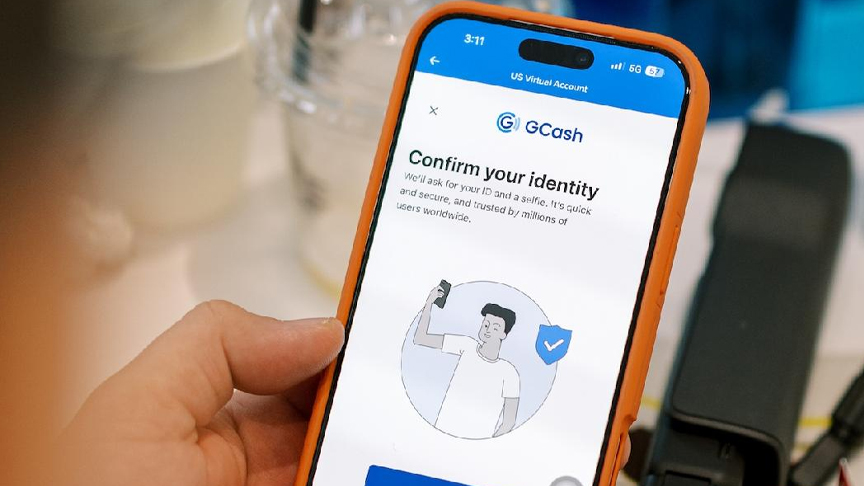
Create your Virtual US Account today

As freelancing continues to grow across the country, GCash hopes initiatives like the Freelancer Connect can help create more spaces where freelancers feel supported — not just financially, but as a community navigating a rapidly changing world of work together.

Creating your Virtual US Account is easy:

  1. Open the GCash app – Tap US Accounts in the Explore the App section
  2. Tap Continue and verify your information
  3. Complete your account creation

Continue Reading

BizWiz

3 Lessons from women who successfully built careers in freelancing

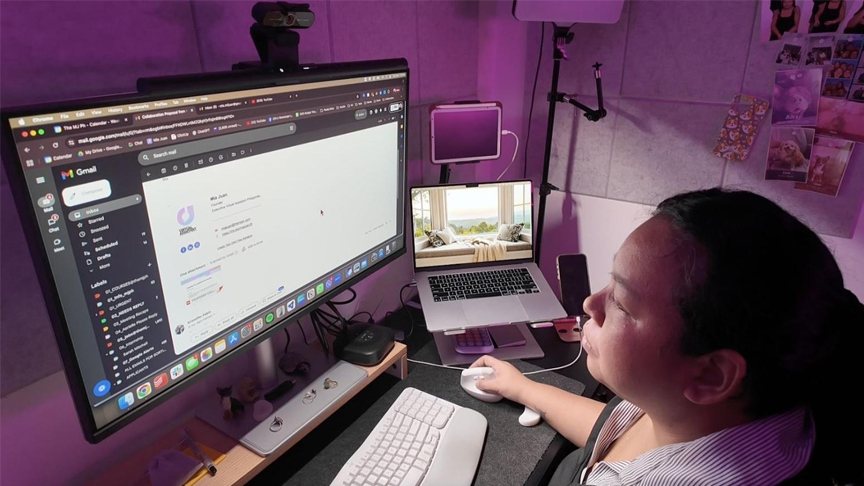
Freelancers face inconsistent income, unpredictable clients, and little guidance on how to navigate it all. For longtime freelancers Mia Juan and Dana Novales, building a career online has meant learning these lessons in real time.
Published

on

 Earning through freelance work has never been more accessible. With a stable internet connection and numerous job platforms, opportunities can come from anywhere – and for many Filipino women, they do. A 2020 study by the Philippine Institute for Development Studies (PIDS) showed that an increasing number of women are engaging in online work because it lets them earn while balancing home responsibilities.

But access doesn’t always mean ease. Freelancers face inconsistent income, unpredictable clients, and little guidance on how to navigate it all. For longtime freelancers Mia Juan and Dana Novales, building a career online has meant learning these lessons in real time. With more women entering the freelancing field, they share three lessons they’ve learned:

1. Build real relationships, not just transactions.

Freelancing can make work feel transactional. You get assigned a task, submit the work, get paid, and then move on. But the most successful freelancers don’t treat work that way. In such an unpredictable field, being remembered matters.

According to Dana, “Real relationships are built on service, not strategy.” Every “Well done!” or “Good work!” can open doors to new opportunities, so don’t waste them. Instead, take an extra step to establish a real relationship with your clients: check in, understand what they need, and find ways to make the process easy for them.

2. Set up systems that work for you.

Handling different clients with different ways of working can get overwhelming fast. For Mia, having systems for your workflow simply makes this easier and helps manage client expectations.

That can be as simple as being clear about what services you offer. “It’s basically saying this is what I can offer and setting a clear boundary of what you do not do. That way, there is no miscommunication of responsibilities, which happens commonly in freelancing work,” she shares. It also helps to have a proper onboarding flow – having contracts, timelines, and payment terms in place before you start, not while you’re already in the middle of the work.

3. Find solutions that work for your peace of mind.

Some challenges only appear once you’re in the midst of them, and for many freelancers, realizing that foreign payments come with fees, delays, and uncertainty is when freelancing starts to feel stressful.

“Earning in USD sounds exciting–until fees, forex, and delays eat into your income,” Dana points out. She shares that this is something she wishes she had known earlier in her freelancing career. “That’s why there is importance in having the right structures in place, especially if you’re a mom who has to think of managing your home, paying your bills, among many other responsibilities.”

That’s why Mia and Dana now use the new GCash Virtual US Account, a feature within the GCash app that lets freelancers receive USD payments from US clients more directly without the usual surcharges. After creating an account, you get your own ACH and Wire Routing Number, which you can give to your clients for direct deposits of your pay.

You can also choose to convert your USD to PHP when you want, depending on live forex rates, which you can see on the platform – giving you control over how much you actually receive. Once it’s in your wallet, you can use it to send money, pay bills, or add to your savings.

Creating a GCash Virtual US Account is easy in just a few steps.

  1. Open the GCash app. Tap US Accounts in the Explore the App section
  2. Tap Continue and verify your information
  3. Complete your account creation

Continue Reading
Advertisement
Advertisement

Like us on Facebook

Trending