Connect with us

Strategies

10 Security misperceptions that need to be addressed immediately

The list is based on the experience of Sophos Rapid Response, a team of expert incident responders who deliver fast assistance in identifying and neutralizing active threats such as malware infections, compromised data, or unauthorized access, among others.

Published

on

Photo by Mimi Thian from Unsplash.com

With June marking National ICT Month in the Philippines and the Department of Information and Communications Technology (DICT) adopting the CHIP (Connect, Harness, Innovate, and Protect) framework for digital transformation and underscoring the value of protection,  Sophos compiled   a guide for Filipino businesses so they can avoid  today’s most commonly held security misperceptions.

The list is based on the experience of Sophos Rapid Response, a team of expert incident responders who deliver fast assistance in identifying and neutralizing active threats such as malware infections, compromised data, or unauthorized access, among others.

Misperception 1: We are not a target. We are too small or have no assets of value to an adversary 

Sophos Advice: Many cyberattack victims assume they are too small, in a sector of no interest, or lacking the kind of lucrative assets that would attract an adversary. The truth is, it doesn’t matter. If you have the processing power and a digital presence, you are a target. Despite the media headlines, most attacks are not perpetrated by advanced nation-state attackers. They are launched by opportunists looking for easy prey and low-hanging fruit, such as organizations with security gaps, errors, or misconfigurations that cybercriminals can easily exploit. 

Misperception 2: We don’t need advanced security technologies installed everywhere 

Sophos Advice: Some IT teams still believe that endpoint security software is enough to stop all threats or don’t need security for their servers. Attackers take full advantage of such assumptions. Any mistakes in configuration, patching, or protection make servers a primary target, not a secondary one, as might have been the case in the past.

Based on the incidents that Sophos Rapid Response has investigated, servers are now the number one target for attacks. Attackers can easily find a direct route using stolen access credentials.  Suppose your organization relies only on basic security without more advanced and integrated tools such as behavioral and AI-based detection and a 24/7 human-led security operations center. In that case, intruders will likely find their way past your defenses.

Misperception 3: We have robust security policies in place 

Sophos Advice:  Having security policies for applications and users is critical. However, they need  to be checked and updated constantly as new features and functionality are added to devices connected to the network. Verify and test policies using techniques such as penetration testing, tabletop exercises, and trial runs of disaster recovery plans. 

Misperception 4: Remote Desktop Protocol (RDP) servers can be protected from attackers by changing the ports they are on and introducing multi-factor authentication (MFA) 

Sophos Advice: The standard port used for RDP services is 3389, so most attackers will scan this port to find open remote access servers. However, the scanning will identify any available services, so changing ports offers little or no protection on its own. 

Further, while introducing multi-factor authentication is essential, it won’t enhance security unless all employees and devices enforce it. RDP activity should occur within the protective boundary of a virtual private network (VPN). Still, even that cannot fully protect an organization if the attackers already have a foothold in a network. Ideally, unless its use is essential, IT security should limit or disable RDP internally and externally.

Misperception 5: Blocking IP addresses from high-risk regions such as Russia, China, and North Korea protects us against attacks from those geographies 

Sophos Advice:  Blocking IPs from specific regions is unlikely to do any harm, but it could give a false sense of security if it’s the sole means of protection. Adversaries host their malicious infrastructure in many countries, with hotspots in the US, the Netherlands, and the rest of Europe. 

Misperception 6: Our backups provide immunity from the impact of ransomware 

Sophos Advice: Keeping up-to-date backups of documents is business-critical. However, if your backups are connected to the network, then they are within reach of attackers and vulnerable to being encrypted, deleted, or disabled in a ransomware attack. 

Storing backups in the cloud also needs to be done with care. The standard formula for secure backups to restore data and systems after a ransomware attack is 3:2:1. Three copies of everything, using two different systems, one of which is offline. 

Having offline backups in place won’t protect your information from extortion-based ransomware attacks, where the criminals steal and threaten to publish your data instead of or as well as encrypting it. 

Misperception 7: Our employees understand security 

Sophos Advice: According to the State of Ransomware 2021, 22% of organizations believe they’ll be hit by ransomware in the next 12 months because it’s hard to stop end users from compromising security. 

Social engineering tactics like phishing emails are becoming harder to spot. Messages are often hand-crafted, accurately written, persuasive, and carefully targeted. Your employees need to know how to spot suspicious messages and what to do when they receive one. Who do they notify so that other employees can be alerted? 

Misperception 8: Incident response teams can recover my data after a ransomware attack

Sophos Advice: This is very unlikely. Attackers today make far fewer mistakes, and the encryption process has improved, so relying on responders to find a loophole that can undo the damage is extremely rare. Automatic backups like Windows Volume Shadow Copies are also deleted by most modern ransomware and overwriting the original data stored on disk, making recovery impossible other than paying the ransom. 

Misperception 9: Paying the ransom will get our data back after a ransomware attack 

Sophos Advice: According to the State of Ransomware survey 2021, an organization that pays the ransom recovers on average around two-thirds (65%) of its data.  A mere 8% got back all of their data, and 29% recovered less than half. Paying the ransom even when it seems easier and covered by your cyber-insurance policy is therefore not a straightforward solution to getting your data back. 

Misperception 10: The release of ransomware is the whole attack – if we survive that we’re OK 

Sophos Advice: Unfortunately, this is rarely the case. Ransomware is just the point where the attackers want you to realize they are there and what they have done. 

The adversaries are likely to have been in your network for days if not weeks before releasing the ransomware, exploring, disabling, or deleting backups, finding the machines with high-value information or applications to target for encryption, removing information, and installing additional payloads such as backdoors. Maintaining a presence in the victim’s networks allows attackers to launch a second attack if they want to. 

BizNews

Structure of online reviews shapes their helpfulness

Reviews that grow increasingly positive are most helpful to readers, while those that turn negative are least helpful. For average-rated products, progressively negative trajectories enhance helpfulness, whereas reviews that start negative and grow positive are least effective.

Published

on

A study of nearly 200,000 Amazon reviews shows that the usefulness of online product reviews depends not only on what is said, but on how the information is structured.

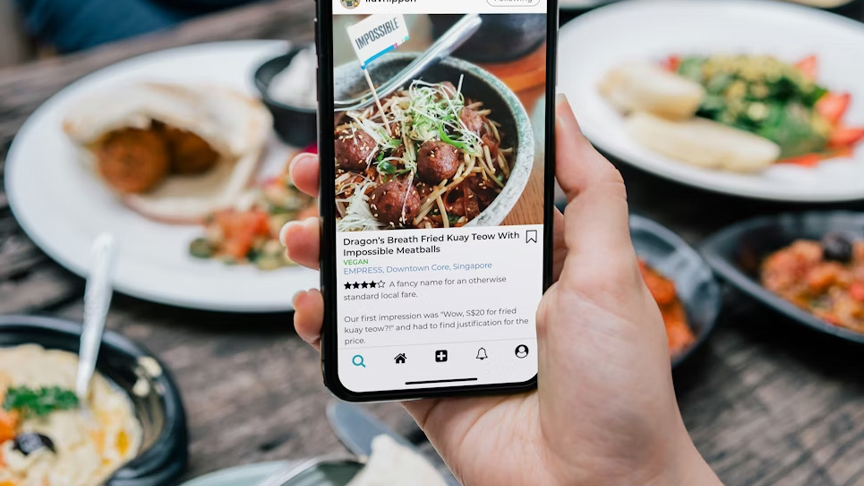
The researchers, from the Universities of Cambridge and Queensland, studied Amazon reviews for products ranging from clothing to food to electronics. They found that how the information is organised matters as much as what is said, and that different review structures are more or less helpful, depending on how highly the reviewer has rated the product.

Their results, published in the journal Scientific Reports, could help companies and third-party review platforms design their review pages to prompt the sort of reviews that will be most helpful to potential customers.

For example, a reviewer assessing a laptop might praise its performance and design while criticising its battery life, so how should such information be structured to be most useful to the reader? Should the review begin with criticism and end on a positive note, or start positively before turning to drawbacks?

“Any target of evaluation typically has both positive and negative aspects, which makes crafting evaluative messages challenging,” said co-author Dr Yeun Joon Kim from Cambridge Judge Business School. “The key question is how to structure these elements within a single message. For example, one might present criticism upfront and then move to praise, or instead integrate negative points within an otherwise positive evaluation. Yet research has paid little attention to this structural dimension.

“We wanted to understand whether certain structures are consistently more effective, or whether their effectiveness depends on the performance of the target being evaluated.”

The study was based on 195,675 reviews of 5,487 distinct products, and assessed performance and related factors, and a helpfulness score as measured by reader votes.

The researchers identified nine possible structures of online reviews ranging from Type A reviews that start positive and become more positive as they go along, to Type I reviews that start negatively and become even more negative – with lots of variance in between.

For highly-rated products, reviews that grow increasingly positive are most helpful to readers, while those that turn negative are least helpful. For average-rated products, progressively negative trajectories enhance helpfulness, whereas reviews that start negative and grow positive are least effective. For low-rated products, reviews are judged most helpful when they open constructively before introducing criticism.

“The results are nuanced but very clear,” said co-author Dr Luna Luan from the University of Queensland, who carried out the research while earning her PhD at Cambridge Judge Business School. “Looking at the overall sentiment of reviews does not fully translate into message effectiveness. It is the broader structure of sentiment – how positivity and negativity evolve throughout the review – that shapes how readers interpret online reviews.”

“Our findings have practical implications for how platforms and companies can design review pages in order to elicit the sort of reviews that will be most helpful to readers based on how highly products are rated,” said Kim. “For example, instead of simply asking ‘Write your review here’, the online review form could instead include micro-prompts that guide how reviewers structure feedback in a way recipients find most helpful.”

The researchers found the most commonly used review styles are not necessarily the most helpful to readers. In particular, for average- and low-rated products, the structures that reviewers tend to adopt often differ from those that readers find most useful.

This mismatch likely reflects different underlying motivations. Reviewers are not always writing to maximise usefulness for others, but may instead be expressing their own experiences, frustrations or emotions – especially when evaluating products of moderate or poor quality. As a result, review writing often serves both as information sharing and as a form of self-expression. This helps explain why widely used review styles do not always align with what readers perceive as most informative or helpful.

Continue Reading

Strategies

Online marketers, take note: Online viewers prefer livestreams to recordings

Watching an online performance in real time boosts several aspects of the viewing experience.

Published

on

In an era when most TikTok videos are prerecorded, can a band with a new single create a tighter bond with fans by debuting via livestream instead? Can a business do the same when promoting a new product?

New research from the McCombs School of Business at The University of Texas at Austin suggests they could.

Since the pandemic, the livestreaming industry has been booming. The global market is expected to reach $345 billion by 2030, up from $100 billion in 2024. Nearly 30% of internet users watch livestreams at least once a week on social media.

Adrian Ward, associate professor of marketing, is one of them. A few years ago, he was viewing a livestream of a town hall meeting and found himself gripped by a speaker’s comments, feeling as if he were actually in the room. On reflection, he suspected it was the liveness of the event, as much as the speaker, that kept him glued to the screen.

“As we spend more of our time online and on social media, it’s worth asking how we can feel as complete and connected as possible in these spaces,” Ward says.

Live and Let Stream

With Alixandra Barasch of the University of Colorado Boulder and Nofar Duani of the University of Southern California, Ward began to investigate what he calls the “mere liveness effect”: the idea that simply knowing an event is streaming in real time makes a viewer feel more connected to the performer.

The researchers ran five experiments with 3,500 total participants. By manipulating various factors, they compared how, when, and why viewers reacted to watching livestreams versus prerecorded videos online.

In one experiment, participants watched live or recorded videos of their choosing on the platform Twitch. In another, they viewed a performance by the R&B cover band Sunny and the Black Pack, either live on YouTube Live or its recording the next day on YouTube.

In a third, the researchers created their own streaming platform to show participants identical videos, manipulating whether the content appeared to be live or prerecorded.

The experiments provide evidence that watching an online performance in real time boosts several aspects of the viewing experience:

  • Connection. Viewers in one experiment felt 7 percentage points more connected to the performers in the live video. Another experiment showed the effect was even stronger when viewers believed no one else was watching.
  • Enjoyment. In another experiment, viewers enjoyed the live video 5 percentage points more than the prerecorded one.
  • Engagement. Real-time streams carried a “liveness lift.” Viewers chose to continue watching longer, and they were more willing to follow and subscribe to the live streamer’s channels.

A common factor underlying those effects was a heightened sense of presence, Ward says. “When we watch something live, we are psychologically transported there.

“It’s not that there’s actually something different about the video itself. It’s that we know that it’s live right now, and that breaks down barriers between our world and the world on the other side of the screen.”

Lessons for Liveness

One quality weakened the liveness effect: not being able to see a performer’s face. When viewers saw only a musician’s hands, they felt less connected, even though they were watching the same performance.

The findings have implications for marketers, platform developers, and content creators, Ward says. In an age when people increasingly meet their social needs online, going live can benefit streamers by motivating audience engagement.

As a follow-up, he’s working with a graduate student to study whether the liveness effect translates into greater brand trust or sales.

“From influencers to businesses, it’s about the experience of real people seeing other real people live and in the moment,” Ward says. “It makes you feel like you’re sharing something.”

The Liveness Lift: Viewing Live Streams Creates Connection and Enhances Engagement in Amateur Music Performances” is published in The Journal of Marketing.

Continue Reading

Strategies

Renting out your place? Human connection key to a successful holiday rental

Warmth, friendliness and a sense of belonging, or the “homely” side of the experience, strengthen guest loyalty, making them more likely to return to the same host. However, these feelings alone didn’t necessarily make guests more likely to recommend the property to others.

Published

on

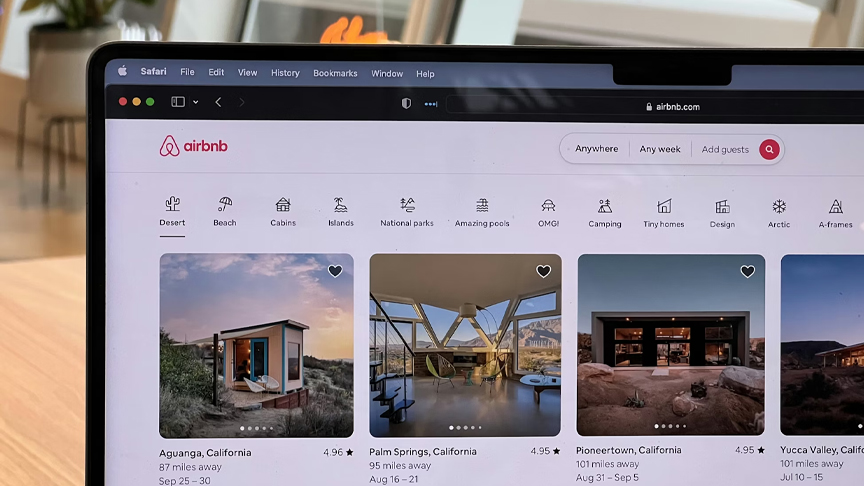
Striking up a connection with the property host is the factor that drives repeat bookings on holiday accommodation platforms such as Airbnb.

This is according to a new study, carried out by universities in the UK and Iran and published in the February 2026 edition of International Journal of Hospitality Management, that suggested that quality and value of accommodation also play a part in guest satisfaction, but personal connection is key to people deciding to stay again.

The research analyzed hundreds of online guest reviews and conducted in-depth interviews to understand what shapes guests’ evaluations of their stays in what is known as “peer-to-peer accommodation”.

Conducted over six years, the study shows that guests assess their stays using emotional cues such as warmth, atmosphere, and aesthetics; and cognitive cues such as cleanliness, safety, and convenience.

The study found that warmth, friendliness and a sense of belonging, or the “homely” side of the experience, strengthen guest loyalty, making them more likely to return to the same host. However, these feelings alone didn’t necessarily make guests more likely to recommend the property to others.

In contrast, affective and intellectual experiences – the enjoyment and perceived value of the stay – were stronger predictors of recommendations and positive reviews.

The research also examined how the quality of booking websites, such as Airbnb’s platform, influences guest behaviour. Although the website didn’t change how guests felt about the property itself, a well-designed and trustworthy site directly boosted guest loyalty and word-of-mouth.

Co-author Nektarios Tzempelikos, Professor of Marketing at Anglia Ruskin University (ARU), said: “Guests think carefully about both emotional and practical aspects before booking. Hosts who focus only on one side – either charm or functionality – may be missing the bigger picture.

“Platforms like Airbnb thrive when they’re designed for trust. Guests return to sites that are clear, reliable and easy to use. But it’s not just about tech, it’s about people. The most memorable stays come from warmth, authenticity and genuine local connection.

“By encouraging friendly, personal communication between hosts and guests, and balancing smart technology with a human touch, platforms can create experiences that feel less transactional and more meaningful.”

The study was carried out by researchers from Brunel University, University of Bradford, Newcastle University, Anglia Ruskin University and the University of Tehran.

Continue Reading
Advertisement
Advertisement

Like us on Facebook

Trending