Connect with us

Ethical Biz

Smart holds online workshop for Digital Farmers Program trainors

DFP links technology-savvy youths with small-holder farmers so that the latter could tap the digital space, and consequently, establish a channel for exchanging ideas—from using modern agricultural technologies, to discovering time-tested farming traditions.

Published

on

Photo by bongkarn thanyakij from Unsplash.com

The pandemic has stopped general farming in its tracks, with 15% of crop-raising and fishing activities in the countryside suspended in March. The movement of produce from the provinces was thus affected, curtailing food supply in Metro Manila.
DFP Training of Trainors 01
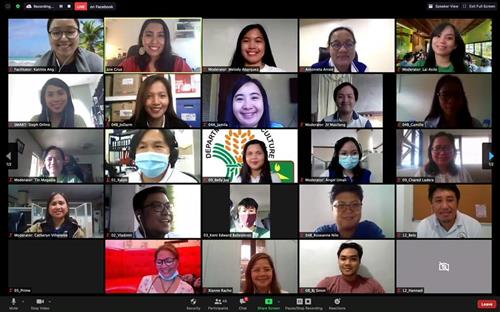
Information officers and media production specialists from the Information Services Section of 15 Regional DA-ATI Training Centers nationwide joined the web event. 

While the government granted subsidies to farmers, the private sector teamed up with farmers’ groups to alleviate the problem by bringing produce to the cities during the enhanced community quarantine. Facebook and Instagram served as the marketplace.

The farmers’ knowledge of technology and digital tools served them in good stead. To help boost productivity and marketability, the Department of Agriculture-Agricultural Training Institute (DA-ATI) last year launched the Digital Farmers Program (DFP) in partnership with Smart Communications, Inc. (Smart).

The program teaches small-scale farmers to use digital tools through courses like the use of smartphones, e-commerce and online payment systems.

While the Department of Agriculture already developed many online resources, including mobile apps, farmers weren’t using the new technology. Now, more than ever, farmers can benefit from learning how to be more tech-savvy. The average age of a farmer in the Philippines is 57 years.

“With uncertainties brought on by COVID-19, we all have to adapt. The Digital Farmers Program is a training ground for the new style of doing things. It is digital and inclusive and geared toward the growth of the agriculture sector,” said Smart Public Affairs Group Head Ramon Isberto.

DFP links technology-savvy youths with small-holder farmers so that the latter could tap the digital space, and consequently, establish a channel for exchanging ideas—from using modern agricultural technologies, to discovering time-tested farming traditions.

To continue the roll-out of DFP lessons, the DA-ATI and Smart recently completed the DFP 101 Master Trainers’ Bootcamp, the first virtual interactive “Training for Trainors” workshop for DFP. Information officers and media production specialists from the Information Services Section of 15 Regional ATI Training Centers nationwide joined the web event. 

The program teaches small-scale farmers to use digital tools through courses like the use of smartphones, e-commerce and online payment systems.

DFP training of trainors 2
Bethel John Sinon, a media production specialist from DA-ATI Regional Training Center VIII, said the virtual workshop made him ready to conduct his own web trainings to help farmers.

Advance phases will include lessons on mobile agriculture and financial services such as third-party farming apps, mobile e-money, and microcredit, entrepreneurship, smart farming, and financial literacy. 

“We are expanding our training capabilities as we do things online more and more,” said DA-ATI Director Alfredo Aton. He thanked Smart for its continued support. Also present at the workshop were DA-ATI Information Services Division Chief Antonieta Arceo and Smart VP for Community Partnerships Darwin Flores.

The workshop was facilitated by trainers from Limitless Lab, a strategic design and innovation company. StartupPH Training also gave pointers on effective online training to sustain participants’ interest. 

The DFP is an advocacy of Smart Communities, which taps Technology for Development to narrow down the digital divide. The program is also aligned with the commitment of Smart’s parent company, PLDT, to support the 17 Sustainable Goals of the United Nations.

For the second half 2020, 28 batches of the DFP 101 trainings will be rolled out starting on August.

For more information, visit www.facebook.com/SmartCommunities.

Ethical Biz

Climate change is reshaping how companies do business

Ccompanies exposed to higher climate change risks are deliberately reducing their reliance on a small number of major customers. Instead, they are spreading sales across a broader customer base as a way of managing risk.

Published

on

Climate change is not only disrupting supply chains and asset values, it is also quietly reshaping companies’ choice of business partners.

New research based on nearly two decades of data from thousands of US-listed firms shows that companies exposed to higher climate change risks are deliberately reducing their reliance on a small number of major customers. Instead, they are spreading sales across a broader customer base as a way of managing risk.

The study, published in Business Strategy and the Environment, finds clear evidence that climate risk is driving this strategic shift, rather than simply coinciding with it. Firms facing greater exposure to extreme weather, climate-related disruption, or regulatory transition risk are less likely to concentrate revenue among a handful of large buyers.

Amplifying shocks

Authors Dr Eric Boahen, Dr Cuong Nguyen and Thi Thuy Trang Nguyen found this behaviour is particularly pronounced among firms with strong corporate social responsibility performance, higher levels of innovation, and heavy investment in physical assets such as plants and infrastructure. These firms appear to recognise that customer concentration can amplify climate shocks.

“What this evidence shows is that climate risk is no longer abstract or future-facing. It is shaping everyday business decisions in the here and now,” said Dr Boahen, Cluster Lead for Accounting, Finance and Economics at the University of East London.

“Boards and executives are not just thinking about emissions or disclosure. They are quietly rethinking who they depend on for revenue. When climate shocks can hit firms and their biggest customers at the same time, relying too heavily on a small number of clients becomes a strategic vulnerability.”

The research draws on real-world behaviour observed across almost 4,800 firms over a 17-year period.

Why it matters

For investors and lenders, the study highlights customer concentration as a potential blind spot in climate risk assessment. Companies with diversified customer bases may be better insulated against earnings volatility, financing stress, and supply-chain disruption.

For boards and regulators, the findings point to customer structure as a governance issue. Persistently high customer concentration in climate-exposed regions may signal weaknesses in risk management.

“Climate resilience is not just about where assets are located or how much carbon a firm emits,” Dr Boahen said. “It is also about how exposed a company is through its commercial relationships. Customer concentration is now a climate issue, whether companies label it that way or not.”

Continue Reading

Ethical Biz

Maxim Cebu drivers extend help to communities affected by natural disaster

Driver-partners of Maxim Cebu extended humanitarian aid to communities affected by the recent natural disaster, delivering water and rice to the damaged area and donating blood at the local hospital.
Published

on

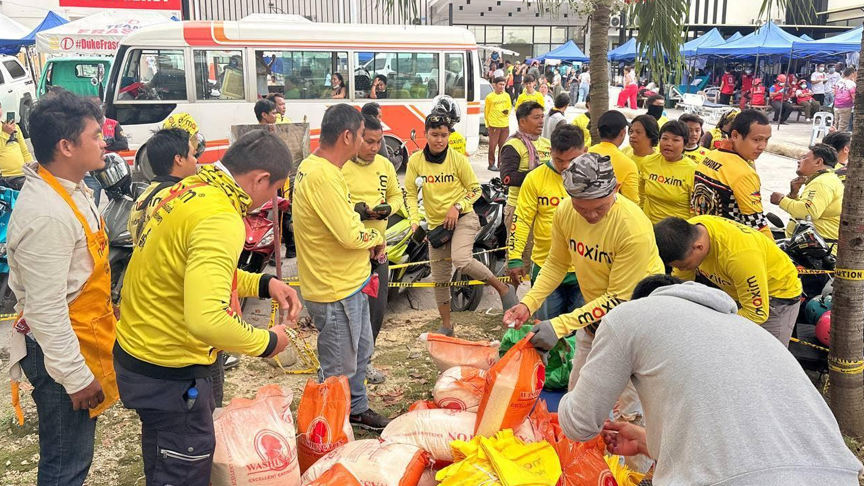
In the first days of October, driver-partners of Maxim Cebu extended humanitarian aid to communities affected by the recent natural disaster, delivering water and rice to the damaged area and donating blood at the local hospital.

The assistance reached about a hundred families in Bogo City, who had taken refuge in temporary shelters set up at Cebu Provincial Hospital Bogo City and Bogo Gymnasium. The supplies were transported in Maxim’s trucks, but since the road leading to the shelters had been destroyed, the task of delivering the goods was taken on by driver-partners using more mobile vehicles – motos.

A total of 62 Maxim driver-partners took part in distributing relief goods to those in need. Together, they delivered more than 500 kilograms of rice, 200 packs of biscuits, and around 100 bottles of water. The campaign was jointly sponsored by the company and its partners, who were eager to help the affected residents during this difficult time.

The following day, a group of driver-partners visited Vicente Sotto Hospital to donate blood. More than 60 victims of the earthquake had been admitted to the hospital, which, subsequently, left the medical facility with critically low blood supplies. Seventy-two driver-partners donated approximately 35 liters of blood, while their colleagues in Lapu-Lapu City followed with 30 more donors, contributing nearly 15 liters. All donations will be used to treat the patients injured by the earthquake.

To further support recovery efforts, Maxim Cebu also organized a street cleanup to help mitigate the disaster’s aftermath. From 5 to 8 a.m., the company’s team cleared debris and helped restore order in the affected zone. This initiative not only improved the local environment but also reinforced Maxim’s commitment to supporting local communities in times of crisis.

Building on these humanitarian efforts, Maxim–Angeles Pampanga will also hold a blood donation activity at the Mabalacat LGU this coming October 30, continuing the company’s advocacy of helping communities in need and promoting volunteerism among its driver-partners.

“This earthquake has become a grave challenge for our communities, and it is at a time like this when we must stand together,“ said Poliran Christopher Landong, Head of Maxim Cebu. “Maxim and our driver-partners are doing everything we can to support the people, be it street cleanups, blood donations, or whatever else that is needed. We are a team, and only by staying united can we overcome major difficulties.”

This effort is one of the many social initiatives launched by Maxim Rides & Food Delivery and its driver-partners. It marks another important step in community support, showing that Maxim’s partners are always ready to come together when lives are at stake.

Continue Reading

Ethical Biz

Canon champions lifesaving advocacy with blood donation drive in partnership with NKTI

As part of Canon’s Health and Wellness initiatives, the event united employees in a shared mission to save lives and promote the spirit of giving. A total of 30 Canon employees participated as donors, contributing to NKTI’s blood bank and providing vital support for patients in need of blood transfusions.

Published

on

Canon Marketing (Philippines), Inc. (CMPI) reinforced its commitment to corporate social responsibility and community health through a successful Blood Donation Drive in collaboration with the National Kidney and Transplant Institute (NKTI).

As part of Canon’s Health and Wellness initiatives, the event united employees in a shared mission to save lives and promote the spirit of giving. A total of 30 Canon employees participated as donors, contributing to NKTI’s blood bank and providing vital support for patients in need of blood transfusions.

“Every drop of blood is a symbol of compassion and hope,” said Anuj Aggarwal, President & CEO of Canon Marketing (Philippines), Inc. “We are proud of our employees for coming forward to make a real difference. This initiative truly reflects Canon’s philosophy of kyosei—living and working together for the common good.”

Dr. Jose Dante Dator, Executive Director of NKTI, commended Canon’s initiative:

“Partnerships like this highlight the power of collaboration between the private sector and healthcare institutions. Canon’s support directly contributes to saving countless lives, and we hope more organizations will follow their example.”

Through this initiative, Canon Philippines continues to advocate for health, wellness, and community service, embodying its vision to create a positive impact beyond business. The Blood Donation Drive also underscores Canon’s dedication to nurturing a culture of care, empathy, and social responsibility among its employees.

Canon is a global multibillion-dollar company with one of the world’s most extensive digital imaging product lines. In 2020, it marked its 35th consecutive year among the top five U.S. patent holders and its 16th straight year as the leading Japanese company for U.S. patents granted—a testament to its culture of innovation.

Guided by its Kyosei philosophy of living and working together for the common good, Canon delivers total imaging solutions that enhance both personal and professional lives. Recognized as one of the Top 20 brands in Asia-Pacific (Campaign Asia-Pacific & Nielsen, 2018), the brand is known for performance, reliability, and corporate citizenship.

In the Philippines, Canon Marketing (Philippines), Inc. operates nationwide with a strong network of offices and authorized service centers. It has earned multiple honors, including the Corporate Award and Gold Bagwis Seal of Excellence for outstanding customer service.

Canon Philippines is committed to sustainability, embedding eco-friendly practices across its operations and product lifecycle to help build a greener future.

For press materials, visit the Canon Press Center. For product and service inquiries, contact our Customer Care Hotline at +63-2-884-9000.

Continue Reading
Advertisement
Advertisement

Like us on Facebook

Trending