
Ethical Biz
Apple commits to be 100% carbon neutral for its supply chain and products by 2030
Already carbon neutral today for corporate emissions worldwide, the company plans to bring its entire carbon footprint to net zero 20 years sooner than IPCC targets.


Apple unveiled its plan to become carbon neutral across its entire business, manufacturing supply chain, and product life cycle by 2030. The company is already carbon neutral today for its global corporate operations, and this new commitment means that by 2030, every Apple device sold will have net zero climate impact.
“Businesses have a profound opportunity to help build a more sustainable future, one born of our common concern for the planet we share,” said Tim Cook, Apple’s CEO. “The innovations powering our environmental journey are not only good for the planet — they’ve helped us make our products more energy efficient and bring new sources of clean energy online around the world. Climate action can be the foundation for a new era of innovative potential, job creation, and durable economic growth. With our commitment to carbon neutrality, we hope to be a ripple in the pond that creates a much larger change.”
Apple is providing detail on its approach to carbon neutrality with a roadmap for other companies, as industries look to reduce their impact on climate change. In its 2020 Environmental Progress Report — released today — Apple details its plans to reduce emissions by 75 percent by 2030 while developing innovative carbon removal solutions for the remaining 25 percent of its comprehensive footprint.
To support these efforts and beyond, Apple is establishing an Impact Accelerator that will focus on investing in minority-owned businesses that drive positive outcomes in its supply chain and in communities that are disproportionately affected by environmental hazards. This accelerator is part of Apple’s recently announced $100 million Racial Equity and Justice Initiative, focused on efforts that address education, economic equality, and criminal justice reform.
“We’re proud of our environmental journey and the ambitious roadmap we have set for the future,” said Lisa Jackson, Apple’s vice president of Environment, Policy and Social Initiatives. “Systemic racism and climate change are not separate issues, and they will not abide separate solutions. We have a generational opportunity to help build a greener and more just economy, one where we develop whole new industries in the pursuit of giving the next generation a planet worth calling home.”
Apple’s Climate Roadmap
Apple’s 10-year roadmap will lower emissions with a series of innovative actions, including:
Low carbon product design: Apple will continue to increase the use of low carbon and recycled materials in its products, innovate in product recycling, and design products to be as energy efficient as possible.
- Apple’s latest recycling innovation — a robot the company is calling “Dave” — disassembles the Taptic Engine from iPhone to better recover key materials such as rare earth magnets and tungsten while also enabling recovery of steel, the next step following its line of “Daisy” iPhone disassembly robots.
- The company’s Material Recovery Lab in Austin, Texas, which is focused on innovative electronics recycling technology, is now partnering with Carnegie Mellon University to further develop engineering solutions.
- All iPhone, iPad, Mac, and Apple Watch devices released in the past year are made with recycled content, including 100 percent recycled rare earth elements in the iPhone Taptic Engine — a first for Apple and for any smartphone.
- Apple decreased its carbon footprint by 4.3 million metric tons in 2019 through design and recycled content innovations in its products. Over the past 11 years, Apple has reduced the average energy needed for product use by 73 percent.

Apple’s latest recycling invention — its Dave robot — recovers material from an iPhone component for better use in future products.
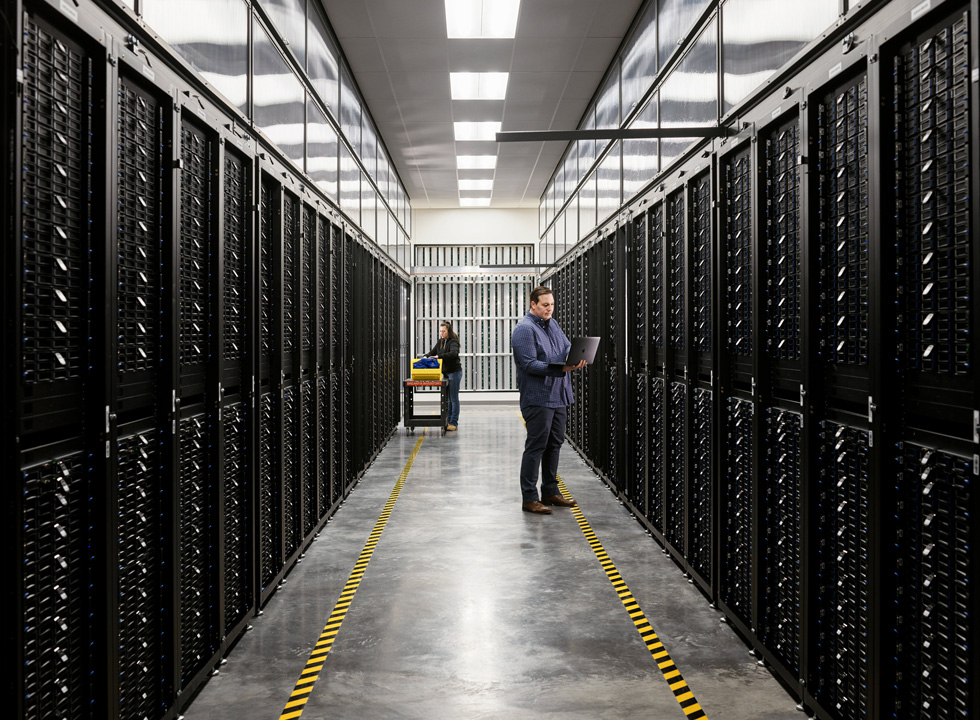
Expanding energy efficiency: Apple will identify new ways to lower energy use at its corporate facilities and help its supply chain make the same transition.
- Through a new partnership with Apple, the US-China Green Fund will invest $100 million in accelerated energy efficiency projects for Apple’s suppliers.
- The number of facilities participating in Apple’s Supplier Energy Efficiency Program grew to 92 in 2019; these facilities avoided over 779,000 annualized metric tons of supply chain carbon emissions.
- Last year, Apple invested in energy efficiency upgrades to over 6.4 million square feet of new and existing buildings, lowering electricity needs by nearly one-fifth and saving the company $27 million.

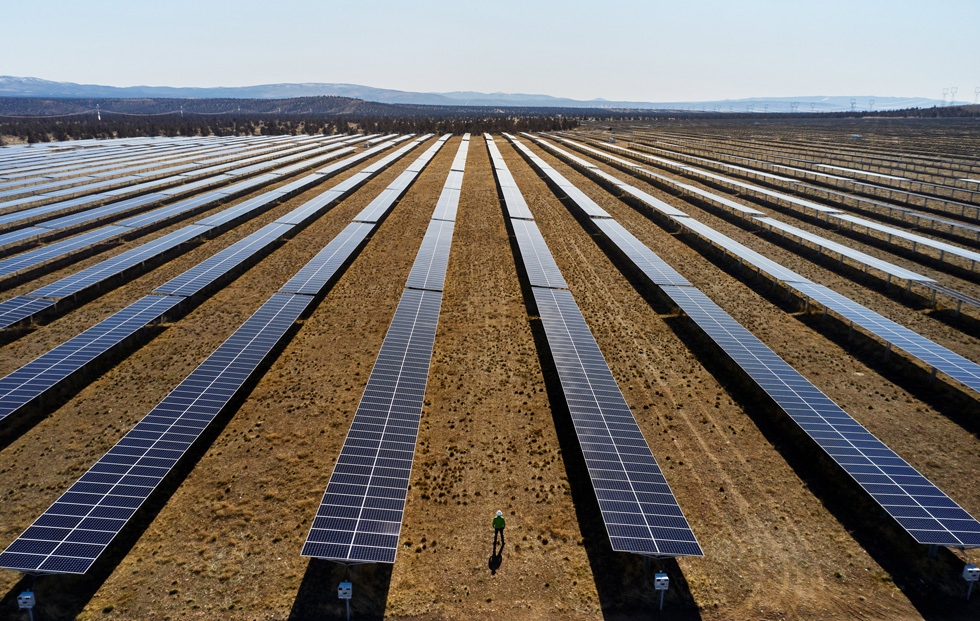
Renewable energy: Apple will remain at 100 percent renewable energy for its operations — focusing on creating new projects and moving its entire supply chain to clean power.
- Apple now has commitments from over 70 suppliers to use 100 percent renewable energy for Apple production — equivalent to nearly 8 gigawatts in commitments to power the manufacturing of its products. Once completed, these commitments will avoid over 14.3 million metric tons of CO2e annually — the equivalent of taking more than 3 million cars off the road each year.
- New and completed projects in Arizona, Oregon, and Illinois bring Apple’s renewable capacity for its corporate operations to over 1 GW — equivalent to powering over 150,000 homes a year. Over 80 percent of the renewable energy that Apple sources for its facilities are now from Apple-created projects, benefitting communities and other businesses.
- Globally, Apple is launching one of the largest new solar arrays in Scandinavia, as well as two new projects providing power to underserved communities in the Philippines and Thailand.
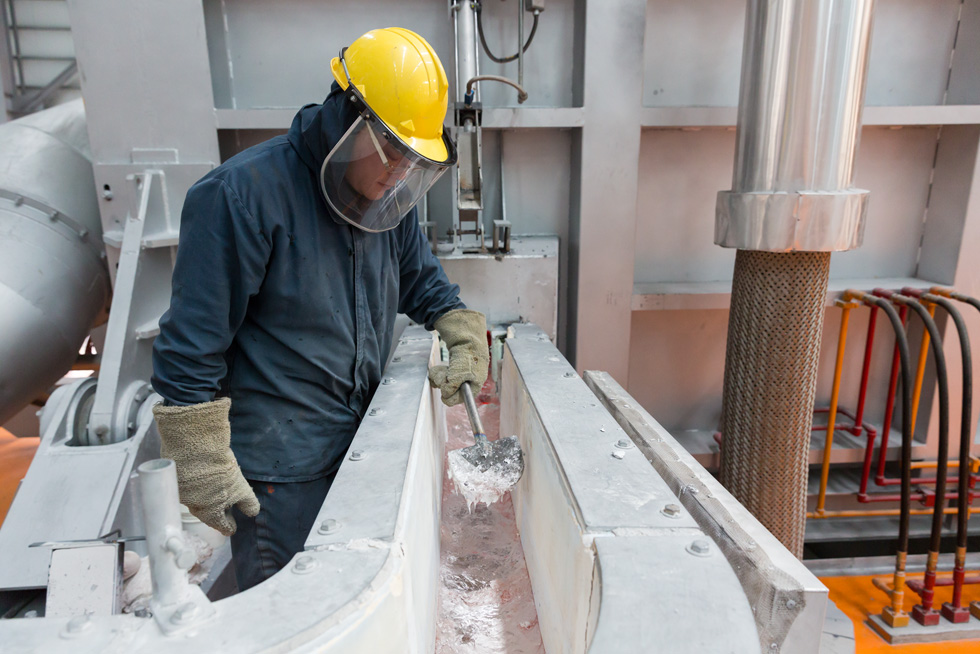
Process and material innovations: Apple will tackle emissions through technological improvements to processes and materials needed for its products.
- Apple is supporting the development of the first-ever direct carbon-free aluminum smelting process through investments and collaboration with two of its aluminum suppliers.
- Today the company is announcing that the first batch of this low carbon aluminum is currently being used in production intended for use with the 16-inch MacBook Pro.
- Through partnerships with its suppliers, Apple reduced emissions from fluorinated gases by more than 242,000 metric tons in 2019. Fluorinated gases are used in the manufacturing of some consumer electronics components and can contribute to global warming.
Carbon removal: Apple is investing in forests and other nature-based solutions around the world to remove carbon from the atmosphere.
- Apple is announcing today a first-of-its-kind carbon solutions fund to invest in the restoration and protection of forests and natural ecosystems globally.
- In partnership with Conservation International, the company will invest in new projects, building on learnings from existing work like restoring degraded savannas in Kenya and a vital mangrove ecosystem in Colombia. Mangroves not only protect the coasts and help support the livelihood of those communities where they grow, but they also can store up to 10 times more carbon than forests on land.
- Through its work with The Conservation Fund, the World Wildlife Fund, and Conservation International, the company has protected and improved the management of over 1 million acres of forests and natural climate solutions in China, the US, Colombia, and Kenya.


Apple engages with governments, businesses, NGOs, and consumers around the world to support policies that strengthen environmental protections and the transition to clean energy, which the company sees as a vital component of global climate action. The company’s complete plan and how it measures its carbon footprint can be found in its 2020 Environmental Progress Report at apple.com/environment.
Ethical Biz
Canon Marketing Philippines leads Brigada Eskwela to help prepare Lagro High School for new school year
Beyond the physical improvements, the initiative reflected the collaboration and community spirit that Brigada Eskwela represents each year.

Ethical Biz
Climate change is reshaping how companies do business
Ccompanies exposed to higher climate change risks are deliberately reducing their reliance on a small number of major customers. Instead, they are spreading sales across a broader customer base as a way of managing risk.

Ethical Biz
Maxim Cebu drivers extend help to communities affected by natural disaster
Driver-partners of Maxim Cebu extended humanitarian aid to communities affected by the recent natural disaster, delivering water and rice to the damaged area and donating blood at the local hospital.


Long-serving CEOs may weaken innovation, study finds

Office owners or managers, take note: Increased risk of bullying in open-plan offices

Profit alone is a poor measure of success, study shows companies can look efficient while harming the planet

Reminder to marketing people: Missing information can misinform

Should emojis be used in workplace communications?

If you’re a perfectionist at work, your boss’ expectations may matter more than your own, research finds

Still developing its approaches? Checking out The Beef Deli in Malolos, Bulacan

How Charlie sells wanton with nostalgia
If you’re a perfectionist at work, your boss’ expectations may matter more than your own, research finds
Should emojis be used in workplace communications?
Profit alone is a poor measure of success, study shows companies can look efficient while harming the planet
Long-serving CEOs may weaken innovation, study finds
Reminder to marketing people: Missing information can misinform
Office owners or managers, take note: Increased risk of bullying in open-plan offices

Biz strategy of Quento: Forget discrimination and capture as many as possible

FFTG as a must-visit cafe… and safe space in Quezon City

5 Video marketing tips

How to successfully market your biz as green

What to do before a ransomware attack

Smart advice to find success
-
 BizNews5 days ago
If you’re a perfectionist at work, your boss’ expectations may matter more than your own, research finds
-
 Tech & Innovation4 days ago
Should emojis be used in workplace communications?
-
 BizNews2 days ago
Profit alone is a poor measure of success, study shows companies can look efficient while harming the planet
-
 BizNews18 hours ago
Long-serving CEOs may weaken innovation, study finds
-
 BizNews3 days ago
Reminder to marketing people: Missing information can misinform
-
 BizNews1 day ago
Office owners or managers, take note: Increased risk of bullying in open-plan offices