Connect with us

Ethical Biz

Aircrafted KIDS initiative of Emirates reaches 700 young students across Asia

With 1300 bags already distributed across Africa, the Asia Aircrafted KIDS delivery is part of a larger initiative by Emirates to repurpose and upcycle materials for the benefit of children across the globe.

Published

on

Supporting children’s education and making meaningful connections within the communities it serves, Emirates has engaged with several educational entities across Asia; to provide 700 handmade schoolbags and essential stationery supplies directly to young students. Each schoolbag is a piece of history—a limited-edition bag from Emirates’ Aircrafted range, made from the fabrics and parts of Emirates’ iconic aircraft.

With 1300 bags already distributed across Africa, the Asia Aircrafted KIDS delivery is part of a larger initiative by Emirates to repurpose and upcycle materials for the benefit of children across the globe.  

Aircrafted Kids by Emirates goes to Asia

In India, Emirates collaborated with Smile Foundation India, a respected institution that provides education, healthcare, and livelihood programs to children aged between 6-14 years. In Bangladesh, Emirates partnered with Kanan, Thikana (Shelter Home), and Ahsania Mission Shishu Nagari – three sister entities across Dhaka that provide shelter for women and children, and a safe place to nurture education and wellbeing. In Pakistan, Emirates worked with SOS Children’s Villages, a renowned entity which serves local communities by creating a nurturing and inspirational space for financially disadvantaged youths to continue their education. In the Philippines, Emirates has been a long-time partner of Virlanie Foundation, a non-profit organization that aims to help disadvantaged children reach their full potential and reintegrate them into society. Through the Emirates Airline Foundation, Emirates has a long history of supporting children’s welfare programs, and Aircrafted Kids is an extension of this work.

Emirates has a local office in India, Bangladesh, Pakistan, so each entity was visited by the Emirates representatives who helped pack the bags and distribute them and were eager to connect with the organizations who do such important work in the community. Inside the bags, Emirates provided school supplies such as stationary, calculators and essentials, as well as a variety of books that can be shared throughout schools.

The next stop on the Aircrafted Kids schoolbags trail is Egypt, with more destinations in the MENA region to follow.

The making of Aircrafted Kids schoolbags

As part ofan environmental strategy that includes responsible consumption, Emirates committed to repurposing more than 50,000 kilograms of materials, from 205 aircraft that are undergoing a cabin interior refit and refresh. The team at Emirates Engineering brainstormed a myriad of ways in which the old materials could be reused and upcycled and settled on a range of sturdy backpacks. The high-quality seat fabric of Emirates Economy Class seats is 95% wool and 5% nylon, a flat weave structure sourced from Germany and Ireland which is ideal for upcycling due to its durability and non-flammable nature.

In a dedicated workshop at Emirates, a team of 14 EngineeringMaintenance Assistants creatively designed and tailored a whole range of backpacks for children of different ages. The Emirates Corporate Communications, Marketing & Brand team then identified charitable entities, schools and foundations, where the bags could be distributed for most impact, communicating with the NGOs on what their preferences would be. The teams spent weeks researching styles, ensuring the bags were safe and comfortable for children to use. Across all the bag designs, the fabrics were professionally laundered, then further deep cleaned by hand, leather-conditioned for the accents, and thoroughly disinfected before being sewn into unique pieces. Brand new lining was added to the bags, along with functional zippers and adjustable straps, before being packed into specially branded ‘Aircrafted Kids’ boxes and shipped to their final destinations.

With the transport and logistics fully supported by Emirates’ SkyCargo teams, and dnata Logistics across the continents – Aircrafted Kids by Emirates connected the community of employees within Emirates to achieve a meaningful goal.

Aircrafted by Emirates Limited Edition Luggage for sale

Emirates fans can also get involved in this ‘connecting communities’ initiative, by purchasing limited edition luggage in the coming months, as the Aircrafted by Emirates retail range prepares to launch a second phase of the capsule collection. Like the first collection, which sold out in a matter of days – proceeds after costs are donated to Emirates Airline Foundation supporting humanitarian projects around the world. Customers and fans can also donate to Emirates Airline Foundation any time, and help children in need.

Ethical Biz

Climate change is reshaping how companies do business

Ccompanies exposed to higher climate change risks are deliberately reducing their reliance on a small number of major customers. Instead, they are spreading sales across a broader customer base as a way of managing risk.

Published

on

Climate change is not only disrupting supply chains and asset values, it is also quietly reshaping companies’ choice of business partners.

New research based on nearly two decades of data from thousands of US-listed firms shows that companies exposed to higher climate change risks are deliberately reducing their reliance on a small number of major customers. Instead, they are spreading sales across a broader customer base as a way of managing risk.

The study, published in Business Strategy and the Environment, finds clear evidence that climate risk is driving this strategic shift, rather than simply coinciding with it. Firms facing greater exposure to extreme weather, climate-related disruption, or regulatory transition risk are less likely to concentrate revenue among a handful of large buyers.

Amplifying shocks

Authors Dr Eric Boahen, Dr Cuong Nguyen and Thi Thuy Trang Nguyen found this behaviour is particularly pronounced among firms with strong corporate social responsibility performance, higher levels of innovation, and heavy investment in physical assets such as plants and infrastructure. These firms appear to recognise that customer concentration can amplify climate shocks.

“What this evidence shows is that climate risk is no longer abstract or future-facing. It is shaping everyday business decisions in the here and now,” said Dr Boahen, Cluster Lead for Accounting, Finance and Economics at the University of East London.

“Boards and executives are not just thinking about emissions or disclosure. They are quietly rethinking who they depend on for revenue. When climate shocks can hit firms and their biggest customers at the same time, relying too heavily on a small number of clients becomes a strategic vulnerability.”

The research draws on real-world behaviour observed across almost 4,800 firms over a 17-year period.

Why it matters

For investors and lenders, the study highlights customer concentration as a potential blind spot in climate risk assessment. Companies with diversified customer bases may be better insulated against earnings volatility, financing stress, and supply-chain disruption.

For boards and regulators, the findings point to customer structure as a governance issue. Persistently high customer concentration in climate-exposed regions may signal weaknesses in risk management.

“Climate resilience is not just about where assets are located or how much carbon a firm emits,” Dr Boahen said. “It is also about how exposed a company is through its commercial relationships. Customer concentration is now a climate issue, whether companies label it that way or not.”

Continue Reading

Ethical Biz

Maxim Cebu drivers extend help to communities affected by natural disaster

Driver-partners of Maxim Cebu extended humanitarian aid to communities affected by the recent natural disaster, delivering water and rice to the damaged area and donating blood at the local hospital.
Published

on

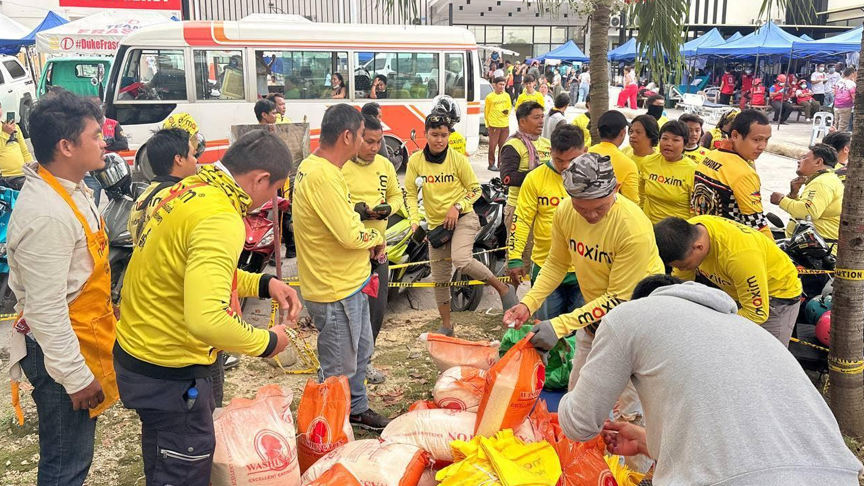
In the first days of October, driver-partners of Maxim Cebu extended humanitarian aid to communities affected by the recent natural disaster, delivering water and rice to the damaged area and donating blood at the local hospital.

The assistance reached about a hundred families in Bogo City, who had taken refuge in temporary shelters set up at Cebu Provincial Hospital Bogo City and Bogo Gymnasium. The supplies were transported in Maxim’s trucks, but since the road leading to the shelters had been destroyed, the task of delivering the goods was taken on by driver-partners using more mobile vehicles – motos.

A total of 62 Maxim driver-partners took part in distributing relief goods to those in need. Together, they delivered more than 500 kilograms of rice, 200 packs of biscuits, and around 100 bottles of water. The campaign was jointly sponsored by the company and its partners, who were eager to help the affected residents during this difficult time.

The following day, a group of driver-partners visited Vicente Sotto Hospital to donate blood. More than 60 victims of the earthquake had been admitted to the hospital, which, subsequently, left the medical facility with critically low blood supplies. Seventy-two driver-partners donated approximately 35 liters of blood, while their colleagues in Lapu-Lapu City followed with 30 more donors, contributing nearly 15 liters. All donations will be used to treat the patients injured by the earthquake.

To further support recovery efforts, Maxim Cebu also organized a street cleanup to help mitigate the disaster’s aftermath. From 5 to 8 a.m., the company’s team cleared debris and helped restore order in the affected zone. This initiative not only improved the local environment but also reinforced Maxim’s commitment to supporting local communities in times of crisis.

Building on these humanitarian efforts, Maxim–Angeles Pampanga will also hold a blood donation activity at the Mabalacat LGU this coming October 30, continuing the company’s advocacy of helping communities in need and promoting volunteerism among its driver-partners.

“This earthquake has become a grave challenge for our communities, and it is at a time like this when we must stand together,“ said Poliran Christopher Landong, Head of Maxim Cebu. “Maxim and our driver-partners are doing everything we can to support the people, be it street cleanups, blood donations, or whatever else that is needed. We are a team, and only by staying united can we overcome major difficulties.”

This effort is one of the many social initiatives launched by Maxim Rides & Food Delivery and its driver-partners. It marks another important step in community support, showing that Maxim’s partners are always ready to come together when lives are at stake.

Continue Reading

Ethical Biz

Canon champions lifesaving advocacy with blood donation drive in partnership with NKTI

As part of Canon’s Health and Wellness initiatives, the event united employees in a shared mission to save lives and promote the spirit of giving. A total of 30 Canon employees participated as donors, contributing to NKTI’s blood bank and providing vital support for patients in need of blood transfusions.

Published

on

Canon Marketing (Philippines), Inc. (CMPI) reinforced its commitment to corporate social responsibility and community health through a successful Blood Donation Drive in collaboration with the National Kidney and Transplant Institute (NKTI).

As part of Canon’s Health and Wellness initiatives, the event united employees in a shared mission to save lives and promote the spirit of giving. A total of 30 Canon employees participated as donors, contributing to NKTI’s blood bank and providing vital support for patients in need of blood transfusions.

“Every drop of blood is a symbol of compassion and hope,” said Anuj Aggarwal, President & CEO of Canon Marketing (Philippines), Inc. “We are proud of our employees for coming forward to make a real difference. This initiative truly reflects Canon’s philosophy of kyosei—living and working together for the common good.”

Dr. Jose Dante Dator, Executive Director of NKTI, commended Canon’s initiative:

“Partnerships like this highlight the power of collaboration between the private sector and healthcare institutions. Canon’s support directly contributes to saving countless lives, and we hope more organizations will follow their example.”

Through this initiative, Canon Philippines continues to advocate for health, wellness, and community service, embodying its vision to create a positive impact beyond business. The Blood Donation Drive also underscores Canon’s dedication to nurturing a culture of care, empathy, and social responsibility among its employees.

Canon is a global multibillion-dollar company with one of the world’s most extensive digital imaging product lines. In 2020, it marked its 35th consecutive year among the top five U.S. patent holders and its 16th straight year as the leading Japanese company for U.S. patents granted—a testament to its culture of innovation.

Guided by its Kyosei philosophy of living and working together for the common good, Canon delivers total imaging solutions that enhance both personal and professional lives. Recognized as one of the Top 20 brands in Asia-Pacific (Campaign Asia-Pacific & Nielsen, 2018), the brand is known for performance, reliability, and corporate citizenship.

In the Philippines, Canon Marketing (Philippines), Inc. operates nationwide with a strong network of offices and authorized service centers. It has earned multiple honors, including the Corporate Award and Gold Bagwis Seal of Excellence for outstanding customer service.

Canon Philippines is committed to sustainability, embedding eco-friendly practices across its operations and product lifecycle to help build a greener future.

For press materials, visit the Canon Press Center. For product and service inquiries, contact our Customer Care Hotline at +63-2-884-9000.

Continue Reading
Advertisement
Advertisement

Like us on Facebook

Trending