Connect with us

BizNews

Local startup 1Export brings global opportunities to MSMEs

In tough times like these, taking steps toward exporting may seem expensive, confusing and risky, especially since a profitable return is not certain. This is where 1Export comes in.

Published

on

As the current economic downturn continues, exporting has become one of the last remaining opportunities for micro, small, and medium enterprises (MSME’s) hoping to hold on through the pandemic. Many such businesses are finding a life line through the local startup 1Export, an end-to-end platform for cross-border trade and fulfillment.

With 1Export’s help for all their exporting needs, MSMEs aren’t just staying above water, they are growing. 1Export has won numerous awards internationally (Gojek Xcelerate 2019 & SoGal San Francisco 2020 Global Pitch winner), because of its focus on making exporting easier for businesses big or small. It remains to be the largest export e-commerce platform in the Philippines in terms of revenue share.

In tough times like these, taking steps toward exporting may seem expensive, confusing and risky, especially since a profitable return is not certain. This is where 1Export comes in. Led by young professionals in their respective fields, 1Export is a one-stop, holistic solution for businesses looking to expand their market range without needing to carry the numerous pitfalls associated with exporting their products.
Exporting through technology

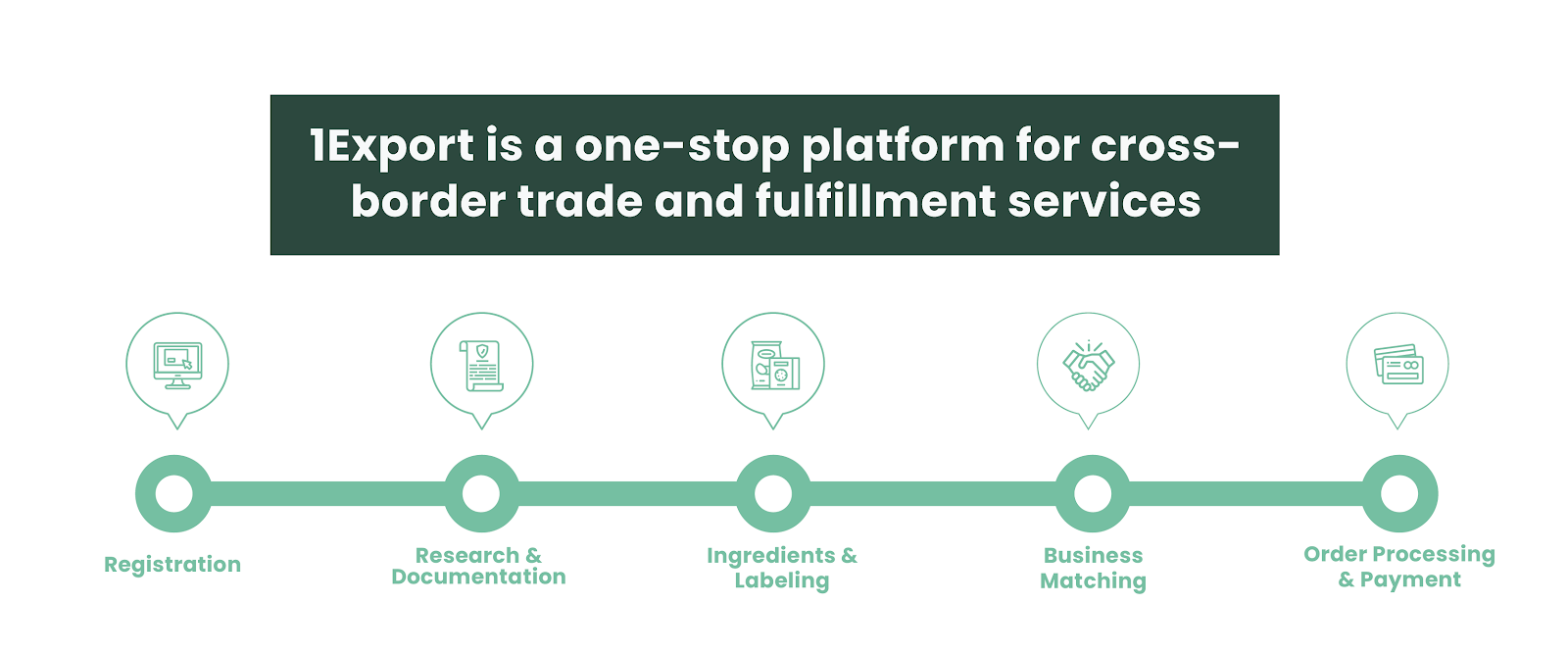
As the process of becoming compliant begins, 1Export holds the hands of its partners by finding them the appropriate buyers for any and all of the products that they wish to export. Currently, 1Export offers its services to 9 international markets, with each market having their own sets of standards that each business must comply with in order to successfully export their products. These compliance standards make exporting more complicated than it needs to be. 1Export smooths out  the process with a tech platform, which makes creating the correct documentation for any country simple. In addition to this, MSME suppliers can also conveniently use automated labeling through a simple upload of a photo, making the path to going global a seamless one. With a myriad of services to adequately equip partner suppliers with their exporting needs paired with a 100% port clearance rate, 1Export presents an opportunity unlike any other with a potential to earn in US dollars. 

“Exporting is often viewed as a tedious and laborious process. For most MSMEs, creating a truly globally competitive brand remains just a pipe dream. We believe that, when done right, exporting can be a powerful tool to showcase MSME talent, uplift the economy, and change the lives of people. At 1Export, we aim to harness the innate ingenuity, talent and beauty of the country and showcase it to the world.” Daniel Remo, Chief Operating Officer of 1Export says.


Hope for our MSMEs
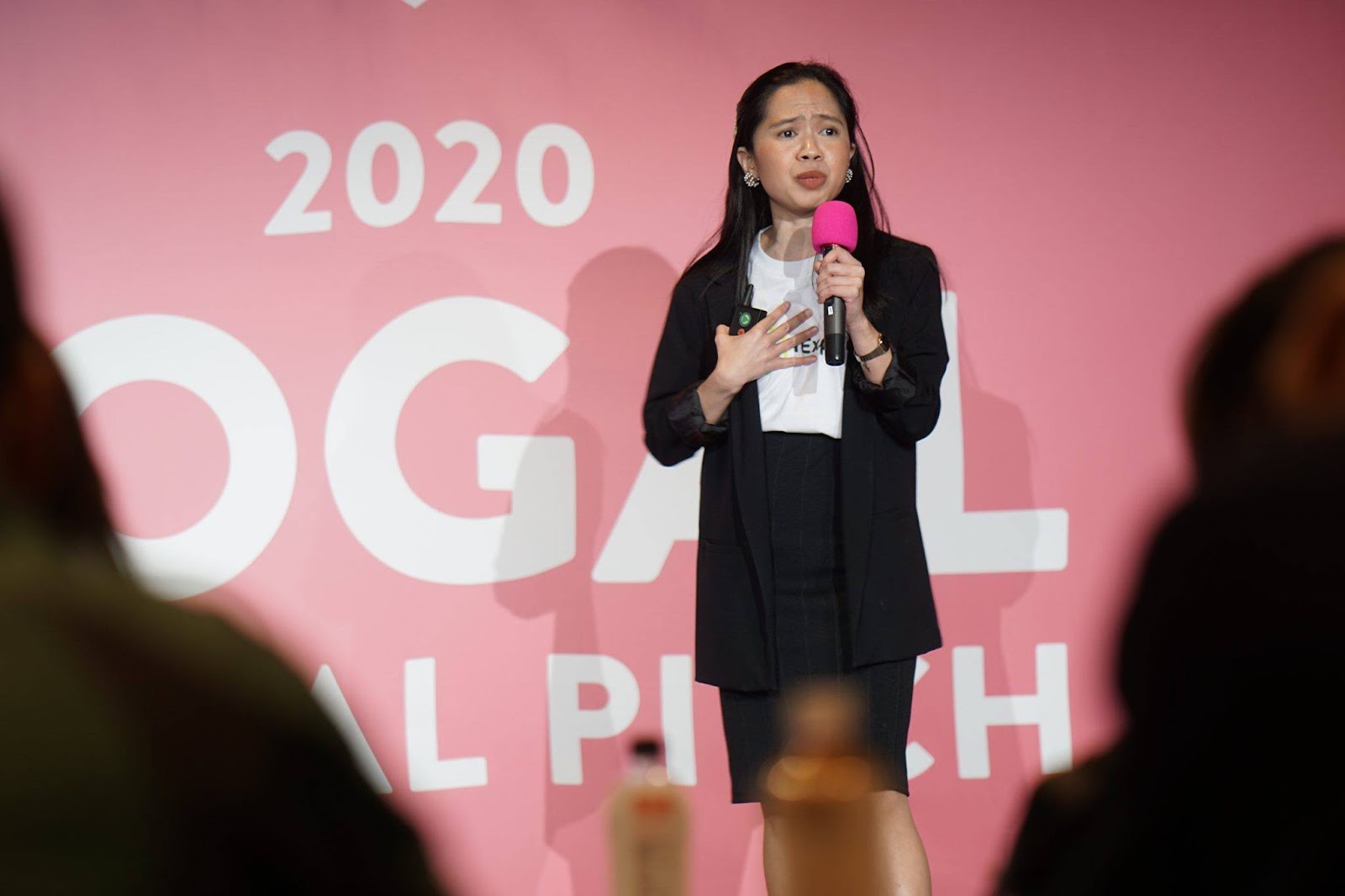
Mel Nava, CEO of 1Export, during their pitch in SoGal San Francisco 2020

There are a lot of opportunities that MSMEs can take advantage of while in this pandemic. Global trends point to an increase in purchase of essential products, but as the curve flattens in other countries, people are looking for things that provide comfort or happiness. So the question at the end of the day is, how do we make MSME products relevant? According to Mel Nava, Chief Executive Officer of 1Export, “We make them globally competitive so that they can export, we help them export so they can sell more, stay afloat, and serve the needs and wants of other markets”. Because travel is limited, cross-border trade has increased and to bring products people want and long for now need to comply with trade regulations abroad.

While the pandemic has been the cause for the demise of a lot of businesses, there is hope for the economy because platforms like 1Export addresses the various problems of MSMEs brought about by exporting: a need for international partners, compliant products, and finding guaranteed buyers. In a time of disarray and economic decline, 1Export has created a system that works for both its buyers and suppliers, making it a complete and sustainable technology platform of the country.

BizNews

Long-serving CEOs may weaken innovation, study finds

Companies led by long-serving chief executives may become less innovative over time unless challenged by strong independent boards.

Published

on

A new study from the University of East London has found that companies led by long-serving chief executives may become less innovative over time unless challenged by strong independent boards.

The research examined 215 FTSE 350 companies over an 11-year period between 2010 and 2021. It explored how CEO tenure and independent directors influence a company’s “R&D knowledge stock”, which is the research, expertise and technological capability built through investment in innovation.

The study published in the journal Corporate Governance found that CEOs who remain in office for many years often become more cautious and less willing to back risky research and development projects. These companies were more likely to reduce investment in innovation and long-term technological growth.

Firms with higher numbers of independent directors were more likely to continue building innovation capacity with experienced CEOs and independent directors forming an effective partnership, to combine deep company knowledge with outside challenge.

However, both experienced CEOs and independent directors become more cautious and less willing to back risky research and development projects when the company fails to meet performance aspirations, suggesting that independent directors do not have stable risk preferences.

The findings suggest that innovation is shaped not only by technology and finance, but also by leadership culture and corporate governance structures.

Author Dr Igbekele Sunday Osinubi, of the Royal Docks School of Business and Law, said: “Long-serving CEOs can bring valuable experience and stability, but there is also a risk that leaders become too cautious or too attached to existing ways of thinking. Our findings show that independent directors play an important role in encouraging companies to continue investing in innovation, especially during difficult periods when firms may otherwise retreat from long-term research and development.”

He added: “This matters beyond individual companies. Innovation drives productivity, competitiveness and economic growth. The study highlights how governance structures can influence whether firms continue building the knowledge and technologies that shape future industries.”

The paper argues that regulators and policymakers should consider governance reforms and incentives that encourage long-term innovation strategies, particularly in firms led by long-serving executives. The findings may also influence how boards think about CEO succession planning, oversight and the balance between short-term financial pressures and long-term investment.

Osinubi’s research, “Long CEO tenure, independent directors and R&D knowledge stock: the moderating effect of performance shortfalls”, was published in the Corporate Governance: The International Journal of Business in Society

Continue Reading

BizNews

Profit alone is a poor measure of success, study shows companies can look efficient while harming the planet

Firms that appear highly efficient at generating revenue can perform far worse when their environmental footprint are included in the calculation.  

Published

on

Companies celebrated for strong financial performance may actually be inefficient once their environmental impact is taken into account, according to new research from the University of Surrey. 

The study, published in the European Journal of Operational Research, shows that firms that appear highly efficient at generating revenue can perform far worse when their environmental footprint are included in the calculation.  

To tackle this problem, researchers developed a new way to measure “sustainable corporate efficiency”, combining traditional financial metrics with environmental data such as energy consumption, carbon emissions and revenues generated from environmentally friendly products and services.  

Dr Menelaos Tasiou, co-author of the study and Senior Lecturer in Finance at the University of Surrey, said: “Businesses have long been judged on how efficiently they turn resources into profit. But if those profits come with large environmental costs, the picture changes completely. What we show is that true efficiency means generating revenue while also reducing the environmental damage caused by production. In other words, profitability alone can mask how wasteful a business really is when environmental costs are considered.  

The research analysed more than 2,800 publicly listed companies across 61 countries between 2010 and 2022, creating one of the largest global datasets measuring how sustainable companies are, when both financial performance and environmental impact are assessed together.  

The team combined company financial records, in alignment with the green economy (defined as a low carbon, resource efficient and socially inclusive economy), with environmental disclosures such as energy use and greenhouse gas emissions. They then applied a machine learning technique known as Convexified Efficiency Analysis Trees (CEAT) to estimate how efficiently companies convert resources into revenue while minimising pollution.  

Unlike older approaches, the method models the reality that production creates both desirable outputs, such as revenue, and undesirable ones, such as emissions. This allows companies to be compared on how well they balance profit with environmental performance.  

The results found a moderate link between financial efficiency and environmental efficiency, meaning many firms that are strong financially are not necessarily good at managing their environmental impact.  

The study also found large differences across industries and countries. Firms operating in sectors with high emissions, such as manufacturing and energy, often lagged behind leaders that were better at reducing carbon intensity while maintaining revenue.  

Dr Tasiou continued: “Measuring efficiency in this broader way can help investors, regulators and policymakers identify companies that are genuinely prepared for a low carbon economy. Stronger management capability plays a key role. Firms with more capable management teams were more likely to balance profitability with environmental responsibility, suggesting that leadership decisions can strongly influence sustainable performance.  

“As governments push towards net zero and investors scrutinise environmental performance more closely, companies that fail to integrate sustainability into their operations risk falling behind.” 

Continue Reading

BizNews

Reminder to marketing people: Missing information can misinform

You don’t need bad actors for people to get the wrong idea. Incomplete information can be enough.

Published

on

To get people to pay attention, you have to make it engaging. But what makes content engaging often comes at the cost of detail – shaping what people learn and what they think they’ve learned. The result: People can come away with the wrong idea, even when what they read isn’t factually wrong.

That tension sits at the core of research from Marta Serra-Garcia, a behavioral economist at the University of California San Diego’s Rady School of Management. The study, published in the American Economic Review, examines how incentives in the online attention economy shape the way scientific information is communicated – and what readers ultimately take away from it.

A trade-off in the attention economy

You don’t need bad actors for people to get the wrong idea. Incomplete information can be enough.

Crucially, the research finds that attention-grabbing summaries are not more likely to be factually inaccurate. Instead, they tend to include less information – especially key details about how studies were conducted.

“This is not a simple story that clickbait is bad,” said Serra-Garcia, associate professor of economics and strategy and Phyllis and Daniel Epstein Chancellor’s Endowed Faculty Fellow at UC San Diego’s Rady School. “You need to get people’s attention in order for them to learn something, and it’s good to encourage curiosity. Yet there’s a trade-off: Material designed to engage can also unintentionally contribute to the kinds of misunderstandings that can fuel misinformation.”

The finding comes from a large, multi-stage experimental study in which freelance writers produced nearly 600 summaries of actual scientific research, and more than 3,700 participants were then tested on what they learned from them.

Why “in mice” matters

In one study used in the experiment, a compound in broccoli reduced cancer cell growth – in mice. Leave out those last two words, and the finding can sound far more directly relevant to human health than it actually is.

“Why can’t we say ‘in mice’?” Serra-Garcia said. “It’s not very hard to add. It’s two words. But once you say ‘in mice,’ maybe fewer people will click.”

Study results were consistent. Summaries written to attract attention were shorter, easier to read and more engaging – but included less detailed information, especially about sample sizes and methods.

Given the option to seek out more information, most readers did not. That mirrors real-world behavior: Studies of social media use suggest most content is shared without users ever clicking through to read more.

Among those who relied on summaries alone in Serra-Garcia’s study, knowledge dropped by about 6-7 percentage points. Readers were also more likely to draw incorrect conclusions – such as assuming findings applied to humans or reflected firm medical guidance.

Inside the experiments

To isolate these effects, Serra-Garcia conducted a multi-stage experimental study. In the first stage, 149 freelance writers produced nearly 600 summaries of the same set of studies – covering topics such as cancer, sleep, vaccines and climate – under different instructions: to inform readers accurately, or to attract attention by encouraging clicks or shares. 

In the second stage, more than 3,700 participants read those summaries under different conditions, including whether they could click through for more information.

The results held across experiments: Attention-driven summaries increased engagement and prompted some readers to learn more – but left many others with less complete understanding.

AI and the attention economy

The same pattern emerged when a human wasn’t doing the writing. In additional tests, when a large language model was prompted to attract attention, it also produced less detailed summaries – suggesting the effect is driven less by who creates the content than by the objective it’s optimized for.

For Serra-Garcia, the findings point to an ongoing challenge for researchers, journalists and institutions alike.

“How do you make science engaging and important to readers,” she said, “without missing the essentials that convey the full picture?” 

The research was funded in part by National Science Foundation grant no. 2343858. 

Read the full study: “The Attention – Information Trade-off.” 

Continue Reading
Advertisement
Advertisement

Like us on Facebook

Trending