Connect with us

BizNews

From click to doorstep: The hidden decisions behind e-commerce orders

Every time a shopper clicks “Place Order,” a complex process begins behind the scenes. An online retailer must decide where each item should be fulfilled, how orders should be picked and packed, how parcels should be transported, and how returns should be handled.

Published

on

Every time a shopper clicks “Place Order,” a complex process begins behind the scenes. An online retailer must decide where each item should be fulfilled, how orders should be picked and packed, how parcels should be transported, and how returns should be handled. These decisions are tightly connected: a choice made at the start can affect costs, workload, delivery speed and customer experience downstream.

In a study published in the Journal of Management Science and Engineering, Yuankai Zhang, Wei-Hua Lin, Qiong Tian and Xiangpei Hu reviewed the growing body of research on B2C online order fulfillment, including emerging omni-channel models in which physical stores can also serve as fulfillment locations.

For managers, the review provides a practical way to look beyond individual warehouse or delivery decisions and consider the entire fulfillment chain. For researchers, it identifies future directions including better coordination across stages, decision-making under uncertainty, sustainability, behavioral analytics, and the integration of artificial intelligence (AI) with digital twins and optimization.

The research papers included were published between 2007 to May 2026. The systematic search began with 1,495 records and resulted in 198 articles for detailed analysis. The authors organized the literature around the real-world fulfillment process: order assignment, warehouse operations, shipping and delivery, and return operations.

The review highlights four characteristics that make B2C fulfillment especially challenging: very large product assortments, networks with multiple fulfillment locations, personalized multi-item orders, and tight delivery time windows. It also shows how research is increasingly moving beyond isolated decisions and static planning toward more integrated and real-time approaches.

“B2C order fulfillment is not a collection of separate tasks. Decisions made at one stage can create consequences at another,” says Zhang. “By viewing the process as a connected system, we can better identify where coordination, data and new technologies can improve fulfillment decisions.”

The team also examined how data analytics, AI and emerging generative AI can support forecasting, scenario generation and operational decision-making. “Rather than replacing optimization methods, these technologies are increasingly viewed as decision-support tools that can work alongside optimization,” adds Zhang.

BizNews

Tip for resto owners and managers: Plating matters, and how sauce placement can make a dish appear healthier

The way food is presented can shape diners’ expectations before they even taste it.
Published

on

Our experience of eating is shaped by the combined influence of vision, smell, touch, and taste. The way food is presented can shape diners’ expectations before they even taste it. Visual features, such as arrangement and esthetic design, can influence perceptions of taste, quality, healthiness, and overall appeal.

Although previous studies have examined factors such as plate size, arrangement, and neatness, relatively little attention has been given to sauce presentation. Sauces can serve as both flavor additions and visual elements, and their placement may shape how diners perceive and interact with a dish.

To investigate these effects, researchers led by Dr. Kosuke Motoki of the Faculty of Business and Commerce, Keio University, Japan, examined how chef-designed sauce presentations influence consumers’ evaluations of a dish. The research was conducted in collaboration with Dr. Kohei Yamaguchi and Dr. Haruka Tohara of the Department of Dysphagia Rehabilitation, Institute of Science Tokyo, Japan, and Dr. Shin-ichi Ishikawa of the Department of Food Science and Business, Miyagi University, Japan, along with Chef Tatsuya Noda of the PLUM KNOT Co., Ltd., Japan. Their findings were published in Volume 15, Issue 17 of the journal Foods.

The idea for the study grew from discussions among Dr. Motoki, Dr. Yamaguchi, Dr. Ishikawa, and Chef Noda about food artistry and plating at 8go, the restaurant at Gastronomy Innovation Campus Tokyo (GIC Tokyo), where the study was later conducted. GIC Tokyo, developed in partnership with Tokyo Tatemono Co., Ltd., provides a collaborative setting for researchers, chefs, and industry partners.

“Our study involved 57 participants in a real restaurant setting at 8go, where we evaluated the same sturgeon-fritter dish presented with two different sauce arrangements. Sturgeon aquaculture is primarily oriented toward caviar production, while sturgeon meat is less commercially prominent. Its fuller use may improve resource efficiency, placing the study in a sustainability-oriented culinary context,” explains Dr. Motoki.

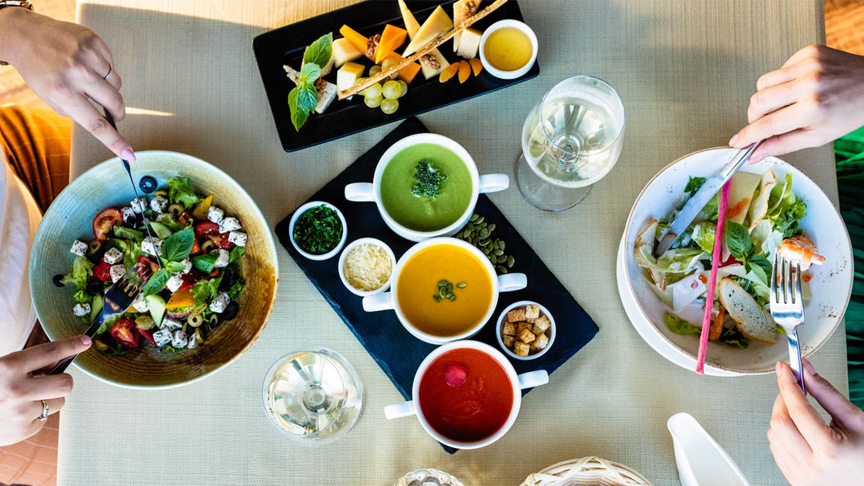
Participants evaluated a sturgeon-filet dish in two ways. In the minimal plating condition, sauces were placed separately on the plate, while in the drizzle presentation condition, sauces were distributed across the plate and around the food. Each participant experienced both versions, allowing the researchers to compare individual responses. The dish was prepared in collaboration with a professional chef from a restaurant recognized with a Michelin Green Star.

Before tasting, participants rated various measures including expected tastiness, perceived healthiness, intention to eat, overall liking, perceived artistic presentation, and willingness to pay. Minimal plating produced a significantly higher perceived healthiness rating than drizzle presentation: 4.65/7 compared with 4.05/7. This difference remained significant after correction for multiple comparisons.

“We observed that minimal plating made the same dish appear healthier, showing how small visual details can influence our first impressions of the food,” notes Dr. Motoki.

No significant differences were found in the other pre-tasting measures. After tasting, minimal presentation received higher ratings for overall liking and intention to eat more, but these differences did not remain significant after correction for multiple comparisons and were therefore considered preliminary.

One possible explanation for the pre-consumption healthiness finding could be visual simplicity. The minimal presentation may appear less visually dense, potentially associating it with qualities such as simplicity or naturalness.

Additionally, separately placed sauces may also give diners greater control over how much sauce they use, which could influence the eating experience. However, these mechanisms were not directly measured.

The findings offer a practical direction for evidence-based food presentation in restaurants and hospitality. “By bringing together researchers, a professional chef, and 8go as a real-world research setting within GIC Tokyo, we were able to examine how chef-designed plating shapes diners’ evaluations before and after tasting,” says Dr. Motoki. These findings show that sauce placement can help communicate a healthier impression. The preliminary post-tasting results also provide a starting point for investigating whether presentation and the way diners use the sauce may influence enjoyment.

Importantly, the researchers emphasize that looking healthier does not necessarily mean being nutritionally healthier. Further studies across different foods, plating styles, and dining environments are needed to gain deeper insights.

Continue Reading

BizNews

Autonomy, purpose and personal control associated with entrepreneurship may outweigh its well-known stress and pressures

Creating a more entrepreneurial workplace, where employees have the freedom to make decisions, pursue ideas and see the results of their efforts, may help support engagement and well-being while avoiding some of the financial and personal risks associated with starting a business.

Published

on

Conventional wisdom suggests that the long hours and pressures of entrepreneurship can take a toll on health. But new research by Cristiano Bellavitis, associate professor in the School of Business at Stevens Institute of Technology, and his collaborators, finds that entrepreneurs tend to live longer than people who spend their careers working for others.

Drawing on more than two decades of data from over 27,000 Americans aged 50 and older, Bellavitis’s study finds that people who have engaged in entrepreneurship have approximately a 10 percent lower risk of death than non-entrepreneurs, even after accounting for factors like age, income, education and health. 

Researchers suggest that the autonomy, purpose and personal control associated with entrepreneurship may help explain the pattern and contribute to long-term well-being. 

“Most people think of entrepreneurship as extremely stressful, and it certainly can be,” Bellavitis says. “But entrepreneurship also gives people a high degree of autonomy and the opportunity to pursue something they genuinely love or care about. Our findings suggest those benefits may have lasting effects.”

Mental health appeared to be a statistically significant factor, Bellavitis notes. Entrepreneurs reported lower levels of depression and loneliness, both of which have been associated with better health outcomes and greater longevity.

The study found that the longevity advantage was the strongest among opportunity-driven entrepreneurs: individuals who launched their ventures because they wanted to start a business and pursue a promising opportunity. By contrast, people who became entrepreneurs out of necessity, such as after losing a job, did not reap the same benefits.

“What seems to matter is not entrepreneurship alone, but the circumstances under which people enter it,” Bellavitis says. “When entrepreneurship reflects greater choice and opportunity, the autonomy and sense of purpose that can come with it may provide psychological benefits that extend beyond financial rewards.”

The study titled Do Entrepreneurs Live Longer? was published in the Journal of Business Venturing on October 22, 2026. 

The researchers emphasize that while the study identifies a strong relationship between entrepreneurship and longevity, it does not prove that entrepreneurship directly causes people to live longer. However, even after controlling for numerous demographic, economic and health factors and conducting additional analysis, the relationship remains significant.

Researchers also found that longer and more frequent engagement in entrepreneurship was associated with a longer lifespan.

The findings don’t apply to entrepreneurs only, Bellavitis notes — employers can learn from them as well. Organizations can incorporate some of entrepreneurship’s benefits by giving employees greater autonomy, ownership and visibility into the impact of their work.

Creating a more entrepreneurial workplace, where employees have the freedom to make decisions, pursue ideas and see the results of their efforts, may help support engagement and well-being while avoiding some of the financial and personal risks associated with starting a business.

“In many ways, that could be the best of both worlds. Companies can foster the independence, purpose and excitement that often come with entrepreneurship while providing the stability of traditional employment,” Bellavitis says. 

He adds that “the broader lesson isn’t that everyone should quit their job and start a company.” It’s that purpose, autonomy and meaningful engagement matter. “Whether you’re an entrepreneur or an employee, finding ways to have ownership of your work and a reason to be excited about what you do every day is important for long-term well-being.”

Continue Reading

BizNews

As local businesses grow, digital tools help stay flexible amid changing customer behavior

As digital payments become increasingly embedded in everyday transactions, SMEs are quickly discovering that growth also means needing to adapt their operations to keep pace with how customers want to transact and ensuring payments don’t become a barrier to their growth.
Published

on

For many small and medium-sized businesses today, growth no longer follows a single path. Some expand through new branches, while others build their customer base by moving between pop-ups and bazaars. As they grow, they’re also finding ways to ensure they meet the evolving habits and preferences of consumers – including the way they pay.

Data from the Bangko Sentral ng Pilipinas in 2025 showed that QR Ph person-to-merchant (P2M) transactions grew by 246.9% in volume, reaching 183.3M transactions from 52.8M only in 2024. Transaction value also grew by 211.3%, reaching ₱926.1 billion from ₱297.5 billion the previous year.

As digital payments become increasingly embedded in everyday transactions, SMEs are quickly discovering that growth also means needing to adapt their operations to keep pace with how customers want to transact and ensuring payments don’t become a barrier to their growth.

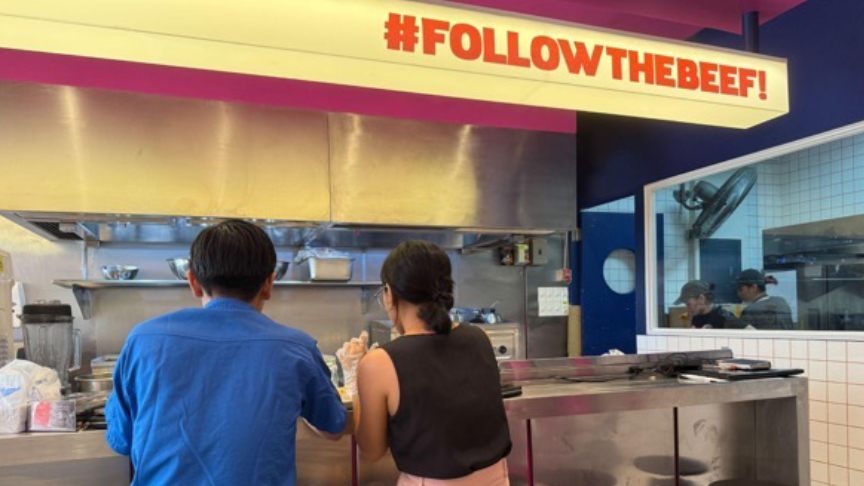
Chef Christine Balucas-Tabu of smash burger restaurant Bun Run, and Gabriel Jocson IV and Stephanie Dianne Ang, founders of matcha shop Kyoto House, know this firsthand. Though they’ve taken different paths to growth, both have had to adapt how they operate to meet customers while keeping the experience they’ve built consistent.

Growth without losing what works

For Chef Christine Balucas-Tabu, who serves as Culinary Operations Director at Bun Run, expanding a restaurant business while preserving the overall experience that made customers fall in love with it in the first place requires a careful balance. This is something she knew well when the brand decided to open its second shop in Makati in October 2025., making sure that what customers loved about the original San Juan branch could also be found in Makati, while they adapted to a different crowd and their preferences.

“Ultimately, we want our customers coming back for more not just because the food tastes good but because the experience was even greater,” she explains. Part of that experience is making sure the payment process is as seamless as possible – for both staff and customers. “GCash for Business has been a great part of the growth of our business to make all transactions smooth and sound,” she adds.

Bun Run uses GCash SoundPay Plus, a device that accepts QRPH and card payments with  real-time voice confirmation, helping staff verify payments faster and safely. With over 80% of their transactions cashless – around 30% through QRPH and 50% via debit and credit cards according to Chef Christine – having a single device that supports multiple payment methods has helped keep transactions fast and seamless, especially during peak hours.

Growing by meeting customers where they are

Flexibility takes on a different look for Kyoto House. Rather than operating from a permanent store, the business reaches customers through online channels, bazaars, and pop-ups. For its owners, this approach allows them to reach more of its target customers: home brewers who want to enjoy a delicious cup of matcha in the comfort of their own homes, but may not know where to start.

Today, 40% of the sales of Kyoto House come from pop-ups and bazaars. Its flexible model has been a key growth driver, and according to its owners, being present in multiple locations allows them to introduce their products and teach their customers how they can correctly prepare matcha at home. But because they’re constantly on the move, they also need the flexibility to make payments work wherever they go.

“What should not change is the experience customers receive. Wherever we are, we want the service to feel warm, the product information to remain accurate, and the payment process to be simple and reliable,” Gabriel and Stephanie emphasizes.

On a typical weekend bazaar, the team typically handles 300-450 transactions per day, with 100% of their payments being cashless, making it essential to have a payment solution that can keep up with the pace. For that, they can count on the flexibility that GCash Soundpay Plus gives them.

“For us, ease does not mean removing every challenge. It means building systems that allow us to spend less time on preventable problems and more time improving the products and serving our customers,” shares Gabriel and Stephanie.

Flexibility is the new way to grow for SMEs

The growth of Bun Run and Kyoto House may look different, but their journeys point to the same need: having the flexibility to adapt and scale. With tools like GCash SoundPay Plus, merchants can streamline payments, serve more customers with ease, and unlock more opportunities for revenue growth.

Businesses can get started by creating a Starter Plan account on the GCash for Business Portal with as simple as a GCash verified account to enjoy P5M wallet limit then start ordering a GCash SoundPay Plus device.

Continue Reading
Advertisement
Advertisement

Like us on Facebook

Trending