Connect with us

Strategies

5 Ways working moms can achieve work-life balance

Life as a working mom can be very challenging, especially now that most are still working remotely, and the lines between work and home are blurred. Each mom is different, and each workplace must cater to individual needs to ensure work-life balance.

Published

on

Life as a working mom can be very challenging, especially now that most are still working remotely, and the lines between work and home are blurred. Each mom is different, and each workplace must cater to individual needs to ensure work-life balance. 
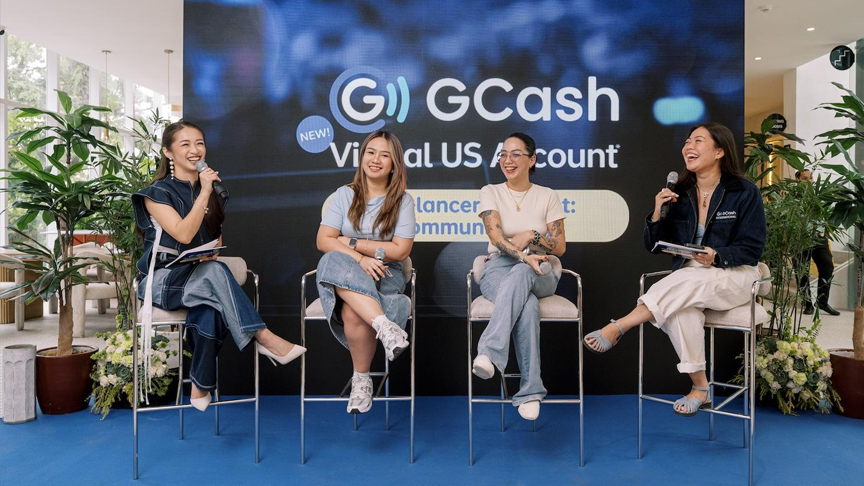
Yani Hornilla-Donato, Canva Philippines’ Country Manager, Chrissie Peria, Copy Lead for Canva’s Template Design Team, and Christine Reyes, Creative Lead for Canva’s Elements Team, share how they have found balance between work and home, and how workplaces can create the best environment for moms.

1. Learn to set boundaries

As Canva Philippines’ Country Manager, Yani is passionate about growing the team in Manila. She loves to share creative ways to connect Canva with Filipinos and help people communicate visually.

Based on her experience as a new mom, Yani talks about the importance of communication, while also being intentional in setting goals, empowering teams, and setting boundaries. 

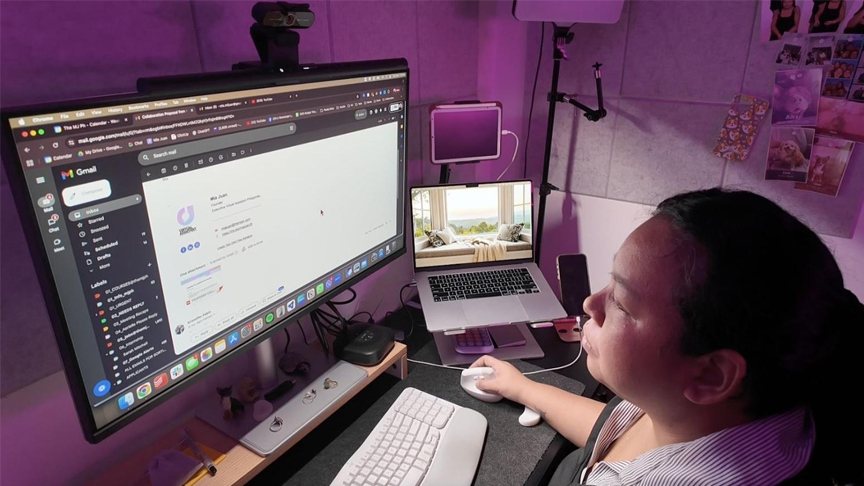
There are simple ways to establish boundaries—physically, mentally, and socially. Yani said,“Setup a workstation at home. A place where you can focus and send a signal to other people that you are working. Ideally, create a separate workspace from your place of rest.”

Yani has placed a hard stop to the end of her working day. “I start early, so I can finish by 4 in the afternoon. 5:00 pm and beyond is dedicated for my family, especially my new baby. I want to be present, take care of her, and witness her milestones. And definitely no work on weekends! Except for emergencies,” she added.

In a work from home set-up, it’s become difficult for some to switch off from work. “I make it a point to spend time catching up with people and sincerely asking them, ‘How are you?’. I’m also a huge fan of birthdays, so whenever I can, I try to orchestrate really fun online birthdays for people at work,” said Yani.

Canva has been featured in the Top 3 Best Workplaces in the Philippines for two years in a row, according to Great Place to Work, and Yani is proud of the culture that the team has established. 

2. Schedule leave and rest to spend time with family

Canva wants to help moms find balance between being a present mother, and also thriving at work. The company has increased the number of maternity days for its employees every year.  

“We have a generous leave package that affords all of us time off. We also try to extend flexibility wherever possible, especially for moms who need to adjust their schedules at home,” Yani added.

Chrissie, the Copy Lead for Canva’s Template Design Team, and responsible for populating Canva’s library with the wonderful templates, shared how Canva helped everyone settle into the remote working setup during the pandemic. Initiatives include giving allowances to improve workspaces at home, providing food and utility provisions, and hosting health and wellness virtual events to help employees cope.

3. Find your pack, nurture a culture of support and understanding

It is important to find a good support system and be open to your managers and wider team about your needs. This way they can support and understand you better. 

Christine, the Creative Lead for the Elements Team in Canva Manila, works with a team of creatives to produce graphic elements. One of the challenges she faces as a mom is being able to spend time with her family with a clear head.

“It took a while for me to completely let go of the habit of checking my work email and Slack beyond 4:00 pm, but I’ve learnt to be successful in that aspect. My leads always assure me that nothing will break even if I don’t answer everything after 4:00 pm,” Christine said.

At Canva, teams check on each other, have regular social calls and are quick to pick-up another person’s load if they need support. “Everyone is so understanding — children barging in on calls are greeted with smiles and small talk, dogs and cats get paraded on screen, and crowing roosters in the background are brushed off with giggles and no judgement,” Chrissie shared.

“We have Internal Coaching available for everyone too. This is especially helpful for moms who are going through tough things, and need or want a coach to offer guidance,” Yani said.

4. Share the fun work culture with your family

Canva’s Vibe Team is built on creating a work environment where everyone is empowered to do their best work and give back to the community.

Pre-pandemic Canva used to have Family Days, as well as events during special occasions like Halloween, when employees would bring their kids along to the Manila office to play. The Vibe team also hands out Mother’s Day (and Father’s Day) presents and holds special events at the office. 

“With our new working arrangements, our celebrations have shifted online. And while we’re not together physically, they’re just as heartwarming. We all aim to be good humans, and a force for good in a world that’s facing challenging times. And I’m lucky enough to be surrounded and supported by these wonderfully good people,” Chrissie shared.

5. Find your motivation; become a “Force for Good”

“Being a force for good” is one of Canva’s core values. The company works towards a world that isn’t just good for a small few, but one that’s good for everyone. Like most startups, life at Canva is very fast paced and everyone gives their best to adapt and react to the needs of their users.

“Everyone is encouraged to contribute and help improve the product and the user experience. It’s pretty fulfilling, knowing that you had a direct hand in something that makes someone’s life easier,” Chrissie shared. The biggest thing to love about what I do, is how my work empowers people on a daily basis. Writing is something that comes naturally to me, but it’s not the case for everyone. So knowing that I can use my skills to make others’ lives easier is motivating,” she added.

All moms are different, and we want to celebrate each one of them. Show your love and appreciation to your mom, mommy, mama, nanay or inay with Canva’s Mother’s Day templates. ⁣You can also find Filipino templates by changing the language settings to Tagalog and search for the term “ina”.

For more information about Canva, visit https://www.canva.com/

Strategies

Online marketers, take note: Online viewers prefer livestreams to recordings

Watching an online performance in real time boosts several aspects of the viewing experience.

Published

on

In an era when most TikTok videos are prerecorded, can a band with a new single create a tighter bond with fans by debuting via livestream instead? Can a business do the same when promoting a new product?

New research from the McCombs School of Business at The University of Texas at Austin suggests they could.

Since the pandemic, the livestreaming industry has been booming. The global market is expected to reach $345 billion by 2030, up from $100 billion in 2024. Nearly 30% of internet users watch livestreams at least once a week on social media.

Adrian Ward, associate professor of marketing, is one of them. A few years ago, he was viewing a livestream of a town hall meeting and found himself gripped by a speaker’s comments, feeling as if he were actually in the room. On reflection, he suspected it was the liveness of the event, as much as the speaker, that kept him glued to the screen.

“As we spend more of our time online and on social media, it’s worth asking how we can feel as complete and connected as possible in these spaces,” Ward says.

Live and Let Stream

With Alixandra Barasch of the University of Colorado Boulder and Nofar Duani of the University of Southern California, Ward began to investigate what he calls the “mere liveness effect”: the idea that simply knowing an event is streaming in real time makes a viewer feel more connected to the performer.

The researchers ran five experiments with 3,500 total participants. By manipulating various factors, they compared how, when, and why viewers reacted to watching livestreams versus prerecorded videos online.

In one experiment, participants watched live or recorded videos of their choosing on the platform Twitch. In another, they viewed a performance by the R&B cover band Sunny and the Black Pack, either live on YouTube Live or its recording the next day on YouTube.

In a third, the researchers created their own streaming platform to show participants identical videos, manipulating whether the content appeared to be live or prerecorded.

The experiments provide evidence that watching an online performance in real time boosts several aspects of the viewing experience:

  • Connection. Viewers in one experiment felt 7 percentage points more connected to the performers in the live video. Another experiment showed the effect was even stronger when viewers believed no one else was watching.
  • Enjoyment. In another experiment, viewers enjoyed the live video 5 percentage points more than the prerecorded one.
  • Engagement. Real-time streams carried a “liveness lift.” Viewers chose to continue watching longer, and they were more willing to follow and subscribe to the live streamer’s channels.

A common factor underlying those effects was a heightened sense of presence, Ward says. “When we watch something live, we are psychologically transported there.

“It’s not that there’s actually something different about the video itself. It’s that we know that it’s live right now, and that breaks down barriers between our world and the world on the other side of the screen.”

Lessons for Liveness

One quality weakened the liveness effect: not being able to see a performer’s face. When viewers saw only a musician’s hands, they felt less connected, even though they were watching the same performance.

The findings have implications for marketers, platform developers, and content creators, Ward says. In an age when people increasingly meet their social needs online, going live can benefit streamers by motivating audience engagement.

As a follow-up, he’s working with a graduate student to study whether the liveness effect translates into greater brand trust or sales.

“From influencers to businesses, it’s about the experience of real people seeing other real people live and in the moment,” Ward says. “It makes you feel like you’re sharing something.”

The Liveness Lift: Viewing Live Streams Creates Connection and Enhances Engagement in Amateur Music Performances” is published in The Journal of Marketing.

Continue Reading

Strategies

Renting out your place? Human connection key to a successful holiday rental

Warmth, friendliness and a sense of belonging, or the “homely” side of the experience, strengthen guest loyalty, making them more likely to return to the same host. However, these feelings alone didn’t necessarily make guests more likely to recommend the property to others.

Published

on

Striking up a connection with the property host is the factor that drives repeat bookings on holiday accommodation platforms such as Airbnb.

This is according to a new study, carried out by universities in the UK and Iran and published in the February 2026 edition of International Journal of Hospitality Management, that suggested that quality and value of accommodation also play a part in guest satisfaction, but personal connection is key to people deciding to stay again.

The research analyzed hundreds of online guest reviews and conducted in-depth interviews to understand what shapes guests’ evaluations of their stays in what is known as “peer-to-peer accommodation”.

Conducted over six years, the study shows that guests assess their stays using emotional cues such as warmth, atmosphere, and aesthetics; and cognitive cues such as cleanliness, safety, and convenience.

The study found that warmth, friendliness and a sense of belonging, or the “homely” side of the experience, strengthen guest loyalty, making them more likely to return to the same host. However, these feelings alone didn’t necessarily make guests more likely to recommend the property to others.

In contrast, affective and intellectual experiences – the enjoyment and perceived value of the stay – were stronger predictors of recommendations and positive reviews.

The research also examined how the quality of booking websites, such as Airbnb’s platform, influences guest behaviour. Although the website didn’t change how guests felt about the property itself, a well-designed and trustworthy site directly boosted guest loyalty and word-of-mouth.

Co-author Nektarios Tzempelikos, Professor of Marketing at Anglia Ruskin University (ARU), said: “Guests think carefully about both emotional and practical aspects before booking. Hosts who focus only on one side – either charm or functionality – may be missing the bigger picture.

“Platforms like Airbnb thrive when they’re designed for trust. Guests return to sites that are clear, reliable and easy to use. But it’s not just about tech, it’s about people. The most memorable stays come from warmth, authenticity and genuine local connection.

“By encouraging friendly, personal communication between hosts and guests, and balancing smart technology with a human touch, platforms can create experiences that feel less transactional and more meaningful.”

The study was carried out by researchers from Brunel University, University of Bradford, Newcastle University, Anglia Ruskin University and the University of Tehran.

Continue Reading

BizNews

Wine sellers, pay attention: Women more likely to choose wine from female winemakers

Messages like “proudly made by a woman winemaker” increased women’s intentions of purchasing wines, particularly when the label’s artwork reinforced the point with feminine gender cues such as flowers. Women were also willing to pay higher prices for those wines.

Published

on

Promoting women’s ownership in wineries can boost sales among the largest group of wine consumers, who happen to be women.

Messages like “proudly made by a woman winemaker” increased women’s intentions of purchasing wines, particularly when the label’s artwork reinforced the point with feminine gender cues such as flowers. Women were also willing to pay higher prices for those wines, according to the research from Washington State University and Auburn University.

The findings are noteworthy because 59% of all wine purchases in the US are made by women, said Christina Chi, coauthor of the research and professor of hospitality business management at WSU’s Carson College of Business.

Wine is often considered a cultural product, where the winemaker’s identity plays a role in shaping the brand’s image, she said.

Women winemakers, however, are less likely than their male counterparts to include their names on bottle labels or draw attention to their gender. Their reluctance may stem from concerns about prejudice toward their products in the male-dominated wine industry, Chi said.

“Our findings suggest that women winemakers and winery owners can benefit by being more visible,” she said. “The research shows that they can disclose their ownership with confidence and leverage it as a marketing strategy.”

The possibilities include putting “women-made wine” statements on labels or packaging, and retail store displays featuring women-made wines.

Demi Deng, an assistant professor at Auburn who earned her doctorate at WSU, is the first author on the research published in International Journal of Hospitality Management. Ruiying Cai, an assistant professor of hospitality business management at WSU, also contributed.

The new findings build on earlier studies showing that women are more inclined to buy wine with feminine gender cues on the labels. The 2024 research – by Cai, Chi, Deng, and WSU Emeritus Professor Robert Harrington – received widespread publicity. Beverage trade journals carried the story, and women winemakers were enthusiastic about the findings.

“As researchers, we want our work not only to have societal impact, but to have practical significance for the wine industry,” Chi said. “From the response, we saw that women winemakers were following our research and were eager for additional studies about women wine consumers.”

More than 1,000 US women participated in the most recent research, which involved a three-part study.

First, the researchers replicated the 2024 findings about feminine cues on wine labels. Using a fictitious Columbia Valley red table wine, the women surveyed expressed higher intentions of purchasing the wine when the label’s artwork featured a bouquet of flowers versus a masculine portrait. They were also willing to pay $3.50 more per bottle – about $17.75 for wines with feminine labels compared to $14.25 for wines with masculine cues.

In the second phase of the study, a “woman-made wine” statement was added to marketing materials. Women consumers had even stronger purchase intentions for wines with both the statement and feminine artwork on labels, the research found.

In the final phase, photos of women winemakers were further added to the marketing materials. But women were less likely to buy feminine-label wines when the female winemakers were pictured. Rather than focusing on the “woman-made” messaging, consumers’ decisions may have been swayed by whether they related to the individual women portrayed in the photographs, researchers said.

The studies also tested the marketing strategies on wines with masculine labels. Adding a “woman-made” statement significantly increased their appeal to women consumers. And when female winemakers were pictured in the marketing materials, women were willing to pay $3 more per bottle for wines with masculine labels.  

Besides helping women winemakers market their products, Deng said she hopes the research will draw attention to women’s contributions to the industry. In the United States, about 18% of winemakers are women.  

Deng worked as a sommelier in New Zealand before she earned her doctorate. “I actually encountered a lot of women winemakers, but their names aren’t visible in the wine market,” she said.

Continue Reading
Advertisement
Advertisement

Like us on Facebook

Trending