Connect with us

Strategies

How ads with dogs and cats affect consumer behavior

Exposure to dogs (cats) makes consumers subsequently more promotion- (prevention-) focused, meaning that consumers will become more eager (cautious) in pursuing a goal and more risk-seeking (risk averse) when making decisions.

Published

on

Photo by Humberto Arellano from Unsplash.com

Researchers from University of Massachusetts Lowell, University of South Carolina, and Hong Kong Polytechnic University published a new paper in the Journal of Marketing that examines how pet-related experiences affect people’s consumption-related decisions.

The study, forthcoming in the Journal of Marketing, is titled “The Pet Exposure Effect: Exploring the Differential Impact of Dogs Versus Cats on Consumer Mindsets” and is authored by Lei Jia, Xiaojing Yang, and Yuwei Jiang.

Pets are prevalent and play important roles in consumers’ daily lives. For example, 68 percent of U.S. households, or 84.6 million homes, own a pet. Dogs and cats are the most popular pets, with 48 percent of U.S. households (60 million homes) owning at least a dog and 37 percent of U.S. households (47 million homes) owning at least a cat. Pet adoption rates have climbed significantly, with about one in five households having acquired a dog or cat since the outbreak of the COVID-19 pandemic. Pets also frequently appear in popular culture, mass media, and marketing communications. For example, Target chose a dog as its brand mascot, Microsoft featured dogs in its 2020 holiday commercial to inspire people to find joy, and Wells Fargo used a cat in its commercial to advertise its suspicious card activity alert services.

Specifically, this new research examines the effects of pet exposure (e.g., recalling experience interacting with dogs or cats or viewing ads featuring a dog or a cat as the spokesperson) on consumers’ subsequent judgments and decision making, even in pets-unrelated domains. The researchers demonstrate that exposure to dogs (cats) makes consumers subsequently more promotion- (prevention-) focused, meaning that consumers will become more eager (cautious) in pursuing a goal and more risk-seeking (risk averse) when making decisions. Jia explains that “These effects occur because pet exposure experiences remind consumers of the stereotypical temperaments and behaviors of the pet species.”

These results are supported across multiple product and service contexts. For example, exposure to dogs (cats) led research participants to choose riskier (risk-averse) options in decision making, such as choosing the riskier stock investment option (the less risky mutual fund investment option), and more willing to risk monetary compensation for a chance to win an even a bigger payment. In addition, exposure to dogs (cats) led participants to prefer ad messages that are framed with a promotion (prevention) focus or messages featuring eagerness (vigilance) appeals. Furthermore, secondary data results show that people in US states with a higher percentage of dog ownership are more interested in searching promotion- (prevention)-focused words online and are more likely to get COVID-19 during the pandemic. The proposed effects are moderated by pet stereotypicality, such that the effects of pet exposure on consumer behavior only persist to the extent consumers are reminded of the stereotypical temperaments and behaviors of the pet species. 

Yang describes the novel implications to marketers. “First, marketers should consider crafting their advertising messages differently or recommending different products and services when they target consumers depending on their pet exposure situations. For example, to enhance the effectiveness of advertising appeals or communication messages, marketers should emphasize promotion-focused goals such as gains and non-gains if they are targeting dog owners or after consumers are exposed to dogs or dog-featuring stimuli  such as in an advertisement. Conversely, they should focus on prevention-focused goals such as losses and non-losses if they are pursuing cat owners or after consumers who are exposed to cats or cat-featuring stimuli. Importantly, our findings show that this advice holds even when the advertised product or service has nothing to do with pets or pet products.”

The research offers important insights into how to incorporate pets into marketing communications. One consideration is the type of product or service being advertised. For products or services mainly perceived as promotion-focused (e.g., stock investments, sports cars), featuring dogs in the ad is likely to increase the ad’s persuasiveness. For products or services deemed more prevention-focused (e.g., mutual fund investment, insurance), featuring cats may increase the ad’s appeal. Jiang adds that “Marketers should ensure that stereotypical pet temperaments are made salient in the message. For example, the eagerness aspect of the dog or the cautiousness aspect of the cat should be highlighted. Otherwise, the intended effects of featuring pets in the ad may not be achieved.”

Lastly, the finding that pets and pet ownership are potentially related to COVID-19 transmission rates and prevention behaviors could shed new light on policies related to the prevention of COVID-19 and potentially other infectious diseases. For example, policymakers in states with more dog owners could design more customized educational programs and materials related to the diseases. Alternatively, when designing ads to prevent the transmission of COVID-19 and other infectious diseases, cats could be incorporated as a spokesperson and/or the cat temperament can be referenced in the message to enhance the effectiveness of the ad.

Strategies

Renting out your place? Human connection key to a successful holiday rental

Warmth, friendliness and a sense of belonging, or the “homely” side of the experience, strengthen guest loyalty, making them more likely to return to the same host. However, these feelings alone didn’t necessarily make guests more likely to recommend the property to others.
Published

on

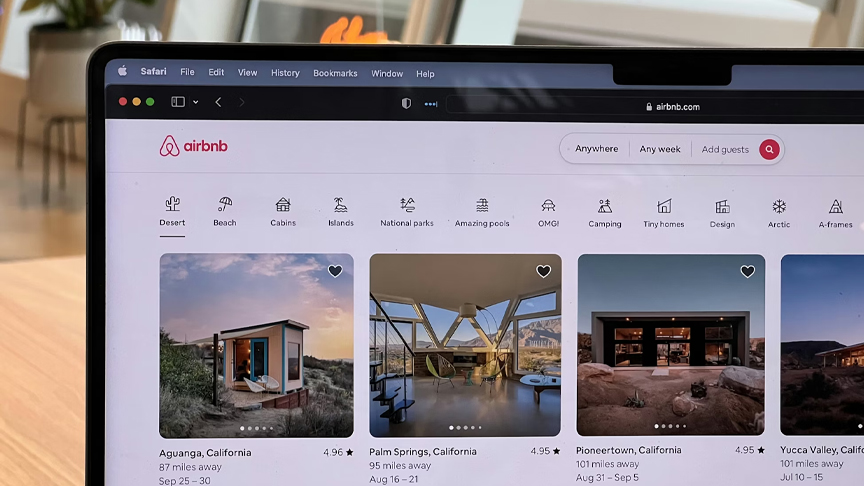
Striking up a connection with the property host is the factor that drives repeat bookings on holiday accommodation platforms such as Airbnb.

This is according to a new study, carried out by universities in the UK and Iran and published in the February 2026 edition of International Journal of Hospitality Management, that suggested that quality and value of accommodation also play a part in guest satisfaction, but personal connection is key to people deciding to stay again.

The research analyzed hundreds of online guest reviews and conducted in-depth interviews to understand what shapes guests’ evaluations of their stays in what is known as “peer-to-peer accommodation”.

Conducted over six years, the study shows that guests assess their stays using emotional cues such as warmth, atmosphere, and aesthetics; and cognitive cues such as cleanliness, safety, and convenience.

The study found that warmth, friendliness and a sense of belonging, or the “homely” side of the experience, strengthen guest loyalty, making them more likely to return to the same host. However, these feelings alone didn’t necessarily make guests more likely to recommend the property to others.

In contrast, affective and intellectual experiences – the enjoyment and perceived value of the stay – were stronger predictors of recommendations and positive reviews.

The research also examined how the quality of booking websites, such as Airbnb’s platform, influences guest behaviour. Although the website didn’t change how guests felt about the property itself, a well-designed and trustworthy site directly boosted guest loyalty and word-of-mouth.

Co-author Nektarios Tzempelikos, Professor of Marketing at Anglia Ruskin University (ARU), said: “Guests think carefully about both emotional and practical aspects before booking. Hosts who focus only on one side – either charm or functionality – may be missing the bigger picture.

“Platforms like Airbnb thrive when they’re designed for trust. Guests return to sites that are clear, reliable and easy to use. But it’s not just about tech, it’s about people. The most memorable stays come from warmth, authenticity and genuine local connection.

“By encouraging friendly, personal communication between hosts and guests, and balancing smart technology with a human touch, platforms can create experiences that feel less transactional and more meaningful.”

The study was carried out by researchers from Brunel University, University of Bradford, Newcastle University, Anglia Ruskin University and the University of Tehran.

Continue Reading

BizNews

In-aisle store displays might crowd shoppers and reduce overall sales

Retailers might seek strategies to boost product exposure without also increasing crowding – especially for cart shoppers who may experience greater crowding effects – and that excessive use of in-aisle fixtures will likely dampen sales at the aggregate level rather than increasing it. 

Published

on

In a study involving a real-world grocery store, in-aisle displays meant to boost product visibility were in fact associated with reduced sales and purchase-related behaviors, with results amplified for shopping cart users.

Mathias Streicher of Austria’s Department of Management and Marketing presents these findings in the open-access journal PLOS One.

Retailers often place extra product displays directly in aisles in an effort to boost visibility and enhance sales. However, in-aisle displays could increase spatial crowding, which occurs when people feel restricted in their freedom of movement and has been linked with purchase-avoidance tendencies. To help clarify if in-aisle displays result in more purchases, Streicher conducted several experiments with a partnering grocery store.

First, they tracked weekly sales for an aisle containing household, baby and pet staples over a six-week period during which five product-display stands were placed mid-aisle. The stands were then removed for six weeks. Comparison of sales data showed that in fact, sales increased after removal of the in-aisle displays, with the average weekly percentage of total store revenue from that aisle rising from 4.33 to 4.83 percent.

A second in-store experiment in the same aisle showed that people using shopping carts also stopped and physically handled products—behavior previously linked with sales—about 7.05 times more often when in-aisle displays were absent than when they were present. Non-cart shoppers also touched products more often when displays were removed, but the effect was smaller (3.81 times).

Finally, in an online experiment, 200 participants imagined using a shopping cart or basket while viewing photographs of the same aisle from the in-store experiments, with or without in-aisle displays. They tended to rate the aisle with displays as more crowded and reported lower levels of perceived control for aisles with displays than those without, with effects amplified for imagined cart versus basket use.

Together, these findings suggest retailers might seek strategies to boost product exposure without also increasing crowding – especially for cart shoppers who may experience greater crowding effects – and that excessive use of in-aisle fixtures will likely dampen sales at the aggregate level rather than increasing it. 

Further research could address some of this study’s limitations, such as by considering the effects of human crowding, promotional offers on products, and seasonal influences on shopping behaviors.

Streicher adds: “The research shows that adding merchandise into store aisles can actually reduce overall sales by making the environment feel crowded and harder to navigate. Importantly, this negative effect is even stronger for shoppers using carts, as they experience greater spatial constraints and reduced control while shopping.”

Continue Reading

BizNews

Structure of online reviews shapes their helpfulness

Reviews that grow increasingly positive are most helpful to readers, while those that turn negative are least helpful. For average-rated products, progressively negative trajectories enhance helpfulness, whereas reviews that start negative and grow positive are least effective.
Published

on

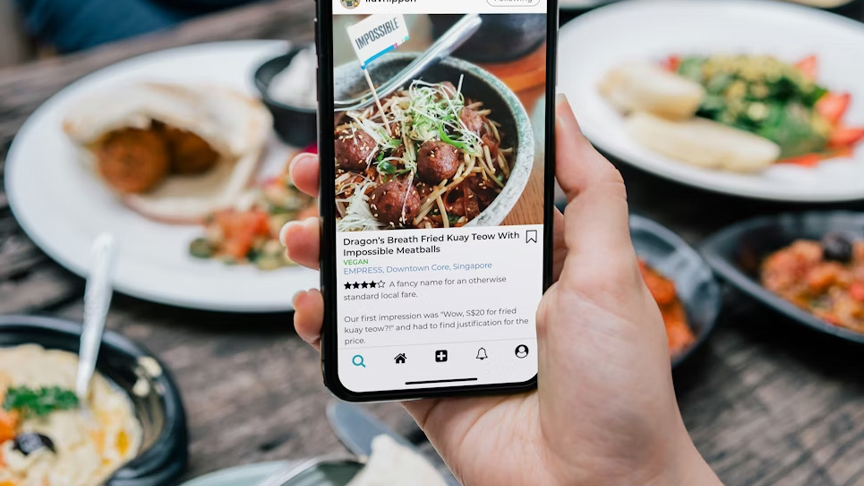
A study of nearly 200,000 Amazon reviews shows that the usefulness of online product reviews depends not only on what is said, but on how the information is structured.

The researchers, from the Universities of Cambridge and Queensland, studied Amazon reviews for products ranging from clothing to food to electronics. They found that how the information is organised matters as much as what is said, and that different review structures are more or less helpful, depending on how highly the reviewer has rated the product.

Their results, published in the journal Scientific Reports, could help companies and third-party review platforms design their review pages to prompt the sort of reviews that will be most helpful to potential customers.

For example, a reviewer assessing a laptop might praise its performance and design while criticising its battery life, so how should such information be structured to be most useful to the reader? Should the review begin with criticism and end on a positive note, or start positively before turning to drawbacks?

“Any target of evaluation typically has both positive and negative aspects, which makes crafting evaluative messages challenging,” said co-author Dr Yeun Joon Kim from Cambridge Judge Business School. “The key question is how to structure these elements within a single message. For example, one might present criticism upfront and then move to praise, or instead integrate negative points within an otherwise positive evaluation. Yet research has paid little attention to this structural dimension.

“We wanted to understand whether certain structures are consistently more effective, or whether their effectiveness depends on the performance of the target being evaluated.”

The study was based on 195,675 reviews of 5,487 distinct products, and assessed performance and related factors, and a helpfulness score as measured by reader votes.

The researchers identified nine possible structures of online reviews ranging from Type A reviews that start positive and become more positive as they go along, to Type I reviews that start negatively and become even more negative – with lots of variance in between.

For highly-rated products, reviews that grow increasingly positive are most helpful to readers, while those that turn negative are least helpful. For average-rated products, progressively negative trajectories enhance helpfulness, whereas reviews that start negative and grow positive are least effective. For low-rated products, reviews are judged most helpful when they open constructively before introducing criticism.

“The results are nuanced but very clear,” said co-author Dr Luna Luan from the University of Queensland, who carried out the research while earning her PhD at Cambridge Judge Business School. “Looking at the overall sentiment of reviews does not fully translate into message effectiveness. It is the broader structure of sentiment – how positivity and negativity evolve throughout the review – that shapes how readers interpret online reviews.”

“Our findings have practical implications for how platforms and companies can design review pages in order to elicit the sort of reviews that will be most helpful to readers based on how highly products are rated,” said Kim. “For example, instead of simply asking ‘Write your review here’, the online review form could instead include micro-prompts that guide how reviewers structure feedback in a way recipients find most helpful.”

The researchers found the most commonly used review styles are not necessarily the most helpful to readers. In particular, for average- and low-rated products, the structures that reviewers tend to adopt often differ from those that readers find most useful.

This mismatch likely reflects different underlying motivations. Reviewers are not always writing to maximise usefulness for others, but may instead be expressing their own experiences, frustrations or emotions – especially when evaluating products of moderate or poor quality. As a result, review writing often serves both as information sharing and as a form of self-expression. This helps explain why widely used review styles do not always align with what readers perceive as most informative or helpful.

Continue Reading
Advertisement
Advertisement

Like us on Facebook

Trending