Connect with us

Strategies

Social media marketing most effective when it prompts consumers to start posting

Social media is a critical marketing tool to help raise awareness when firms launch new products. The platforms can help inform consumers about product characteristics and benefits relative to competitors’ products.

Published

on

Social media is a critical marketing tool to help raise awareness when firms launch new products. The platforms can help inform consumers about product characteristics and benefits relative to competitors’ products.

New research from the University of Notre Dame analyzes data from the motion picture industry, which often relies on social media promotion, in an effort to understand how marketers could better promote other new products.

The Ripple Effect of Firm-Generated Content on New Movie Releases,” forthcoming in the Journal of Marketing Research from lead author Shijie Lu, the Howard J. and Geraldine F. Korth Associate Professor of Marketing at Notre Dame’s Mendoza College of Business, analyzes 145,502 firm-generated and 5.9 million user-generated Twitter posts associated with 159 movies.

Lu and co-authors Isaac Dinner from Indeed and Rajdeep Grewal from the University of North Carolina at Chapel Hill find a positive and significant ripple effect of firm-generated content (FGC) on movie sales. FGC increases user-generated content (UGC), which then drives movie consumption.

The conventional belief has been that social media allows marketers to influence the purchase behavior of their followers directly. However, the team’s findings show that the way FGC works in new product releases is indirectly — through the UGC or word of mouth spread by followers of firms’ social media accounts.

The team looked at Twitter posts about movies released by the top 20 U.S. studios between January 2014 and June 2015. The movies were associated with 486 unique Twitter handles, including 158 movie accounts, 310 actor and director accounts and 18 studio accounts. They conducted an econometric analysis to test the relationships between FGC, UGC and box office sales.

“Interestingly, even when multiple social media accounts from the movie’s actors, directors and studio are used to promote a new movie, the FGC from the main movie account is more effective than other firm-related accounts in driving sales,” Lu said. “But the UGC resulting from that main account sells even more. So, FGC from celebrity actors and directors who are active on social media does not improve box office performances nearly as much as UGC from the fans.”

Additionally, firms’ regular posts with a movie-specific hashtag are more effective than replies, retweets and posts without the hashtag.

“This suggests that movie executives should focus on creating FGC that sparks conversations among followers when new movies are released,” Lu said. “The Barbie movie’s recent retweet of a father who dressed in a Barbie costume when taking his daughter to watch the movie is a good example of getting followers to talk about the movie spontaneously.”

Although the study focused on movies, Lu said the findings can be generalized to other products, including TV shows, games, music and books.

Strategies

Online marketers, take note: Online viewers prefer livestreams to recordings

Watching an online performance in real time boosts several aspects of the viewing experience.

Published

on

In an era when most TikTok videos are prerecorded, can a band with a new single create a tighter bond with fans by debuting via livestream instead? Can a business do the same when promoting a new product?

New research from the McCombs School of Business at The University of Texas at Austin suggests they could.

Since the pandemic, the livestreaming industry has been booming. The global market is expected to reach $345 billion by 2030, up from $100 billion in 2024. Nearly 30% of internet users watch livestreams at least once a week on social media.

Adrian Ward, associate professor of marketing, is one of them. A few years ago, he was viewing a livestream of a town hall meeting and found himself gripped by a speaker’s comments, feeling as if he were actually in the room. On reflection, he suspected it was the liveness of the event, as much as the speaker, that kept him glued to the screen.

“As we spend more of our time online and on social media, it’s worth asking how we can feel as complete and connected as possible in these spaces,” Ward says.

Live and Let Stream

With Alixandra Barasch of the University of Colorado Boulder and Nofar Duani of the University of Southern California, Ward began to investigate what he calls the “mere liveness effect”: the idea that simply knowing an event is streaming in real time makes a viewer feel more connected to the performer.

The researchers ran five experiments with 3,500 total participants. By manipulating various factors, they compared how, when, and why viewers reacted to watching livestreams versus prerecorded videos online.

In one experiment, participants watched live or recorded videos of their choosing on the platform Twitch. In another, they viewed a performance by the R&B cover band Sunny and the Black Pack, either live on YouTube Live or its recording the next day on YouTube.

In a third, the researchers created their own streaming platform to show participants identical videos, manipulating whether the content appeared to be live or prerecorded.

The experiments provide evidence that watching an online performance in real time boosts several aspects of the viewing experience:

  • Connection. Viewers in one experiment felt 7 percentage points more connected to the performers in the live video. Another experiment showed the effect was even stronger when viewers believed no one else was watching.
  • Enjoyment. In another experiment, viewers enjoyed the live video 5 percentage points more than the prerecorded one.
  • Engagement. Real-time streams carried a “liveness lift.” Viewers chose to continue watching longer, and they were more willing to follow and subscribe to the live streamer’s channels.

A common factor underlying those effects was a heightened sense of presence, Ward says. “When we watch something live, we are psychologically transported there.

“It’s not that there’s actually something different about the video itself. It’s that we know that it’s live right now, and that breaks down barriers between our world and the world on the other side of the screen.”

Lessons for Liveness

One quality weakened the liveness effect: not being able to see a performer’s face. When viewers saw only a musician’s hands, they felt less connected, even though they were watching the same performance.

The findings have implications for marketers, platform developers, and content creators, Ward says. In an age when people increasingly meet their social needs online, going live can benefit streamers by motivating audience engagement.

As a follow-up, he’s working with a graduate student to study whether the liveness effect translates into greater brand trust or sales.

“From influencers to businesses, it’s about the experience of real people seeing other real people live and in the moment,” Ward says. “It makes you feel like you’re sharing something.”

The Liveness Lift: Viewing Live Streams Creates Connection and Enhances Engagement in Amateur Music Performances” is published in The Journal of Marketing.

Continue Reading

Strategies

Renting out your place? Human connection key to a successful holiday rental

Warmth, friendliness and a sense of belonging, or the “homely” side of the experience, strengthen guest loyalty, making them more likely to return to the same host. However, these feelings alone didn’t necessarily make guests more likely to recommend the property to others.
Published

on

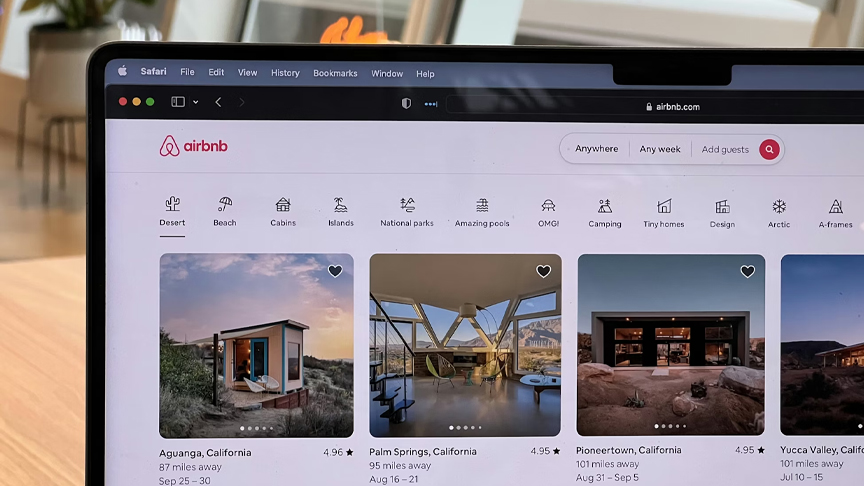
Striking up a connection with the property host is the factor that drives repeat bookings on holiday accommodation platforms such as Airbnb.

This is according to a new study, carried out by universities in the UK and Iran and published in the February 2026 edition of International Journal of Hospitality Management, that suggested that quality and value of accommodation also play a part in guest satisfaction, but personal connection is key to people deciding to stay again.

The research analyzed hundreds of online guest reviews and conducted in-depth interviews to understand what shapes guests’ evaluations of their stays in what is known as “peer-to-peer accommodation”.

Conducted over six years, the study shows that guests assess their stays using emotional cues such as warmth, atmosphere, and aesthetics; and cognitive cues such as cleanliness, safety, and convenience.

The study found that warmth, friendliness and a sense of belonging, or the “homely” side of the experience, strengthen guest loyalty, making them more likely to return to the same host. However, these feelings alone didn’t necessarily make guests more likely to recommend the property to others.

In contrast, affective and intellectual experiences – the enjoyment and perceived value of the stay – were stronger predictors of recommendations and positive reviews.

The research also examined how the quality of booking websites, such as Airbnb’s platform, influences guest behaviour. Although the website didn’t change how guests felt about the property itself, a well-designed and trustworthy site directly boosted guest loyalty and word-of-mouth.

Co-author Nektarios Tzempelikos, Professor of Marketing at Anglia Ruskin University (ARU), said: “Guests think carefully about both emotional and practical aspects before booking. Hosts who focus only on one side – either charm or functionality – may be missing the bigger picture.

“Platforms like Airbnb thrive when they’re designed for trust. Guests return to sites that are clear, reliable and easy to use. But it’s not just about tech, it’s about people. The most memorable stays come from warmth, authenticity and genuine local connection.

“By encouraging friendly, personal communication between hosts and guests, and balancing smart technology with a human touch, platforms can create experiences that feel less transactional and more meaningful.”

The study was carried out by researchers from Brunel University, University of Bradford, Newcastle University, Anglia Ruskin University and the University of Tehran.

Continue Reading

BizNews

Wine sellers, pay attention: Women more likely to choose wine from female winemakers

Messages like “proudly made by a woman winemaker” increased women’s intentions of purchasing wines, particularly when the label’s artwork reinforced the point with feminine gender cues such as flowers. Women were also willing to pay higher prices for those wines.

Published

on

Promoting women’s ownership in wineries can boost sales among the largest group of wine consumers, who happen to be women.

Messages like “proudly made by a woman winemaker” increased women’s intentions of purchasing wines, particularly when the label’s artwork reinforced the point with feminine gender cues such as flowers. Women were also willing to pay higher prices for those wines, according to the research from Washington State University and Auburn University.

The findings are noteworthy because 59% of all wine purchases in the US are made by women, said Christina Chi, coauthor of the research and professor of hospitality business management at WSU’s Carson College of Business.

Wine is often considered a cultural product, where the winemaker’s identity plays a role in shaping the brand’s image, she said.

Women winemakers, however, are less likely than their male counterparts to include their names on bottle labels or draw attention to their gender. Their reluctance may stem from concerns about prejudice toward their products in the male-dominated wine industry, Chi said.

“Our findings suggest that women winemakers and winery owners can benefit by being more visible,” she said. “The research shows that they can disclose their ownership with confidence and leverage it as a marketing strategy.”

The possibilities include putting “women-made wine” statements on labels or packaging, and retail store displays featuring women-made wines.

Demi Deng, an assistant professor at Auburn who earned her doctorate at WSU, is the first author on the research published in International Journal of Hospitality Management. Ruiying Cai, an assistant professor of hospitality business management at WSU, also contributed.

The new findings build on earlier studies showing that women are more inclined to buy wine with feminine gender cues on the labels. The 2024 research – by Cai, Chi, Deng, and WSU Emeritus Professor Robert Harrington – received widespread publicity. Beverage trade journals carried the story, and women winemakers were enthusiastic about the findings.

“As researchers, we want our work not only to have societal impact, but to have practical significance for the wine industry,” Chi said. “From the response, we saw that women winemakers were following our research and were eager for additional studies about women wine consumers.”

More than 1,000 US women participated in the most recent research, which involved a three-part study.

First, the researchers replicated the 2024 findings about feminine cues on wine labels. Using a fictitious Columbia Valley red table wine, the women surveyed expressed higher intentions of purchasing the wine when the label’s artwork featured a bouquet of flowers versus a masculine portrait. They were also willing to pay $3.50 more per bottle – about $17.75 for wines with feminine labels compared to $14.25 for wines with masculine cues.

In the second phase of the study, a “woman-made wine” statement was added to marketing materials. Women consumers had even stronger purchase intentions for wines with both the statement and feminine artwork on labels, the research found.

In the final phase, photos of women winemakers were further added to the marketing materials. But women were less likely to buy feminine-label wines when the female winemakers were pictured. Rather than focusing on the “woman-made” messaging, consumers’ decisions may have been swayed by whether they related to the individual women portrayed in the photographs, researchers said.

The studies also tested the marketing strategies on wines with masculine labels. Adding a “woman-made” statement significantly increased their appeal to women consumers. And when female winemakers were pictured in the marketing materials, women were willing to pay $3 more per bottle for wines with masculine labels.  

Besides helping women winemakers market their products, Deng said she hopes the research will draw attention to women’s contributions to the industry. In the United States, about 18% of winemakers are women.  

Deng worked as a sommelier in New Zealand before she earned her doctorate. “I actually encountered a lot of women winemakers, but their names aren’t visible in the wine market,” she said.

Continue Reading
Advertisement
Advertisement

Like us on Facebook

Trending