Connect with us

Strategies

Visual design of product can hold symbolic meanings to consumers – study

Simplicity of the product package aligns with consumers’ default assumption that store brands invest less in product quality. Thus, the simplicity of store brand packaging likely signals a lack of investment in the product rather than few ingredients and product purity.

Published

on

Researchers from Texas Christian University, University of Illinois Urbana-Champaign, and University of Georgia published a new Journal of Marketing article that examines the consumer trend towards minimalist packaging in consumable products.

The study, forthcoming in the Journal of Marketing, is titled “Symbolically Simple: How Simple Packaging Design Influences Willingness to Pay for Consumable Products” and is authored by Lan Anh N. Ton, Rosanna K. Smith, and Julio Sevilla.

Designing products is both an art and a science. Companies have found that bringing together many visual elements in product design—with multiple colors, text, and illustrations incorporated in the packaging—can lead to enhanced brand engagement. However, in the last few years, consumers have increasingly desired more minimalist aesthetics.

The new Journal of Marketing study examines this consumer trend toward minimalist packaging in consumable products. The research team theorizes that consumers tend to assume that the simplicity of the product package suggests that the product contains few ingredients, which in turn increases perceived product purity, defined as the belief that the essential ingredients of the product are undiluted. With customers increasingly seeking product purity, there is an increase in a willingness to pay for consumable products with simple packaging.

The study defines simple packaging design as the extent to which a product package contains few design elements, which lack detail, are similar to one another, and are arranged in regular ways. Complex packaging design refers to the extent to which a product package contains many design elements that are highly detailed, different from one another, and arranged in irregular ways.

The researchers examined over 1,000 consumable product packages from the largest supermarket chain in the U.S. and find that the simplicity of the packaging design is positively associated with price. As Ton explains, “in a series of experiments, we show that the visual design of a product can hold symbolic meanings to consumers. Specifically, although there is no information about the product’s composition on the package, we find that consumers assume that the simplicity of the product package signals that there are few ingredients within, which enhances perceived product purity.”

However, simple packaging does not always enhance consumers’ willingness to pay. Smith says, “we find that store-brand products are not likely to experience the same benefits of simple packaging as non-store brand products. This is likely because the simplicity of the product package aligns with consumers’ default assumption that store brands invest less in product quality. Thus, the simplicity of store brand packaging likely signals a lack of investment in the product rather than few ingredients and product purity.”

Sevilla adds that “we also find the preference for simple packaging depends on consumers’ goals. When consumers have a health goal, they are more likely to pay for a product with simple packaging. This is because simple packaging conveys that the product contains few ingredients and high product purity, attributes that tend to be associated with healthy products. By contrast, when consumers seek to indulge, they are less willing to pay for products with simple packaging. This is because complex packaging signals many ingredients and low product purity, attributes that tend to be associated with unhealthy and, by extension, tasty products.”

This research extends the understanding of consumer interest in minimalist aesthetics by showing conditions under which design simplicity can be less desirable. Visual simplicity often conveys the idea of “less is more,” but there are situations when it can simply signal “less is less.” It also broadens the understanding of the concept of purity in the context of consumer research. While explicit illustrations, such as a drawing of a mountain spring, can enhance consumer judgments of product purity, product purity can be inferred from more subtle visual cues (or even the lack of visual design elements). Relatedly, the study digs into the concept of product purity, which can hold a variety of meanings, and differentiates purity from its related construct of naturalness, which typically refers to products that are not man-made.

This research provides several insights for chief marketing officers:

  • Simplifying package design can be an effective way for brands to visually (and nonverbally) communicate key product information to consumers. Simple packaging can lead consumers to infer that the product has fewer ingredients and is purer—thereby enhancing their willingness to pay.
  • Aligning the visual design of the product package with ingredient information is essential to make a positive impact on consumers.
  • Managers may consider the specific brand when using simple packaging because positive inferences are less likely to occur for store-brand products.
  • When managers want to signal that their products are indulgent, opting for more complex designs could be more effective.

This work could be extended to durable goods such as technology products. For instance, Apple products are well-known for their simple packaging and are often seen as easier to use than their competitors. It may be fruitful to explore how inferences derived from simple packaging of technology products align or differ from those of consumable goods.

BizNews

In-aisle store displays might crowd shoppers and reduce overall sales

Retailers might seek strategies to boost product exposure without also increasing crowding – especially for cart shoppers who may experience greater crowding effects – and that excessive use of in-aisle fixtures will likely dampen sales at the aggregate level rather than increasing it. 

Published

on

In a study involving a real-world grocery store, in-aisle displays meant to boost product visibility were in fact associated with reduced sales and purchase-related behaviors, with results amplified for shopping cart users.

Mathias Streicher of Austria’s Department of Management and Marketing presents these findings in the open-access journal PLOS One.

Retailers often place extra product displays directly in aisles in an effort to boost visibility and enhance sales. However, in-aisle displays could increase spatial crowding, which occurs when people feel restricted in their freedom of movement and has been linked with purchase-avoidance tendencies. To help clarify if in-aisle displays result in more purchases, Streicher conducted several experiments with a partnering grocery store.

First, they tracked weekly sales for an aisle containing household, baby and pet staples over a six-week period during which five product-display stands were placed mid-aisle. The stands were then removed for six weeks. Comparison of sales data showed that in fact, sales increased after removal of the in-aisle displays, with the average weekly percentage of total store revenue from that aisle rising from 4.33 to 4.83 percent.

A second in-store experiment in the same aisle showed that people using shopping carts also stopped and physically handled products—behavior previously linked with sales—about 7.05 times more often when in-aisle displays were absent than when they were present. Non-cart shoppers also touched products more often when displays were removed, but the effect was smaller (3.81 times).

Finally, in an online experiment, 200 participants imagined using a shopping cart or basket while viewing photographs of the same aisle from the in-store experiments, with or without in-aisle displays. They tended to rate the aisle with displays as more crowded and reported lower levels of perceived control for aisles with displays than those without, with effects amplified for imagined cart versus basket use.

Together, these findings suggest retailers might seek strategies to boost product exposure without also increasing crowding – especially for cart shoppers who may experience greater crowding effects – and that excessive use of in-aisle fixtures will likely dampen sales at the aggregate level rather than increasing it. 

Further research could address some of this study’s limitations, such as by considering the effects of human crowding, promotional offers on products, and seasonal influences on shopping behaviors.

Streicher adds: “The research shows that adding merchandise into store aisles can actually reduce overall sales by making the environment feel crowded and harder to navigate. Importantly, this negative effect is even stronger for shoppers using carts, as they experience greater spatial constraints and reduced control while shopping.”

Continue Reading

BizNews

Structure of online reviews shapes their helpfulness

Reviews that grow increasingly positive are most helpful to readers, while those that turn negative are least helpful. For average-rated products, progressively negative trajectories enhance helpfulness, whereas reviews that start negative and grow positive are least effective.
Published

on

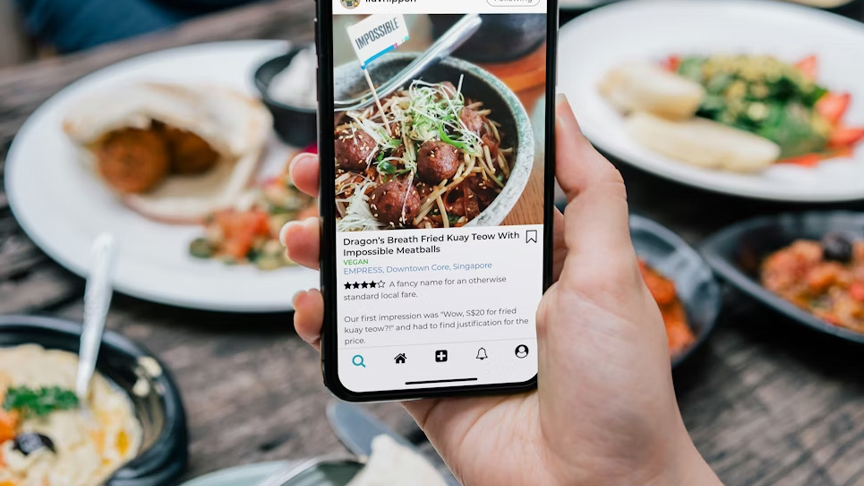
A study of nearly 200,000 Amazon reviews shows that the usefulness of online product reviews depends not only on what is said, but on how the information is structured.

The researchers, from the Universities of Cambridge and Queensland, studied Amazon reviews for products ranging from clothing to food to electronics. They found that how the information is organised matters as much as what is said, and that different review structures are more or less helpful, depending on how highly the reviewer has rated the product.

Their results, published in the journal Scientific Reports, could help companies and third-party review platforms design their review pages to prompt the sort of reviews that will be most helpful to potential customers.

For example, a reviewer assessing a laptop might praise its performance and design while criticising its battery life, so how should such information be structured to be most useful to the reader? Should the review begin with criticism and end on a positive note, or start positively before turning to drawbacks?

“Any target of evaluation typically has both positive and negative aspects, which makes crafting evaluative messages challenging,” said co-author Dr Yeun Joon Kim from Cambridge Judge Business School. “The key question is how to structure these elements within a single message. For example, one might present criticism upfront and then move to praise, or instead integrate negative points within an otherwise positive evaluation. Yet research has paid little attention to this structural dimension.

“We wanted to understand whether certain structures are consistently more effective, or whether their effectiveness depends on the performance of the target being evaluated.”

The study was based on 195,675 reviews of 5,487 distinct products, and assessed performance and related factors, and a helpfulness score as measured by reader votes.

The researchers identified nine possible structures of online reviews ranging from Type A reviews that start positive and become more positive as they go along, to Type I reviews that start negatively and become even more negative – with lots of variance in between.

For highly-rated products, reviews that grow increasingly positive are most helpful to readers, while those that turn negative are least helpful. For average-rated products, progressively negative trajectories enhance helpfulness, whereas reviews that start negative and grow positive are least effective. For low-rated products, reviews are judged most helpful when they open constructively before introducing criticism.

“The results are nuanced but very clear,” said co-author Dr Luna Luan from the University of Queensland, who carried out the research while earning her PhD at Cambridge Judge Business School. “Looking at the overall sentiment of reviews does not fully translate into message effectiveness. It is the broader structure of sentiment – how positivity and negativity evolve throughout the review – that shapes how readers interpret online reviews.”

“Our findings have practical implications for how platforms and companies can design review pages in order to elicit the sort of reviews that will be most helpful to readers based on how highly products are rated,” said Kim. “For example, instead of simply asking ‘Write your review here’, the online review form could instead include micro-prompts that guide how reviewers structure feedback in a way recipients find most helpful.”

The researchers found the most commonly used review styles are not necessarily the most helpful to readers. In particular, for average- and low-rated products, the structures that reviewers tend to adopt often differ from those that readers find most useful.

This mismatch likely reflects different underlying motivations. Reviewers are not always writing to maximise usefulness for others, but may instead be expressing their own experiences, frustrations or emotions – especially when evaluating products of moderate or poor quality. As a result, review writing often serves both as information sharing and as a form of self-expression. This helps explain why widely used review styles do not always align with what readers perceive as most informative or helpful.

Continue Reading

Strategies

Online marketers, take note: Online viewers prefer livestreams to recordings

Watching an online performance in real time boosts several aspects of the viewing experience.

Published

on

In an era when most TikTok videos are prerecorded, can a band with a new single create a tighter bond with fans by debuting via livestream instead? Can a business do the same when promoting a new product?

New research from the McCombs School of Business at The University of Texas at Austin suggests they could.

Since the pandemic, the livestreaming industry has been booming. The global market is expected to reach $345 billion by 2030, up from $100 billion in 2024. Nearly 30% of internet users watch livestreams at least once a week on social media.

Adrian Ward, associate professor of marketing, is one of them. A few years ago, he was viewing a livestream of a town hall meeting and found himself gripped by a speaker’s comments, feeling as if he were actually in the room. On reflection, he suspected it was the liveness of the event, as much as the speaker, that kept him glued to the screen.

“As we spend more of our time online and on social media, it’s worth asking how we can feel as complete and connected as possible in these spaces,” Ward says.

Live and Let Stream

With Alixandra Barasch of the University of Colorado Boulder and Nofar Duani of the University of Southern California, Ward began to investigate what he calls the “mere liveness effect”: the idea that simply knowing an event is streaming in real time makes a viewer feel more connected to the performer.

The researchers ran five experiments with 3,500 total participants. By manipulating various factors, they compared how, when, and why viewers reacted to watching livestreams versus prerecorded videos online.

In one experiment, participants watched live or recorded videos of their choosing on the platform Twitch. In another, they viewed a performance by the R&B cover band Sunny and the Black Pack, either live on YouTube Live or its recording the next day on YouTube.

In a third, the researchers created their own streaming platform to show participants identical videos, manipulating whether the content appeared to be live or prerecorded.

The experiments provide evidence that watching an online performance in real time boosts several aspects of the viewing experience:

  • Connection. Viewers in one experiment felt 7 percentage points more connected to the performers in the live video. Another experiment showed the effect was even stronger when viewers believed no one else was watching.
  • Enjoyment. In another experiment, viewers enjoyed the live video 5 percentage points more than the prerecorded one.
  • Engagement. Real-time streams carried a “liveness lift.” Viewers chose to continue watching longer, and they were more willing to follow and subscribe to the live streamer’s channels.

A common factor underlying those effects was a heightened sense of presence, Ward says. “When we watch something live, we are psychologically transported there.

“It’s not that there’s actually something different about the video itself. It’s that we know that it’s live right now, and that breaks down barriers between our world and the world on the other side of the screen.”

Lessons for Liveness

One quality weakened the liveness effect: not being able to see a performer’s face. When viewers saw only a musician’s hands, they felt less connected, even though they were watching the same performance.

The findings have implications for marketers, platform developers, and content creators, Ward says. In an age when people increasingly meet their social needs online, going live can benefit streamers by motivating audience engagement.

As a follow-up, he’s working with a graduate student to study whether the liveness effect translates into greater brand trust or sales.

“From influencers to businesses, it’s about the experience of real people seeing other real people live and in the moment,” Ward says. “It makes you feel like you’re sharing something.”

The Liveness Lift: Viewing Live Streams Creates Connection and Enhances Engagement in Amateur Music Performances” is published in The Journal of Marketing.

Continue Reading
Advertisement
Advertisement

Like us on Facebook

Trending