Connect with us

BizNews

Having a bad boss makes you a worse employee

Employees who prioritize career advancement are strongly affected by abusive leadership while employees who prioritized job security remained just as likely to take charge after experiencing abusive supervision. Employees who prioritize advancement tend to hunker down and reduce taking-charge behavior after experiencing abusive supervision.

Published

on

Your boss stomps and yells, criticizes you, and then proceeds to take the credit for your work – even it is an isolated incident? This can take a profound toll on employee well-being and performance. But despite the many years of research, the precise mechanisms through which bad leadership impacts employees’ performance remain a subject of interest.

In a new study, first published in Group & Organization Management, an international group of researchers, led by Stevens Institute of Technology and University of Illinois Chicago, offer a novel explanation of the cognitive factors through which abusive leadership degrades employee performance — and helps explain why some employees are more vulnerable than others to the negative impact of abusive bosses.

“Thankfully, abusive supervision isn’t too common, but when it happens it leaves employees far less likely to take the initiative and work to improve business practices,” said Howie Xu, an author of the study and an assistant professor of management at Stevens. “We wanted to understand the cognitive factors behind that effect — and ask how companies can shield their employees from the negative impact of bad bosses.” 

Xu’s team surveyed employees and supervisors from 42 different South Korean companies, along with hundreds of US students, to explore the ways in which abusive supervision impacts “taking-charge” behavior by employees. Subjects were then ranked according to whether they actively seek positive opportunities for promotion and advancement or take a more preventative approach that prioritizes safety and job security.

“We theorized that both the drive to obtain rewards (promotion, bonuses) and the drive to avoid punishments (maintain job security) would shape the way employees respond to abusive bosses,” Xu explained. 

But that’s not what Xu and his team found. Rather, they found that employees who prioritize career advancement are strongly affected by abusive leadership while employees who prioritized job security remained just as likely to take charge after experiencing abusive supervision. Employees who prioritize advancement tend to hunker down and reduce taking-charge behavior after experiencing abusive supervision.”
“That’s a very surprising finding,” Xu said. “We found clear evidence that the signal from abusive leadership is much more salient to employees who care about advancement than it is to employees who care about security.”

One possible explanation, Xu explained, is that ambitious employees may perceive an abusive boss as having direct control over whether they will receive bonuses or opportunities for promotion. By contrast, bad bosses may be seen as having less direct control over firing decisions, which often require ratification by HR teams or more senior managers. 

That’s an important finding, because it suggests that organizations seeking to mitigate the impact of bad leadership should focus on empowering employees and making them feel valued and appreciated, rather than simply reassuring them their jobs are safe. “If a leader slips into abusive behavior, our research suggests that they should not only apologize, but also work to reassure employees of their value to the organization,” Xu said.

Unexpectedly, the variation in employee response to abusive supervision was broadly constant across both the Korean and US populations. “We think of these countries as culturally distinct, but there was no real difference in how employees responded to abusive bosses,” Xu said. “That might reflect the effect of globalization — or might be a sign that this is a universal trait that exists across many different cultures.” 

Researchers from Texas Tech University, Hunan University and Seoul National University also contributed to the paper.

BizNews

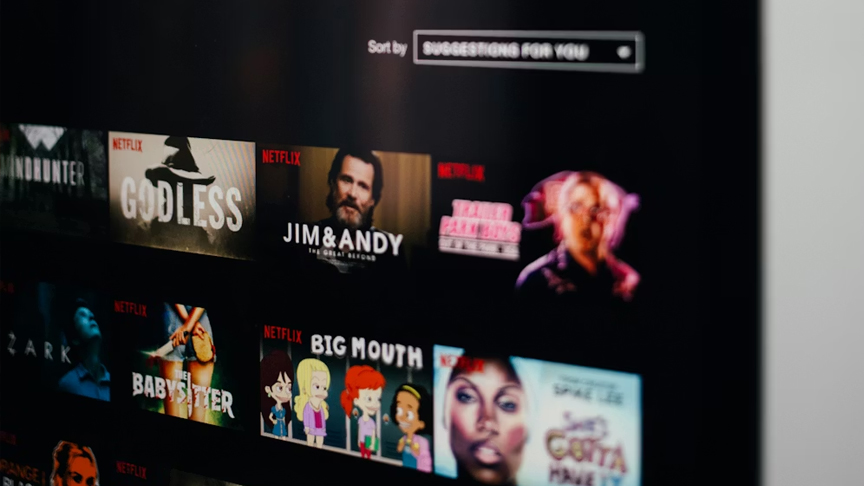
For those marketing contents, weekly episode releases drive higher viewer engagement and subscriptions on platforms

Marketing people, pay attention: the drip-style release schedule boosts both engagement and subscription revenue.
Published

on

Gradually releasing TV show episodes, rather than offering full seasons all at once for binge-watchers, significantly increases engagement on subscription video-on-demand (SVoD) platforms, leading to substantially higher subscription rates.

This is according to a study that provides the first large-scale causal evidence from a real-world randomized field experiment showing how release strategies shape viewing patterns, content discovery and retention across 84,000 viewers over a five-week randomized trial.

The study, “When Less Is More: Content Strategies for Subscription Video on Demand,” was authored by Miguel Godinho de Matos of Católica Lisbon School of Business and Economics, Samir Mamadehussene of the University of Texas at Dallas and Pedro Ferreira of Carnegie Mellon University.

To conduct their study, researchers made sure that across a five-week randomized field trial conducted with a major multinational telecommunications provider, viewers were assigned to a gradual (drip) release schedule. As a result, they found these viewers were 48% more likely to continue using the platform. They were more likely to return on a weekly basis to explore additional content.

When the researchers studied the all-at-once release of episodes, they found that while this approach initially attracted more binge-watchers who were eager to start a new series immediately after launch, those platform users did not engage with the platform over time in a more sustained way.

“The moment all-at-once viewers finish a fully released show, they often leave the platform,” de Matos said. “A drip schedule keeps viewers engaged for weeks, giving them time to search, browse, and find other shows they enjoy.”

“Releasing episodes slowly creates natural touchpoints that bring viewers back each week,” said Mamadehussene. “Those repeated visits dramatically expand content discovery and strengthen retention.”

When given all-at-once access, drip-release viewers tended to watch fewer episodes the first week, but they did watch significantly more episodes in later weeks. They increased exploration of the platform catalog, and ultimately consumed more total content than those given all episodes upfront.

At the end of the free trial, drip-release users were 1.7% more likely to subscribe, a 48% increase over the all-at-once group’s baseline subscription rate of 3.48%.

To be sure, the study found that this effect varied based on binge-watching preferences. For heavy binge watchers, the lack of immediate access to full seasons reduced engagement, lowering subscription likelihood. These findings help explain why major streamers which popularized binge releases, such as Netflix, have increasingly adopted weekly or hybrid release models.

“Our results show that the drip-style release schedule boosts both engagement and subscription revenue,” said Ferreira. “When it comes to sustaining audience interest, sometimes less really is more.”

Continue Reading

BizNews

3 Filipino MSME owners share how to enter your easy era of business

When presented with the opportunity to use solutions, more business owners are discovering the advantages of adopting new tech innovations — especially when it comes to payments.
Published

on

Many of today’s MSMEs are born from a passion: a recipe that’s been passed down for generations, a love of coffee and pastries, or a vision to showcase local fashion and design to the global stage. But turning that passion into a sustainable business is another thing on its own. Day-to-day challenges like managing orders and keeping payments on track can be overwhelming.

As businesses grow, so does the need for better tools. While there’s no shortage of tech in the market, many MSMEs often steer away due to cost and complexity. However, when presented with the opportunity to use solutions from GCash for Business, more business owners are discovering the advantages of adopting new tech innovations — especially when it comes to payments.

One innovation is GCash SoundPay. This device provides instant voice confirmation for every successful QR payment made. It’s easy to carry, affordable, and simple to use – requiring only a fully verified GCash account of at least 12 months to get started.

For Nikko Mendoza of Smthn Smthn Cafe in Davao, Michael Chan of Mom Rose Chicken Lechon in Bacolod, and Emgee Po of Get Spotted in Bacolod, embracing digital tools has helped them grow their brands while allowing them to enter a new era of ease.

Here’s what they’ve learned:

1. Faster checkouts make everyday transactions feel hassle-free Michael Chan, Mom Rose Chicken Lechon

Mom Rose Chicken Lechon was born from both necessity and memory. When the pandemic shut down their carinderia in 2021, the Chan family shifted to making their signature Spicy Chicken Lechon, a dish inspired by their late mother, Rosemarie.

To this day, the business honors her wish for “a happy family,” and GCash SoundPay helps them keep that promise by ensuring this joy extends to their customers by making everyday payments stress-free.

“Most of our customers prefer GCash now. With GCash SoundPay, payments are faster and more reliable, so we can focus on serving food that makes people happy,” Michael shares.

In store, each team member carries their own GCash SoundPay device, worn with a lanyard and ready to use. This allows them to accept and confirm payments anytime, anywhere. No need for long waiting lines and just one payment acceptance device at the counter. Because of the real-time audio alerts, transactions move quicker, and the team can focus fully on serving their customers more efficiently.

2. Tech is a driver of growth. – Emgee Po, EMGEE by Get Spotted

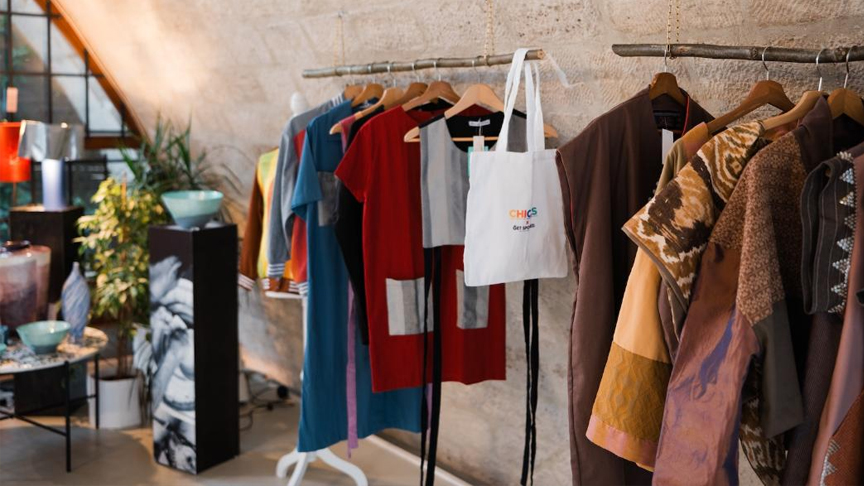
A thesis project in 2011, EMGEE by Get Spotted is a local fashion brand from Bacolod that is now making waves internationally. Its founder, Emgee Po, partners with Negros weavers and Angono seamstresses to create one-off designs that are proudly Filipino. From a mall location in Ayala Malls Capitol Central to pop-ups in Paris and soon New York, EMGEE continues to expand its reach.

GCash played a role in how Emgee connected with customers. She first used her personal GCash account for payments, where cashless transactions made it easier to keep up with multiple customers paying at the same time.

“Most [of] our sales for the shop would be [through] credit cards and GCash. It’s very easy and it’s very convenient [to go cashless],” Emgee shares. But as the business grew, the confusion of mixing personal and business transactions and manually checking her phones to confirm payments started becoming a challenge.

That’s why she moved to GCash for Business. With GCash for Business, she now has everything to confidently grow her business such as an easy-to-use business wallet, no limits, no transaction fees. Now, there’s no more mixing personal and business payments.

3. Businesses benefit from an easy-to-use platform  – Nikko Mendoza, Smthn Smthn Cafe

What started as seasonal pastries grew into a full-fledged garden café in 2024. Since day one, Smthn Smthn Cafe in Davao has accepted GCash payments to serve its customers better. But as the café expanded, owner Nikko Mendoza realized he needed more than just a way to receive payments.

With the new GCash for Business Portal, businesses get access to an easy-to-use platform to track and manage all online transactions in one place. It includes a simple, , easy-to-use payments tracker and management system, no wallet limit when receiving cashless payments from customers, and no transaction fees when paying suppliers through GCash. Additionally, the portal allows merchants to pay their suppliers directly through bank transfer or even to their GCash accounts with no fees, reducing the need to use multiple platforms and pay multiple fees.

For Nikko and his team, utilizing a system like the GCash for Business Portal means more time to focus on running the café, and less time worrying about payment limits, fees, or keeping track of scattered transactions.

Tech Made for Business’ Easy Era

From Manila to Bacolod to Davao, these small business owners show how digital solutions are helping them experience ease everyday in their operations. With GCash SoundPay and an upcoming new device that enables merchants to accept credit card payments through their phone, GCash for Business continues to provide MSMEs a selection of tools tailored to their specific needs per industry.

Utilizing these solutions also comes with a dedicated business account in the new GCash for Business Portal, providing a dedicated dashboard where business owners can order devices and manage their business transactions in a simple, easy-to-use business portal with no limits and no fees.

Learn more about how GCash for Business can empower your business and sign up today with just a GCash verified account of at least 12 months.

Continue Reading

BizNews

Kinapos pero kinaya: Diskarteng Pinoy stories on stretching every peso

Relatable ways Filipinos handle budget gaps with smart diskarte, and how GLoan Sakto helps fill them when needed.

Published

on

Sometimes, no matter how resourceful you are, unexpected shortfalls happen. Sometimes it’s running out of money for the daily commute, being low on gas, or coming up short on budget at the grocery counter. Other times, it’s something simple but urgent, like needing shampoo, baby’s milk, or even a quick snack.

Filipino breadwinners don’t just get by. They get creative. In a culture built on resourcefulness, diskarte stories are part of our shared experience: the small hacks, clever tricks, and laugh-or-cry moments we all use to stretch every peso.

We asked real breadwinners to share their most relatable stories, and here’s what we found:

  • “Biglang naubusan ako ng rekado, kaya takbo agad kay mare para manghiram!”

We’ve all been there, cooking adobo when suddenly you’re out of laurel. The pot’s simmering, and there’s no time or budget to run to the supermarket. For many Filipinos, quick fixes are part of everyday life. When you’re short on budget, even a simple missing ingredient can feel out of reach. Small, practical moves like borrowing or knocking on a neighbor’s door for a missing ingredient help keep dinner on the table and the household running.

  • “Nilagyan ko ng tubig yung shampoo para umabot pa hanggang bukas.”

Payday’s still a day away, and the shampoo bottle is nearly empty. Like many Filipino households, we add water, give it a shake, and hope it lasts one more wash. From shampoo to baby’s milk to medicine, these small emergencies test our creativity. More often than not, we stretch what’s left by adding water to the bottle, scraping the last bit from the jar, or making do until the next payday. It’s these small acts of resourcefulness that help us get by.

  • “Nilalakad ko na lang pauwi pag kinapos sa pamasahe.”

A week before payday, our wallets are down to coins. We line up for the jeepney and realize the pamasahe isn’t enough for the full ride home, so we improvise. Maybe we get off a few stops early and walk the rest of the way, or borrow a little gas money from a friend. These everyday hacks aren’t just about saving; they’re about survival, showing how resourceful and adaptable we become when times get tight.

The Ultimate Galawan for Everyday Gaps

These stories show how Filipinos handle daily gaps with creativity and grit—from food and groceries to minor emergencies and transportation. But even the most resourceful can’t plan for every setback.

That’s where GLoan Sakto comes in. It’s a simple, reliable, and valuable way to cover small but important needs:

  • Food and Groceries: pang-rekado, pang-merienda, or pang-araw-araw na bilihin sa convenience store
  • Minor Emergencies: pang-shampoo, sabon, gatas or diaper ni baby, at pati gamot
  • Transportation: pang-pamasahe sa commute or pang-gas sa motor

GLoan Sakto is a pre-qualified entry loan from GCash that lets eligible users instantly borrow ₱100–₱300 via the app. With a short 14-day term and minimal fees, it’s a convenient way to access quick cash.

To apply for GLoan Sakto, open the GCash app, tap “Borrow,” and follow these steps:

  1. Tap GLoan, then tap “Get Started.”
  2. Choose the purpose of the loan and tap “Get this loan.”
  3. Make sure your personal information is correct, then agree to the Data Privacy Agreement and loan agreements.
  4. Double-check the amount that will be credited to your GCash account and tap “Confirm.”
  5. Wait for the OTP from GCash, enter it in the app, and tap “Submit.” Users will receive a message from GCash confirming if they’re eligible for GLoan Sakto.

With GLoan Sakto, breadwinners can confidently handle everyday budget gaps—no drama, just solutions.

Learn more about GLoan Sakto on the GCash app or visit https://help.gcash.com/hc/en-us/articles/21435929589657-What-is-GLoan-Sakto.

Continue Reading
Advertisement
Advertisement

Like us on Facebook

Trending