Connect with us

Tech & Innovation

AI can enhance flexibility, efficiency for customer service centers

AI is a valuable asset, so long as it’s used properly, though these organizations shouldn’t rely on it exclusively to guide their strategies.

Published

on

Whenever you call a customer service contact center, the team on the other end of the line typically has three goals: to reduce their response time, solve your problem and do it within the shortest service time possible.

However, resolving your problem might entail a significant time investment, potentially clashing with an overarching business objective to keep service duration to a minimum. These conflicting priorities can be commonplace for customer service contact centers, which often rely on the latest technology to meet customers’ needs.

To pursue those conflicting demands, these organizations practice what’s referred to as ambidexterity, and there are three different modes to achieve it: structural separation, behavioral integration and sequential alternation. So, what role might artificial intelligence (AI) systems play in improving how these organizations move from one ambidexterity mode to another to accomplish their tasks?

New research involving the School of Management at Binghamton University, State University of New York explored that question. Using data from different contact center sites, researchers examined the impact of AI systems on a customer service organization’s ability to shift across ambidexterity modes.

The key takeaway: it’s a delicate balancing act; AI is a valuable asset, so long as it’s used properly, though these organizations shouldn’t rely on it exclusively to guide their strategies.

Associate Professor Sumantra Sarkar, who helped conduct the research, said the study’s goal was to understand better how organizations today might use AI to guide their transition from one ambidexterity mode to another because certain structures or approaches might be more beneficial from one month to the next. 

“Customer service organizations often balance exploiting the latest technology to boost efficiency and, therefore, save money,” Sarkar said. “This dichotomy is what ambidexterity is all about, exploring new technology to gain new insights and exploiting it to gain efficiency.”

As part of the three-year study, researchers examined the practices of five contact center sites: two global banks, one national bank in a developing country, a telecommunication Fortune 500 company in South Asia and a global infrastructure vendor in telecommunications hardware.

While many customer service organizations have spent recent years investing in AI, assuming that not doing so could lead to customer dissatisfaction, the researchers found these organizations haven’t used AI to its full potential. They have primarily used it for self-service applications.

Some of the AI-assisted tasks researchers tracked at those sites included:

  • using AI systems to automatically open applications, send emails and transfer information from one system to another
  • approving or disapproving loan applications
  • providing personalized service based on customer’s data and contact history

Researchers determined that while it’s beneficial for customer service companies to be open to harnessing the benefits and navigating any challenges of AI systems as a guide to their business strategies, they should not do so at the expense of supporting quality professional development and ongoing learning opportunities for their staff.

Sarkar said that to fully utilize AI’s benefits, those leading customer service organizations need to examine every customer touchpoint and identify opportunities to enhance the customer experience while boosting the operation’s efficiency.

As a result, Sarkar said newcomers in this technology-savvy industry should learn how companies with 20 or 30 years of experience have already adapted to changes in technology, especially AI, during that time before forming their own business strategies.

“Any business is a balancing game because what you decide to do at the start of the year based on a forecast has to be revised over and over again,” Sarkar said. “Since there’s that added tension within customer service organizations of whether they want to be more efficient or explore new areas, they have to work even harder at striking that balance. Using AI in the right way effectively helps them accomplish that.”

BizNews

Want to be more productive at work? Show your boss this study

Sit-stand desks, also known as height-adjustable desks or standing desks, promise a healthier way to work, giving employees the flexibility to alternate between sitting and standing throughout the day.

Published

on

By Zaid Elayyan
Texas A&M University Division of Marketing and Communications

Every workday is a negotiation between our bodies and our jobs. Sit too long, our backs and necks protest; stand too long, our feet might have something to say about it. 

Sit-stand desks, also known as height-adjustable desks or standing desks, promise a healthier way to work, giving employees the flexibility to alternate between sitting and standing throughout the day.

Now, new research suggests these desks may be giving employees, and employers, another benefit beyond ergonomics and well-being: productivity.

Drawing on data from more than 10,000 employees, researchers at Texas A&M University found that workers who used sit-stand desks averaged 43 additional minutes of active computer use each day compared with those using regular desks, a difference that could translate to nearly $9,000 in annual productivity per employee.

The study, published in Theoretical and Applied Ergonomics, was co-led by Texas A&M School of Public Health professor Dr. Mark Benden and U.S. Army Public Health Command Region, West, Regional Ergonomist Dr. Tricia Salzar.

The findings suggest that the physical workspace may be a powerful, often overlooked, influence on employee well-being, productivity, and even a company’s overall performance.

“The design of the workplace itself can be a powerful driver of human health and performance, including better engagement, productivity and organizational success,” Benden said.

‘The workplace effect’

When organizations look to boost performance and productivity, they turn to new technologies, training programs and management strategies. But another powerful influence may be hiding in plain sight: the physical workplace itself.

“It’s what we call the ‘workplace effect,’” Benden said. “The direct impact that the physical work environment has on the behavior, health, psychological well-being, and even engagement and performance of employees.”

Sit-stand desks are a striking example of the workplace effect. Rather than locking employees into a single position for hours at a time, they give workers the flexibility to sit, stand and move throughout the day, as tasks and energy levels shift.

“It can have a profound effect,” Benden said. “Alternating between different working positions promotes better health outcomes by reducing physical strain and encouraging movement for those who might otherwise spend most of their workday sedentary.”

But the benefits may extend beyond physical health. Benden and Salzar’s new research shows that sit-stand desks can also have a substantial impact on productivity.

“It has a cumulative, positive effect for both employers and employees,” Benden said.

For employees, height-adjustable desks could lead to sustained energy and longer stretches of focused work. For employers, the higher work productivity could translate into a nearly $9,000 return on investment per employee annually.

“The implications are hard to ignore,” Benden said. “When we design workplaces around employees and their needs, better health, better performance and better organizational outcomes follow.”

The takeaway? Investing in the physical workplace, like height-adjustable desks, isn’t just good for employee comfort and health; it could be good for business, too.

10,000 workers, one story

To test whether sit-stand desks could influence work output and productivity, Benden and his colleagues stepped out of their labs and turned to the real world, using a resource few ergonomics studies can match.

“We analyzed a huge dataset of more than 10,000 workers over a yearlong period, comparing the total computer use of traditional desk users and height-adjustable desk users,” Benden said.

The records paired employee comfort surveys with a digital trail of workplace activity, tracking everything from keystrokes and words typed to mouse clicks and typing errors, all to paint a detailed picture of how employees interacted with their computers throughout the workday.

“It was important that we collected subjective measurements, like employee survey responses of their comfort and objective measurements of computer activity through software, to analyze how people engaged with their work,” Benden said.

The team found that workers with sit-stand desks averaged 3.66 hours of active computer time, compared with 2.95 hours among regular-desk employees — a gap of about 43 minutes a day.

That might not sound like much, but over a year it adds up to roughly 171 additional hours, or more than four 40-hour workweeks.

And those additional hours come with a practical price tag, too.

Multiplying the 171 additional hours by a standardized hourly wage of about $52, the researchers estimate that sit-stand desks could generate nearly $9,000 in potential annual productivity value per employee.

“Our findings were exciting because they suggest that height-adjustable desks can directly influence overall work output and economic organizational productivity,” Benden said.

The researchers also found that employees using sit-stand desks generally typed more words and logged more keystrokes than their counterparts at non-adjustable desks.

“The data showed that people aren’t just engaging with their work, they are producing output in a meaningful way,” Benden said.

For Benden, the findings open the door to broader questions about the future of organizations, focusing on another force rapidly reshaping the modern workplace.

“Artificial intelligence is becoming increasingly integrated into daily work,” Benden said. “Just as we’ve studied how the physical environment affects human health and performance, we’re interested in understanding how emerging AI technologies could influence the physical workspace and outcomes of organizations.”

From adjustable desks to emerging technologies, the underlying question remains the same: how can organizations design environments and systems to better support the people who use them?

“The next breakthrough may not come from working harder, but from designing workspaces and systems that help people work smarter and more efficiently,” Benden said.

The story told by the more than 10,000 employees is that the desk may be doing far more than just holding up your computer.

Built around people

For Benden, sit-stand desks represent more than an ergonomic innovation. They’re part of a lifelong passion to understand how workplaces can be designed to better support employee well-being and organizational success.

“We spend a lot of time at work,” Benden said. “It’s my passion to make sure that workers feel supported in their workplace, built on informed and guided scientific evidence.”

A former Army Reserve officer, engineer, healthcare professional, inventor and world-renowned researcher, Benden has spent decades studying the complex relationship between people and the environments in which they work.

Today, he serves as director of the Center for Worker Health, where engineering, management and technology converge and harmonize in an interdisciplinary symphony of research, innovation and education, each playing its own tune in service of a shared mission to improve the lives of workers.

“The Center partners with industry nationwide, to develop innovative, impactful systems and practices that have a direct effect on worker health and efficiency,” Benden said. “We also train students and give them the platform to be as creative as possible to turn new ideas into impactful applications.”

So, the next time you find yourself slumping in your chair at 3 p.m. with an aching back, don’t just reach for another cup of coffee, because the verdict is in: show this study to your boss. Your back — and your company’s bottom line — will thank you. 

Continue Reading

Tech & Innovation

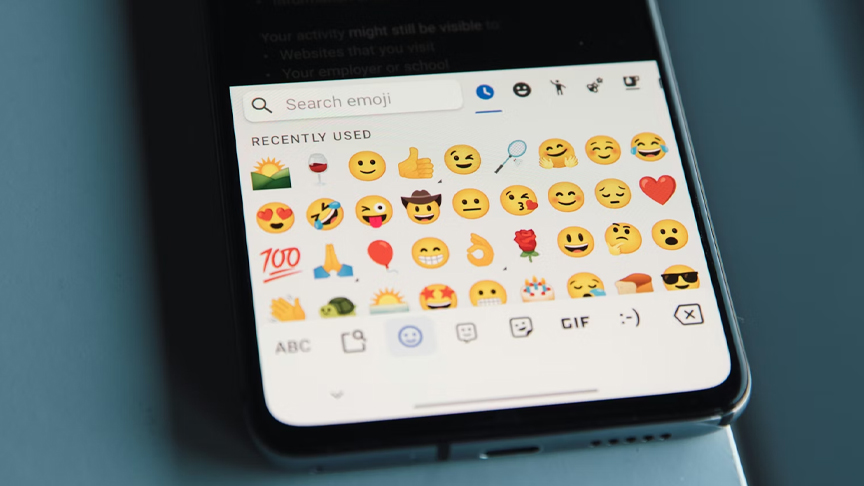
Should emojis be used in workplace communications?

Messages with no emojis were clearly the winner, making the sender appear more competent and professional.
Published

on

When people interact in person, subtle signals like facial expressions, body language and tone of voice play a crucial role in communicating intent and meaning, whereas written communications lack these non-verbal cues and can lead to misinterpretation or assumptions. The advent of emojis became a popular tool to provide context to written messages and they work in many settings. But how are they perceived in workplace communications?  Not so well.

Researchers from the SUniversity of Ottawa examined how emojis impact perceptions of competence and appropriateness for those who utilize them in professional settings. For this small-scale study, participants read workplace instant messages that varied in tone and emoji use.

Key findings

Here is what the researchers found:  

  • Messages with no emojis were clearly the winner, making the sender appear more competent and professional.
  • Positive emojis enhanced impressions when paired with a neutral or positive message.
  • Negative emojis were consistently considered inappropriate for workplace communication as they made senders seem less competent, especially when the message itself was already positive or neutral.
  • Gender dynamics were at play as women judged negative messages from other women more harshly than negative messages from men, rating them as less appropriate.

“This study highlights the importance of being mindful about the potential impact of emojis on professional interactions,” writes lead author Erin L. Courtice from the School of Psychology at the Faculty of Social Sciences at uOttawa. “Emojis are not simply neutral add-ons to text messages; they can influence how others perceive us, particularly in terms of competence and appropriateness. By understanding the nuances of emoji use, professionals can leverage these digital tools to enhance their communication and build stronger workplace relationships.”

Emojis are not a salvo for covering up errors

Positive emojis do not soften bad news or critical feedback – instead, they may create a sense of dishonesty and insincerity when used in a negative message. Negative emojis should generally be avoided because they produce low perceptions of overall competence even if the crux of their meaning is clear and understood in an appropriately framed message.

Researchers found that employing an emoji is not always beneficial: for example, adding a positive emoji to a positive sentence did not increase a perception of appropriateness. The tone of the message was seemingly more important, as mixed signal messaging can potentially affect an employee’s willingness to collaborate on future projects and affect professional trust.

“Future research should consider how emojis function within broader communication patterns, examining outcomes such as conversation flow, rapport building, conflict resolution, and team cohesion in digital workplace environments,” writes Courtice, who collaborated with professor Isabelle Boutet whose research program studies both how humans analyze social cues conveyed by faces, and how digital communication is enhanced by emojis to communicate emotions and social traits.

The full research team included: Erin L. Courtice, Megan Lawrence, Charles A. Collin, and Isabelle Boutet.

Continue Reading

Tech & Innovation

Augmented reality menus may help restaurants attract more customers, improve brand perceptions

AR menus can significantly increase customers’ interest in visiting a restaurant and may result in more positive word-of-mouth marketing, when compared to printed or QR-code menus.

Published

on

Restaurants looking for new ways to engage and inform customers may benefit from incorporating augmented reality (AR) technology into their menus, according to new research from Washington State University.

The study, published in the International Journal of Hospitality Management, finds that AR menus can significantly increase customers’ interest in visiting a restaurant and may result in more positive word-of-mouth marketing, when compared to printed or QR-code menus.

Led by Soobin Seo, professor of hospitality business management at the Carson College of Business, the research examined whether AR could enhance how restaurants present farm-to-table information — details about where ingredients are sourced and how food is produced.

“Consumers increasingly want transparency about where their food comes from, but the way that information is presented really matters,” Seo said. “Augmented reality allows restaurants to share that information in a more vivid, interactive and engaging way.”

The research included two experimental studies designed to reflect how diners encounter menus in real restaurant settings. In the first study, participants viewed one of three menu formats at a simulated local restaurant: a traditional printed menu, a QR-code menu, or an AR menu. The AR menu allowed users to see a three-dimensional food item through their smartphone and tap individual ingredients to learn where they were sourced.

Participants in the study indicated higher intention to visit a restaurant after viewing the menus using AR, and a greater likelihood of sharing the information with others —compared to when they viewed standard menu formats. Participants also reported feeling more immersed in the experience and believed they learned more about the food and where it comes from.

“These immersive experiences help people pay closer attention and feel like they’re actually learning something,” Seo said. “That combination appears to drive stronger interest in the restaurant itself.”

A second study explored how AR menus might work in chain restaurant settings comparing Panera Bread and McDonald’s, where brand perceptions vary widely. Researchers compared consumer responses to AR-based farm-to-table information presented by brands with healthier reputations (e.g. Panera Bread) and those typically viewed as less healthy (e.g. McDonald’s).

While AR menus improved perceptions across both brands, McDonald’s experienced a larger increase in perceived healthiness and visit intentions than Panera Bread.

“When expectations are low, transparent and interactive information can have an outsized impact,” Seo said. “For brands that aren’t typically associated with farm-to-table practices such as fast-food restaurant chain brands, AR disclosures may help offset negative perceptions.”

The study also found that the effectiveness of AR menus is somewhat influenced by how well the technology aligned with a restaurant’s overall brand image, highlighting the importance of “strategic fit” when adopting new technologies, said Seo.

Although AR menus are still relatively uncommon in the restaurant industry, Seo said the technology is becoming more accessible and feasible, even for independently owned restaurants.

“There are already low-cost tools restaurants can use to experiment with augmented reality,” she said. “This isn’t just about being flashy. It’s about providing meaningful information in a way that feels engaging and responsible.”

Beyond marketing benefits, the researchers suggest AR menus could encourage more sustainable practices by motivating restaurants to be more transparent about sourcing and to strengthen relationships with local producers.

“This is a potential win for restaurants, consumers and communities,” Seo said. “It shows how emerging technology can support sustainability while also enhancing the dining experience.”

In addition to Seo, co-authors include Jiyoon (Jennifer) Han, assistant professor of hospitality and tourism management at the Isenberg School of Management at the University of Massachusetts Amherst, and Elizabeth Howlett, professor of marketing at WSU.

Continue Reading
Advertisement
Advertisement

Like us on Facebook

Trending