
Strategies
Add sorting your digital clutter to your New Year’s resolutions – Kaspersky
Cybersecurity company Kaspersky suggests adding another practical and smart resolution to your 2024 list: to protect your precious data by clearing your digital clutter!


This new year, you could have resolved to quit a vice, to learn something new, to manage your finances better and maybe check a couple off your bucket list of places to visit.
Cybersecurity company Kaspersky suggests adding another practical and smart resolution to your 2024 list: to protect your precious data by clearing your digital clutter!
What is digital clutter?
It’s a by-product of the digital age. This happens when users of devices create digital documents and files at an unstoppable rate as it is now. Users install way more apps than they use, rarely update them and usually don’t adjust the security/privacy settings of these apps properly. In this situation, users don’t worry about storage limits and become lethargic about reviewing these files and updating the apps. For example, users typically install 12 Android apps every month but delete only 10 so they actually add two apps to their device every month that are generally left unused and idle.
This means that the digital junk sits on the devices or in the cloud forever. These all amount to what we call digital clutter.
Poor user maintenance of device content also generates a build up of digital clutter. Kaspersky data shows that in 55% of cases, people regularly revise the contents of their device and delete unused docs and apps. In 32% of cases, people sort their digital clutter occasionally and in 13% of cases, users do not try to delete any docs and apps at all.
A Kaspersky report showed the top five data that’s commonly stored on devices are general photos and videos (90%), photos and videos of travel and personal emails (tied at 89% each), address information/contact information (84%), and personal messages via SMS/IM (79%).

A research that Kaspersky ran with OnePoll in 2019 showed that one’s fridge can show the security risk of this human habit. Two-thirds (66%) of those who have bought the same item to go in their fridge twice by accident have also found it difficult to locate a document or file while at work.
2023 saw at least three major cyber incidents in the Philippines that caused fear, anger and frustration among Filipinos. From ransomware attacks to data leaks that compromised massive public data and personal financial information, these threatened not just the government and businesses but especially ordinary people who didn’t think they would be affected until it happened.
“When it comes to cybersecurity, education is the most powerful form of defense. The more we educate and prepare ourselves, the more likely that we can minimize the risks to our personal data and money,” said Yeo Siang Tiong, General Manager for Southeast Asia at Kaspersky.
“It’s been found that only about 8% of people achieve their New Year’s resolutions due to a lack of personal control, excessive stress and negative emotion. I say start small until it becomes a habit. A few simple changes in the beginning will go a long way towards protecting yourself and your data. Stay committed and most importantly, get help. There are so many resources, tools and people that you can count on for support to help you keep your resolutions,” added Yeo.
Kaspersky suggests doing one or more of these tips to become safe digitally this new year:
- Kiss passwords goodbye. We saw one major improvement in network security in 2022: giants Apple, Google and Microsoft simultaneously introduced passwordless sign-ins. Instead of a password, your device stores a unique cryptographic key for each site. There’s no need to type it in and it’s extremely difficult to steal. You can read more about this interesting technology here. We recommend switching wherever it’s offered as it will slash the risk of your account being hijacked. It’s also convenient because you no longer need to think up a password, memorize it and later enter it. Chrome, Edge, and Safari support the technology on both desktop and mobile platforms.
- Go disposable. Information leakage remains one of the biggest digital risks for all of us. User data gets stolen from ISPs, insurance companies, delivery services, social networks, and even school databases. The stolen data is then used to perpetrate various scams.
Unfortunately, there’s little we users can do to prevent leaks. But we can ensure there’s less information out there about us, and make it harder to match: that is, comparing the names and phone numbers in two stolen databases wouldn’t give an attacker any more info on us. We recommend giving minimal information to non-critical services (primarily online stores and commercial digital services) by not specifying your last name or social media accounts, and generally skipping optional fields. And use disposable e-mail addresses and phone numbers as your contact information. Numerous services provide temporary phone numbers for receiving confirmation texts, as well as one-time email addresses — just google “disposable phone number/e-mail address”. Some paid services of this kind even offer disposable credit card numbers, which makes online shopping even safer.
- Get away from toxic social media. Year after year, we encounter way too many negative events, plus the waves of hate on social media continue to reach new heights. If social media gave you the jitters in 2023, this year it’s time to part company for good. Incidentally, we’ve compiled a list of tips on how to walk away without losing valuable data. That said, some prefer not to quit, but to migrate, for example, to Telegram or Mastodon.
- Stop doom scrolling. Social networks and news sites can consume hours of our time and lots of nervous energy. To avoid endless checking of news and posts, set a time limit on your phone for social networks and news apps. Start with an hour a day, and try to stick to it. Many vendors offer this feature: Apple’s name for it is Screen Time, Google’s is Digital Wellbeing, and Huawei’s is Digital Balance. And if your children are spending too much time on social networks, Kaspersky Safe Kids can help. Those prone to deceive themselves by making up for the missing time on their devices should enable additional self-control tools in the settings of the social network itself. YouTube also has such a feature, called Take a Break.
- Keep private and work lives separate. Separating work and private life is good for many reasons. It helps both physical and mental health since work doesn’t interfere with family-and-friends time, and domestic matters don’t distract you during working hours. And your employer gets improved cybersecurity because you don’t mix personal and work information, apps, and so on. Ideally, the separation should be physical, which means different phones and computers for work and private life. It remains only to remember not to use personal sites, e-mail, and social networks on your work device, and vice versa.
- Observe cyber hygiene. Use security software on all computers and phones. For each site that still requires a password, make it unique. Regularly update all apps and the operating system. These tips are nothing new, yet millions of people continue to ignore them, some out of ignorance, others out of laziness. You can avoid all the hassle by entrusting the whole routine to a comprehensive solution like Kaspersky Premium.
Kaspersky Premium has a Hard Disk Cleaner and Health Monitor feature that:
- removes duplicate and large files from your PC and declutters unused apps from your Android phone
- alerts you if your hard drive is about to crash so you can back up your photos, files and data.
This solution also has Performance Optimization that helps your computer run faster by:
- deleting invalid Windows Registry entries
- cleaning your folders and emptying your recycle bin
- turning off data-hungry apps and stopping some apps from opening as you switch your PC on
- prompting you to install app and software updates so your device gets the latest security.
Discover more about Kaspersky Premium’s security features for the entire family at https://www.kasperskyph.com/.


At a time of rising costs and economic uncertainty, freelancing has emerged as a growing source of opportunity. As more Filipinos turn to freelancing as a viable long-term career, many are adopting digital tools like the GCash Virtual US Account to simplify cross-border payments.
Recognizing this, the GCash Freelancer Connect, a series of community events designed to bring freelancers based in different cities in the country, made its way to Pampanga for its first regional leg. Attendees gathered to learn from speakers KD Creatives and Dani Jacobe, who led practical sessions on how to diversify income streams, charge more competitive prices, and build greater financial confidence with the support of tools like GCash. Here are key insights shared during the event:
1. Strong relationships create steady opportunities
With more Filipinos entering the freelancing industry, standing out has become a bigger challenge. For Dani Jacobe, building meaningful connections – and knowing how to communicate value clearly – makes all the difference.
“Your goal is not just to find one client. Your goal is to build a system that helps you keep finding and serving clients,” she shared.
What she has learned over the years is that outreach should go beyond simply introducing one’s services. Freelancers should learn to identify problems, offer clear solutions, and create opportunities for intentional conversations from the very beginning.
“Your skill becomes more valuable when you connect it to a specific business need,” she added.
2. Be confident in your worth
For Kyla Dizon, the journey to becoming “KD Creatives” didn’t happen overnight. Before building her online community around content creation and offering digital guides and advice through her platform, she experienced self-doubt and pressure as a young freelancer. One area where that hit hard was in communicating her value to potential clients.
“The truth is, a lot of freelancers are incredibly talented, but still undercharge because they haven’t fully recognized the value of what they bring to the table,” she explained.
The turning point came when she stopped pricing from a place of fear or being scared that clients would walk away because she’d be too expensive and instead, began pricing from a place of confidence. But that confidence, Kyla noted, came only once she fully embraced her personal brand as a freelancer.
“Now, I approach pricing differently — not based on fear, but on the value and experience I know I can deliver,” she explained. During the Freelancer Connect, she urged attendees to use a pricing matrix, which she has made available online, to accurately determine how much they should charge clients for the services they offer.
3. Receiving payments should not feel complicated
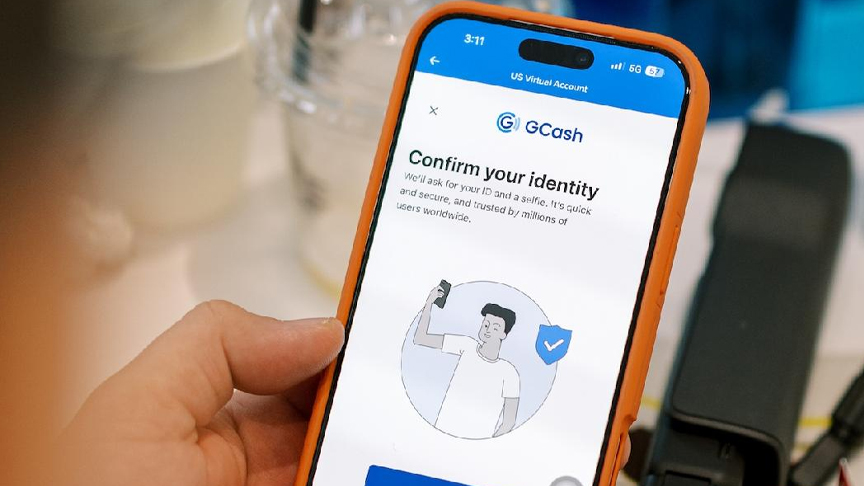
Another common challenge freelancers face is receiving payments, especially from overseas clients, where the process is often inefficient. To address this, GCash has introduced the Virtual US Account, a feature designed to make receiving USD payments easier.
Users can now receive USD transfers directly from US-based clients using their own routing and account numbers, similar to a traditional US bank, within the GCash app. This feature helps freelancers avoid unnecessary deductions, hidden fees, and lengthy transfer processes, while also ensuring competitive forex rates. Users can convert their USD to PHP when it is most favorable for them – they have full control of when they want to withdraw it into their GCash e-wallet.
“We want to ensure that freelancers in the Philippines can receive and manage their money in the most convenient way possible and in a manner that ensures they don’t lose so much of their hard-earned cash. Once in your Virtual US Account, you can access and manage your earnings instantly inside the GCash app – whether that’s converting to PHP, paying bills, buying load, or even growing your wealth through our financial services,” shared Sophia Sison, Product Manager under the International Business Group at GCash.
Create your Virtual US Account today
As freelancing continues to grow across the country, GCash hopes initiatives like the Freelancer Connect can help create more spaces where freelancers feel supported — not just financially, but as a community navigating a rapidly changing world of work together.
Creating your Virtual US Account is easy:
- Open the GCash app – Tap US Accounts in the Explore the App section
- Tap Continue and verify your information
- Complete your account creation
BizWiz
3 Lessons from women who successfully built careers in freelancing
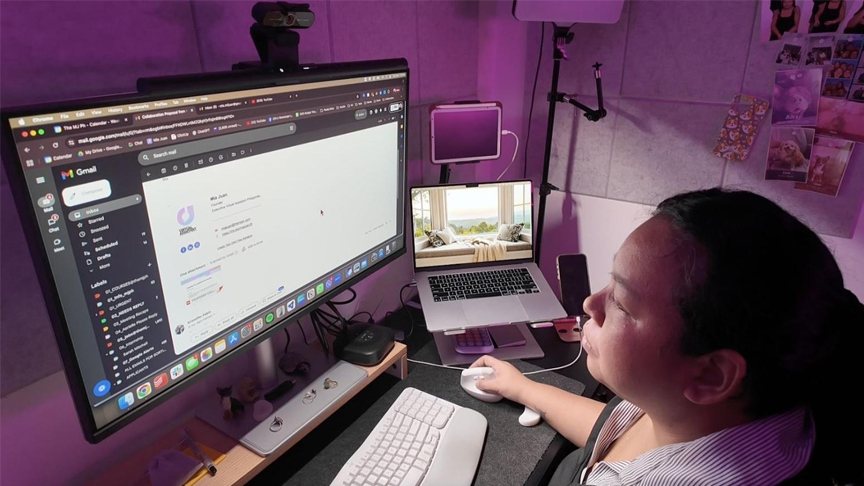
Freelancers face inconsistent income, unpredictable clients, and little guidance on how to navigate it all. For longtime freelancers Mia Juan and Dana Novales, building a career online has meant learning these lessons in real time.
Strategies
Renting out your place? Human connection key to a successful holiday rental
Warmth, friendliness and a sense of belonging, or the “homely” side of the experience, strengthen guest loyalty, making them more likely to return to the same host. However, these feelings alone didn’t necessarily make guests more likely to recommend the property to others.

Dining in the open in Cebu Province? Check out Mandaue City’s Matias BBQ

Empowering the next wave of Filipino freelancers in Pampanga

3 Lessons from women who successfully built careers in freelancing

Reminder to marketing people: Missing information can misinform

Office owners or managers, take note: Increased risk of bullying in open-plan offices

Long-serving CEOs may weaken innovation, study finds

Profit alone is a poor measure of success, study shows companies can look efficient while harming the planet

Should emojis be used in workplace communications?

If you’re a perfectionist at work, your boss’ expectations may matter more than your own, research finds
Should emojis be used in workplace communications?
Profit alone is a poor measure of success, study shows companies can look efficient while harming the planet
Long-serving CEOs may weaken innovation, study finds
Reminder to marketing people: Missing information can misinform
Office owners or managers, take note: Increased risk of bullying in open-plan offices
3 Lessons from women who successfully built careers in freelancing
Dining in the open in Cebu Province? Check out Mandaue City’s Matias BBQ

Biz strategy of Quento: Forget discrimination and capture as many as possible

FFTG as a must-visit cafe… and safe space in Quezon City

5 Video marketing tips

How to successfully market your biz as green

What to do before a ransomware attack

Smart advice to find success
-
 BizNews2 weeks ago
If you’re a perfectionist at work, your boss’ expectations may matter more than your own, research finds
-
 Tech & Innovation1 week ago
Should emojis be used in workplace communications?
-
 BizNews1 week ago
Profit alone is a poor measure of success, study shows companies can look efficient while harming the planet
-
 BizNews1 week ago
Long-serving CEOs may weaken innovation, study finds
-
 BizNews6 days ago
Reminder to marketing people: Missing information can misinform
-
 BizNews6 days ago
Office owners or managers, take note: Increased risk of bullying in open-plan offices
-
 BizWiz4 days ago
3 Lessons from women who successfully built careers in freelancing
-
 BizListing4 days ago
Dining in the open in Cebu Province? Check out Mandaue City’s Matias BBQ