Connect with us

BizNews

As local businesses grow, digital tools help stay flexible amid changing customer behavior

As digital payments become increasingly embedded in everyday transactions, SMEs are quickly discovering that growth also means needing to adapt their operations to keep pace with how customers want to transact and ensuring payments don’t become a barrier to their growth.

Published

on

For many small and medium-sized businesses today, growth no longer follows a single path. Some expand through new branches, while others build their customer base by moving between pop-ups and bazaars. As they grow, they’re also finding ways to ensure they meet the evolving habits and preferences of consumers – including the way they pay.

Data from the Bangko Sentral ng Pilipinas in 2025 showed that QR Ph person-to-merchant (P2M) transactions grew by 246.9% in volume, reaching 183.3M transactions from 52.8M only in 2024. Transaction value also grew by 211.3%, reaching ₱926.1 billion from ₱297.5 billion the previous year.

As digital payments become increasingly embedded in everyday transactions, SMEs are quickly discovering that growth also means needing to adapt their operations to keep pace with how customers want to transact and ensuring payments don’t become a barrier to their growth.

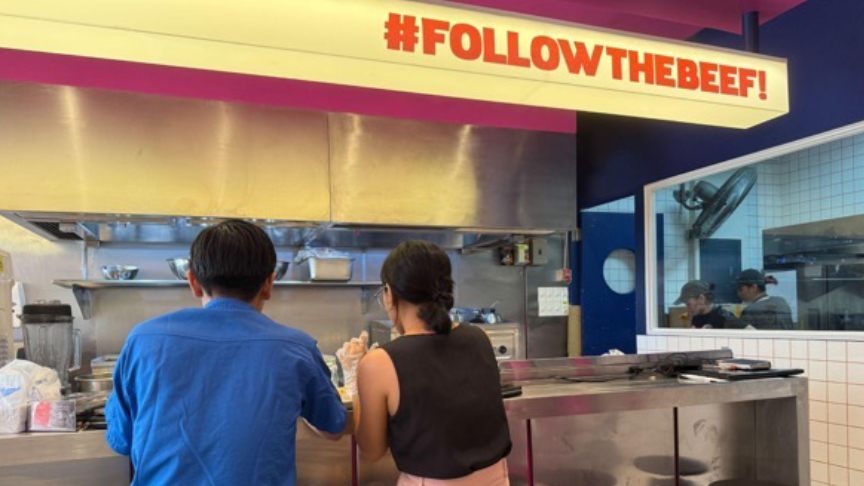
Chef Christine Balucas-Tabu of smash burger restaurant Bun Run, and Gabriel Jocson IV and Stephanie Dianne Ang, founders of matcha shop Kyoto House, know this firsthand. Though they’ve taken different paths to growth, both have had to adapt how they operate to meet customers while keeping the experience they’ve built consistent.

Growth without losing what works

For Chef Christine Balucas-Tabu, who serves as Culinary Operations Director at Bun Run, expanding a restaurant business while preserving the overall experience that made customers fall in love with it in the first place requires a careful balance. This is something she knew well when the brand decided to open its second shop in Makati in October 2025., making sure that what customers loved about the original San Juan branch could also be found in Makati, while they adapted to a different crowd and their preferences.

“Ultimately, we want our customers coming back for more not just because the food tastes good but because the experience was even greater,” she explains. Part of that experience is making sure the payment process is as seamless as possible – for both staff and customers. “GCash for Business has been a great part of the growth of our business to make all transactions smooth and sound,” she adds.

Bun Run uses GCash SoundPay Plus, a device that accepts QRPH and card payments with  real-time voice confirmation, helping staff verify payments faster and safely. With over 80% of their transactions cashless – around 30% through QRPH and 50% via debit and credit cards according to Chef Christine – having a single device that supports multiple payment methods has helped keep transactions fast and seamless, especially during peak hours.

Growing by meeting customers where they are

Flexibility takes on a different look for Kyoto House. Rather than operating from a permanent store, the business reaches customers through online channels, bazaars, and pop-ups. For its owners, this approach allows them to reach more of its target customers: home brewers who want to enjoy a delicious cup of matcha in the comfort of their own homes, but may not know where to start.

Today, 40% of the sales of Kyoto House come from pop-ups and bazaars. Its flexible model has been a key growth driver, and according to its owners, being present in multiple locations allows them to introduce their products and teach their customers how they can correctly prepare matcha at home. But because they’re constantly on the move, they also need the flexibility to make payments work wherever they go.

“What should not change is the experience customers receive. Wherever we are, we want the service to feel warm, the product information to remain accurate, and the payment process to be simple and reliable,” Gabriel and Stephanie emphasizes.

On a typical weekend bazaar, the team typically handles 300-450 transactions per day, with 100% of their payments being cashless, making it essential to have a payment solution that can keep up with the pace. For that, they can count on the flexibility that GCash Soundpay Plus gives them.

“For us, ease does not mean removing every challenge. It means building systems that allow us to spend less time on preventable problems and more time improving the products and serving our customers,” shares Gabriel and Stephanie.

Flexibility is the new way to grow for SMEs

The growth of Bun Run and Kyoto House may look different, but their journeys point to the same need: having the flexibility to adapt and scale. With tools like GCash SoundPay Plus, merchants can streamline payments, serve more customers with ease, and unlock more opportunities for revenue growth.

Businesses can get started by creating a Starter Plan account on the GCash for Business Portal with as simple as a GCash verified account to enjoy P5M wallet limit then start ordering a GCash SoundPay Plus device.

BizNews

Enjoyment increases consumers’ willingness to pay for sustainable products

Consumers are more willing to pay for sustainable products if they also perceive them as enjoyable and appealing.

Published

on

Consumers are more willing to pay for sustainable products if they also perceive them as enjoyable and appealing, according to a study conducted at the University of Eastern Finland. However, environmental friendliness alone does not always translate into willingness to pay.

The study examined how consumers’ sustainable consumption values, hedonic attitudes emphasising enjoyment and utilitarian attitudes emphasising practical benefits affect their willingness to pay more for sustainable products.

“Consumers who value sustainable consumption are more willing to pay a premium, particularly when a product offers positive emotional and user experiences. Enjoyment helps translate sustainability values into actual consumption behaviour,” says Doctoral Researcher Jyri Hoffrén of the University of Eastern Finland.

A utilitarian focus can widen the value-behaviour gap

A utilitarian attitude has the opposite effect on willingness to pay. When a product is assessed in terms of price, functionality, efficiency or economic benefits, sustainability values are less likely to translate into willingness to pay a premium.

“This finding helps explain the value-behaviour gap. Consumers may consider sustainability important but decide not to buy a product if its price, practicality or perceived benefits fail to meet their expectations.”

Environmental friendliness alone is not enough

Environmental friendliness alone does not guarantee willingness to pay. A sustainable product must also be fit for purpose and appealing to consumers. Environmental claims and the product’s functional and experiential attributes should reinforce one another.

“Companies should consider sustainability as part of a product’s overall value. If product marketing emphasises enjoyment without genuine experiential benefits, it may lose credibility. For utilitarian products, consumers are also quick to scrutinise whether the environmental benefits are genuine,” Hoffrén says.

The findings also have important implications for greenwashing: emotionally appealing environmental marketing can persuade consumers without sufficient evidence, while inconsistencies between product attributes and environmental claims can increase distrust.

Three studies at different points in time and across different products

The research, published in Forest Policy and Economics, comprised three studies. They examined whether the associations remained stable over time and compared a wood-based bioplastic bottle, a T-shirt and biofuel. The findings can help the wood industry develop more appealing and competitive consumer products. Consumer-oriented product development and credible marketing can strengthen the position of wood-based alternatives in international markets.

Continue Reading

BizNews

Secret to selling small plates at restaurants: nonrounded pricing

Price ending in .99 signals fairness, increases intention to buy.

Published

on

Oh, what a difference a penny can make in the likelihood that restaurant customers will order a small plate.

A small plate price ending in a nonrounded number – in this case .99 – increases the chances customers will consider that a fair price for a reduced portion and make the purchase, according to a new study.

A rounded price ending with .00 was less likely to result in an intention to order a small plate because the cost was perceived as unfair, results showed.

“Many people think pricing is part of revenue management. So they’re coming only from the cost control and bottom-line perspective. But pricing is a marketing and framing strategy,” said senior study author Stephanie Liu, associate professor of hospitality management at The Ohio State University.

“We need to understand consumer psychology and consumer behavior so that we can help consumers make better decisions. So what we do is change the price of a small plate from $5.00 to $4.99. It’s just one cent difference. But psychologically, consumers feel so much better: ‘It’s fair. Now I can order the small plate.’”

The paper was published recently in the Journal of Hospitality and Tourism Management.

First author Xi Yu, who completed this work as a PhD student in the Hospitality Management Program at Ohio State, was inspired to examine smaller-portion pricing during the pandemic lockdown, when she was ordering a lot of half-sized sandwiches but didn’t pay half the price of the full size.

“I cannot eat the full size, so I always ordered a 6-inch sandwich, but I thought the price was unfair,” said Yu, now an associate professor of Faculty of International Tourism and Management at the City University of Macau.

The mixed-methods study consisted of interviews with consumers and an experiment asking participants to rate perceived price fairness and intention to order either regular-sized or smaller meals with varied pricing structures.

The interviews with 36 consumers identified three themes: Restaurant customers often perceived small plates as overpriced compared to portion size; concerns about pricing fairness emerged as a central issue; and nonrounded prices were associated with better value and higher chances for a purchase.

Participants also commented on the things they liked about small plates – they were a healthier dining choice, reduced food waste and broadened a meal’s variety.

In the experiment, 244 U.S. adults were asked to imagine ordering a lunch soup-and-sandwich combo at a fictitious restaurant. They were shown an image of either a small- or regular-sized meal priced at either $7.99 or $8.00 for a small serving and $11.99 or $12.00 for the regular serving.

Statistical analysis showed that the nonrounded prices signaled a discount or fair pricing, which increased the intention to order – but only for small plates. Perceived fairness was determined to be the psychological mechanism that drove this effect.

“The rationale is that the nonrounded price will always signal a sense of a discount,” Yu said. “For the regular plates, people don’t actually care about whether you give them a rounded or nonrounded price.”

The findings suggest it makes good business sense to sweeten the deal for small plates not just to increase sales, but to satisfy customers, the researchers said.

“It’s a hot topic in the industry, but there hasn’t been sufficient attention paid to it. There is literally no guidance on how to price small plates,” Liu said. “In our context, we want consumers to order the small plates if they fit their appetite. We don’t want them to choose the regular plate just to save money.”

Additional co-authors were Jay Kandampully, professor, and Huiling Huang, a PhD graduate, both of Ohio State’s Hospitality Management Program. Huang is now an assistant professor in integrated resort and tourism management at the University of Macau.

Continue Reading

BizNews

Want to be more productive at work? Show your boss this study

Sit-stand desks, also known as height-adjustable desks or standing desks, promise a healthier way to work, giving employees the flexibility to alternate between sitting and standing throughout the day.

Published

on

By Zaid Elayyan
Texas A&M University Division of Marketing and Communications

Every workday is a negotiation between our bodies and our jobs. Sit too long, our backs and necks protest; stand too long, our feet might have something to say about it. 

Sit-stand desks, also known as height-adjustable desks or standing desks, promise a healthier way to work, giving employees the flexibility to alternate between sitting and standing throughout the day.

Now, new research suggests these desks may be giving employees, and employers, another benefit beyond ergonomics and well-being: productivity.

Drawing on data from more than 10,000 employees, researchers at Texas A&M University found that workers who used sit-stand desks averaged 43 additional minutes of active computer use each day compared with those using regular desks, a difference that could translate to nearly $9,000 in annual productivity per employee.

The study, published in Theoretical and Applied Ergonomics, was co-led by Texas A&M School of Public Health professor Dr. Mark Benden and U.S. Army Public Health Command Region, West, Regional Ergonomist Dr. Tricia Salzar.

The findings suggest that the physical workspace may be a powerful, often overlooked, influence on employee well-being, productivity, and even a company’s overall performance.

“The design of the workplace itself can be a powerful driver of human health and performance, including better engagement, productivity and organizational success,” Benden said.

‘The workplace effect’

When organizations look to boost performance and productivity, they turn to new technologies, training programs and management strategies. But another powerful influence may be hiding in plain sight: the physical workplace itself.

“It’s what we call the ‘workplace effect,’” Benden said. “The direct impact that the physical work environment has on the behavior, health, psychological well-being, and even engagement and performance of employees.”

Sit-stand desks are a striking example of the workplace effect. Rather than locking employees into a single position for hours at a time, they give workers the flexibility to sit, stand and move throughout the day, as tasks and energy levels shift.

“It can have a profound effect,” Benden said. “Alternating between different working positions promotes better health outcomes by reducing physical strain and encouraging movement for those who might otherwise spend most of their workday sedentary.”

But the benefits may extend beyond physical health. Benden and Salzar’s new research shows that sit-stand desks can also have a substantial impact on productivity.

“It has a cumulative, positive effect for both employers and employees,” Benden said.

For employees, height-adjustable desks could lead to sustained energy and longer stretches of focused work. For employers, the higher work productivity could translate into a nearly $9,000 return on investment per employee annually.

“The implications are hard to ignore,” Benden said. “When we design workplaces around employees and their needs, better health, better performance and better organizational outcomes follow.”

The takeaway? Investing in the physical workplace, like height-adjustable desks, isn’t just good for employee comfort and health; it could be good for business, too.

10,000 workers, one story

To test whether sit-stand desks could influence work output and productivity, Benden and his colleagues stepped out of their labs and turned to the real world, using a resource few ergonomics studies can match.

“We analyzed a huge dataset of more than 10,000 workers over a yearlong period, comparing the total computer use of traditional desk users and height-adjustable desk users,” Benden said.

The records paired employee comfort surveys with a digital trail of workplace activity, tracking everything from keystrokes and words typed to mouse clicks and typing errors, all to paint a detailed picture of how employees interacted with their computers throughout the workday.

“It was important that we collected subjective measurements, like employee survey responses of their comfort and objective measurements of computer activity through software, to analyze how people engaged with their work,” Benden said.

The team found that workers with sit-stand desks averaged 3.66 hours of active computer time, compared with 2.95 hours among regular-desk employees — a gap of about 43 minutes a day.

That might not sound like much, but over a year it adds up to roughly 171 additional hours, or more than four 40-hour workweeks.

And those additional hours come with a practical price tag, too.

Multiplying the 171 additional hours by a standardized hourly wage of about $52, the researchers estimate that sit-stand desks could generate nearly $9,000 in potential annual productivity value per employee.

“Our findings were exciting because they suggest that height-adjustable desks can directly influence overall work output and economic organizational productivity,” Benden said.

The researchers also found that employees using sit-stand desks generally typed more words and logged more keystrokes than their counterparts at non-adjustable desks.

“The data showed that people aren’t just engaging with their work, they are producing output in a meaningful way,” Benden said.

For Benden, the findings open the door to broader questions about the future of organizations, focusing on another force rapidly reshaping the modern workplace.

“Artificial intelligence is becoming increasingly integrated into daily work,” Benden said. “Just as we’ve studied how the physical environment affects human health and performance, we’re interested in understanding how emerging AI technologies could influence the physical workspace and outcomes of organizations.”

From adjustable desks to emerging technologies, the underlying question remains the same: how can organizations design environments and systems to better support the people who use them?

“The next breakthrough may not come from working harder, but from designing workspaces and systems that help people work smarter and more efficiently,” Benden said.

The story told by the more than 10,000 employees is that the desk may be doing far more than just holding up your computer.

Built around people

For Benden, sit-stand desks represent more than an ergonomic innovation. They’re part of a lifelong passion to understand how workplaces can be designed to better support employee well-being and organizational success.

“We spend a lot of time at work,” Benden said. “It’s my passion to make sure that workers feel supported in their workplace, built on informed and guided scientific evidence.”

A former Army Reserve officer, engineer, healthcare professional, inventor and world-renowned researcher, Benden has spent decades studying the complex relationship between people and the environments in which they work.

Today, he serves as director of the Center for Worker Health, where engineering, management and technology converge and harmonize in an interdisciplinary symphony of research, innovation and education, each playing its own tune in service of a shared mission to improve the lives of workers.

“The Center partners with industry nationwide, to develop innovative, impactful systems and practices that have a direct effect on worker health and efficiency,” Benden said. “We also train students and give them the platform to be as creative as possible to turn new ideas into impactful applications.”

So, the next time you find yourself slumping in your chair at 3 p.m. with an aching back, don’t just reach for another cup of coffee, because the verdict is in: show this study to your boss. Your back — and your company’s bottom line — will thank you. 

Continue Reading
Advertisement
Advertisement

Like us on Facebook

Trending