Connect with us

BizNews

As local businesses grow, digital tools help stay flexible amid changing customer behavior

As digital payments become increasingly embedded in everyday transactions, SMEs are quickly discovering that growth also means needing to adapt their operations to keep pace with how customers want to transact and ensuring payments don’t become a barrier to their growth.

Published

on

For many small and medium-sized businesses today, growth no longer follows a single path. Some expand through new branches, while others build their customer base by moving between pop-ups and bazaars. As they grow, they’re also finding ways to ensure they meet the evolving habits and preferences of consumers – including the way they pay.

Data from the Bangko Sentral ng Pilipinas in 2025 showed that QR Ph person-to-merchant (P2M) transactions grew by 246.9% in volume, reaching 183.3M transactions from 52.8M only in 2024. Transaction value also grew by 211.3%, reaching ₱926.1 billion from ₱297.5 billion the previous year.

As digital payments become increasingly embedded in everyday transactions, SMEs are quickly discovering that growth also means needing to adapt their operations to keep pace with how customers want to transact and ensuring payments don’t become a barrier to their growth.

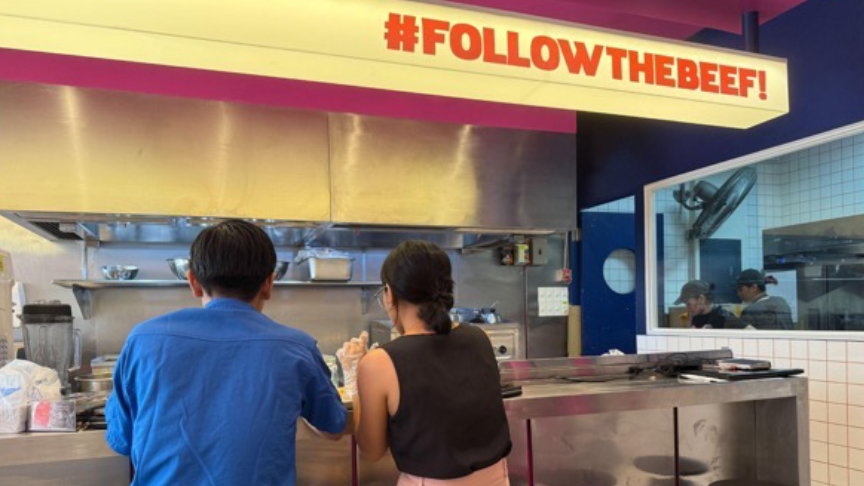
Chef Christine Balucas-Tabu of smash burger restaurant Bun Run, and Gabriel Jocson IV and Stephanie Dianne Ang, founders of matcha shop Kyoto House, know this firsthand. Though they’ve taken different paths to growth, both have had to adapt how they operate to meet customers while keeping the experience they’ve built consistent.

Growth without losing what works

For Chef Christine Balucas-Tabu, who serves as Culinary Operations Director at Bun Run, expanding a restaurant business while preserving the overall experience that made customers fall in love with it in the first place requires a careful balance. This is something she knew well when the brand decided to open its second shop in Makati in October 2025., making sure that what customers loved about the original San Juan branch could also be found in Makati, while they adapted to a different crowd and their preferences.

“Ultimately, we want our customers coming back for more not just because the food tastes good but because the experience was even greater,” she explains. Part of that experience is making sure the payment process is as seamless as possible – for both staff and customers. “GCash for Business has been a great part of the growth of our business to make all transactions smooth and sound,” she adds.

Bun Run uses GCash SoundPay Plus, a device that accepts QRPH and card payments with  real-time voice confirmation, helping staff verify payments faster and safely. With over 80% of their transactions cashless – around 30% through QRPH and 50% via debit and credit cards according to Chef Christine – having a single device that supports multiple payment methods has helped keep transactions fast and seamless, especially during peak hours.

Growing by meeting customers where they are

Flexibility takes on a different look for Kyoto House. Rather than operating from a permanent store, the business reaches customers through online channels, bazaars, and pop-ups. For its owners, this approach allows them to reach more of its target customers: home brewers who want to enjoy a delicious cup of matcha in the comfort of their own homes, but may not know where to start.

Today, 40% of the sales of Kyoto House come from pop-ups and bazaars. Its flexible model has been a key growth driver, and according to its owners, being present in multiple locations allows them to introduce their products and teach their customers how they can correctly prepare matcha at home. But because they’re constantly on the move, they also need the flexibility to make payments work wherever they go.

“What should not change is the experience customers receive. Wherever we are, we want the service to feel warm, the product information to remain accurate, and the payment process to be simple and reliable,” Gabriel and Stephanie emphasizes.

On a typical weekend bazaar, the team typically handles 300-450 transactions per day, with 100% of their payments being cashless, making it essential to have a payment solution that can keep up with the pace. For that, they can count on the flexibility that GCash Soundpay Plus gives them.

“For us, ease does not mean removing every challenge. It means building systems that allow us to spend less time on preventable problems and more time improving the products and serving our customers,” shares Gabriel and Stephanie.

Flexibility is the new way to grow for SMEs

The growth of Bun Run and Kyoto House may look different, but their journeys point to the same need: having the flexibility to adapt and scale. With tools like GCash SoundPay Plus, merchants can streamline payments, serve more customers with ease, and unlock more opportunities for revenue growth.

Businesses can get started by creating a Starter Plan account on the GCash for Business Portal with as simple as a GCash verified account to enjoy P5M wallet limit then start ordering a GCash SoundPay Plus device.

BizNews

RENTAPASADA offers Filipino drivers a more accessible path to ride-hailing income

Through RENTAPASADA, qualified drivers can use a VinFast EV, accept trips through the Green GSM app, and earn from completed rides within a defined operating structure.

Published

on

For many Filipino drivers, entering ride-hailing is not just a matter of getting behind the wheel. The cost of buying a vehicle, meeting bank requirements, daily boundary arrangements, and fuel expenses can make it difficult to start, even for those who already have the skill and willingness to drive.

That is the gap RENTAPASADA aims to address.

Developed by VinFast Philippines and Green GSM, RENTAPASADA is a drive-to-earn rental program designed to give qualified Filipino drivers access to a VinFast electric vehicle, the Green GSM platform, and a clearer system for earning through ride-hailing

Instead of requiring drivers to purchase a vehicle right away, the program gives them a rental-based entry point. Through RENTAPASADA, qualified drivers can use a VinFast EV, accept trips through the Green GSM app, and earn from completed rides within a defined operating structure.

Here’s what that can look like for Filipinos looking to earn through ride-hailing.

It lowers the barrier to getting started

One of the biggest challenges for aspiring ride-hailing drivers is the upfront cost of entering the business. Buying a car usually means preparing a large down payment, going through bank approval, and taking on a long-term financial commitment before any income is generated.

RENTAPASADA offers a different starting point. Under the program, qualified drivers can begin the application process with a PHP 5,000 security deposit or initial registration payment, subject to Green GSM’s assessment and approval. Once approved, they can access a VinFast EV without needing to purchase one.

Drivers are also required to meet program requirements, including a professional driver’s license, NBI or police clearance, medical certificate, drug test, and TIN.

For drivers who have the skill and willingness to work but may not have the capital to purchase a vehicle outright, this creates a more practical entry point into ride-hailing.

It gives drivers access to a vehicle and a platform

A car alone does not create income. Drivers also need access to passengers, a platform, and a system that allows them to operate consistently.

RENTAPASADA connects participating drivers to the Green GSM platform, where they can accept trips and earn from completed rides. The program also provides access to VinFast electric vehicles such as the Herio Green and Limo Green, built for daily transport operations.

By combining vehicle access with platform access, RENTAPASADA gives drivers a more direct path from application to earning.

It creates a more structured alternative to boundary-style driving

Many drivers are familiar with boundary arrangements, where they pay a daily amount to use a vehicle and keep what remains after expenses. The challenge is that fuel, maintenance, and other operating costs can quickly reduce take-home income.

RENTAPASADA follows a daily rental model, but within a more predictable cost structure. For the Herio Green, the rental fee is PHP 1,050 per day, with a total daily deduction of PHP 1,300 when the daily deposit component is included. For the Limo Green, the rental fee is PHP 1,350 per day, with a total daily deduction of PHP 1,650.

This allows drivers to better plan daily income and expenses, with clear visibility on what they need to cover and what they can take home..

It comes with charging support built into the model

For drivers, the value of an EV is not just in the vehicle itself. It is also in the support system that helps them operate it every day.

This is why RENTAPASADA is backed by the combined ecosystem of VinFast, Green GSM, and V-Green. The program connects drivers not only to a VinFast electric vehicle and the Green GSM platform, but also to a growing charging network.

Participating drivers benefit from free charging from March 13, 2026 to March 31, 2029, helping drivers to focus on completed trips, service quality, and take-home income instead of worrying about fuel expenses.

As more drivers join the platform, V-Green’s charging network continues to grow alongside the ecosystem, supporting the day-to-day needs of EV drivers and helping make electric ride-hailing more practical at scale. For RENTAPASADA drivers, the goal is clear: access to the vehicle, access to the platform, and access to the charging support needed to keep earning.

It helps reduce some of the biggest operating pressures

Beyond charging, Green GSM also covers key requirements such as LTO registration, inspection fees, road maintenance fees, PAMI, vehicle insurance and CTPL, periodic maintenance, and GPS installation. They will also assist drivers with the TNVS registration/application process, while the required license or accreditation must still be secured under the driver’s name, subject to proper approval.

This matters because ride-hailing is not only about having a car. It also involves paperwork, compliance, maintenance, and operating requirements that can be difficult for individual drivers to manage on their own. By covering selected requirements and providing application support, RENTAPASADA helps make the operating model more organized and easier to understand.

Drivers, however, still cover certain operating costs, including toll fees, parking fees, traffic violation penalties, repair costs, and TNVS registration/application fees.

It gives drivers a chance to keep more of what they earn

Under the program, drivers can receive 90 percent of trip earnings in the first year, and 85 percent in the second and third year, subject to applicable government fees and taxes. This revenue-sharing structure is designed to help drivers retain a larger portion of their completed trip earnings while operating under the Green GSM platform.

Of course, actual income will still depend on several factors, including trip volume, operating hours, route distance, demand, acceptance rate, completion rate, and service quality. Drivers are also expected to meet operating targets, including 250 trips per month, at least 90 percent acceptance rate, and at least 90 percent completion rate.

But the goal of RENTAPASADA is to give drivers a better system to work with: a vehicle, a platform, operating support, charging support, and a clearer way to plan their earnings.

It opens a practical path for drivers who want to move forward

At its core, RENTAPASADA is not just about putting more electric vehicles on the road. It is about giving Filipino drivers another way to participate in the ride-hailing economy.

For existing drivers, aspiring TNVS partners, and small operators, the program offers a lower-barrier way to start earning without the upfront cost of ownership.

For drivers who want to start, drivers who want structure, and drivers looking for a more practical way to earn, RENTAPASADA presents a new way forward.

Continue Reading

BizNews

Many MSMEs remain vulnerable to disruptions beyond their control

Years of hard work can be compromised in a matter of hours by natural disasters that the country regularly experiences, due to its location along the Pacific Ring of Fire and within the typhoon belt.

Published

on

Often regarded as the backbone of the Philippine economy, the country dedicates the month of July in recognition and celebration of micro, small, and medium enterprises (MSME). According to the Department of Trade and Industry, MSMEs account for 99% of businesses nationwide and provide employment to nearly 65% of the country’s workforce.

Yet despite their vital role, many MSMEs remain vulnerable to disruptions beyond their control, from rising costs and cash flow pressures to other unforeseen events that can threaten business continuity. Years of hard work can be compromised in a matter of hours by natural disasters that the country regularly experiences, due to its location along the Pacific Ring of Fire and within the typhoon belt. For entrepreneurs, being prepared goes beyond simply protecting physical assets; it is ensuring they can continue supporting the people and communities who rely on them.

When unexpected setbacks occur, it is never only the business owner who feels the impact. Every closed storefront, delayed operation, or damaged workplace can also affect the people whose livelihoods rely on it. Protecting a business is more than safeguarding an investment; it is also protecting the dreams, stability, and future of everyone who relies on it to keep running.

This message comes to life in the latest and last film of AXA Philippines’ Everyday Protectors campaign, which follows Lucing, a bakery owner whose shop is damaged by a powerful typhoon. As heavy rain continues to pour, Lucing and her staff choose to keep distributing bread to people in their neighborhood who need it most, demonstrating that for many entrepreneurs, being there for their community is important, especially during crises.

The film ends with Lucing’s bakery reopening under clearer skies, a hopeful reminder that businesses can recover when they are prepared for the unexpected. That readiness is especially important in a country where severe calamities can force businesses to close permanently. According to the Philippine Institute for Development Studies, around 25% of SMEs are unable to reopen. For Lucing, however, the storm did not mark the end of her story as she was equipped with advanced protection that enabled her to begin again and continue supporting the people who depend on her business.

Lucing’s story reflects the kind of risk that many Filipino entrepreneurs face and the role protection can play in helping them recover. Through MSME Secure, AXA helps business owners recover from unforeseen events so they can move forward with greater confidence. In addition to coverage for property damage and spoiled inventory caused by fire, typhoons, floods, and other covered calamities, MSME Secure provides protection against risks such as burglary, employee fraud, and the loss of business funds due to theft or robbery—whether outside the premises, in transit, or in the custody of staff or messengers. It also helps with legal liabilities and related expenses arising from incidents involving customers or other third parties.

Recognizing that businesses have different needs and budgets, AXA also offers MSME Secure Lite for basic protection and MSME Secure Max for more comprehensive coverage, allowing entrepreneurs to choose the level of protection that best fits their business.

By helping businesses bounce back after unexpected disruptions, AXA enables entrepreneurs to focus not only on rebuilding what was lost, but also on continuing to create opportunities, support livelihoods, and serve the communities that count on them.

As the one name to cover all your insurance needs, discover how AXA can provide complete protection for small and medium businesses, health, car, and travel here.

Continue Reading

BizNews

Firms can undermine staff ability to organize… and this isn’t good

Published

on

In 2016, when Amazon workers began organizing at a warehouse in Chester, Virginia, the company tracked where employees gathered, posted anti-union messaging in bathroom stalls, and held town halls to discourage them. The National Labor Relations Board forced Amazon to admit, in writing, that it had illegally surveilled and threatened workers. The union drive still failed.

That sequence — anticipate, disrupt, escalate — isn’t random, according to new research from Timothy Werner, professor of business, government, and society and Wade T. and Bettye C. Nowlin Centennial Professor of Business Administration at the McCombs School of Business at The University of Texas at Austin.

Rather, it’s a systematic playbook that a wide variety of companies deploy far beyond the warehouse floor, Werner says. He calls it “organizational repression” — a term he borrowed from research on how governments suppress political dissent.

He applies the expression to the ways companies manage collective pressure from stakeholders: non-shareholder groups with an interest in a company, such as employees, activists, and communities. The term covers companies’ actions from union-busting to greenwashing under one strategic umbrella.

“We were trying to find a more encompassing term that would capture all these different ways in which organizations, as opposed to states, could engage in this behavior,” Werner says. “These things are more alike than scholars have previously recognized.”

Strategy Against Stakeholders

Past research has assumed that companies are largely respectful toward stakeholder activism, Werner says. They might resist stakeholder pressure, but they might also collaborate or simply ignore it.

“What we wanted to show with this paper was that there are actually ways in which firms can undermine that ability to organize in the first place,” he says.

With Natalie Holzaepfel and Olga Hawn, both of The University of North Carolina at Chapel Hill, Werner built his framework around three phases that stakeholder movements typically move through.

  • Emergence, in which individuals privately notice a grievance.
  • Coalescence, in which people start organizing.
  • Formalization, in which the group becomes a structured movement with allies.

For each phase, the researchers identify matching corporate strategies that can prevent or discourage it.

Emergence: Stop it before it starts. Companies work to convince people there’s nothing worth mobilizing over. Exxon Mobil, for example, began funding research downplaying climate change as early as the 1970s — years before it became a target of activist campaigns.

Another strategy, Werner says, is to cultivate a reputation as being unreceptive to activism, making mobilization feel pointless.

Coalescence: Make joining costly. Once a movement begins to coalesce, companies target the people most likely to join. When Delta Air Lines faced a 2024 unionization push among flight attendants, it offered a carrot: a 5% pay raise, but only to nonunion workers.

Other companies have taken an opposite approach: Brandish sticks such as demotions, changing schedule to conflict with meetings, or implicitly threatening to fire known organizers.

Formalization: Divide and isolate. If a movement fully organizes — recruiting members and forming alliances with outside groups — the most effective corporate response shifts toward fracturing the coalition itself, Werner says.

The pipeline company Energy Transfer, facing protests over its Dakota Access Pipeline, allegedly hired private security companies to disrupt activist networks. It also filed lawsuits against protest groups, eventually winning more than $600 million from Greenpeace.

Not Risk-Free

The researchers don’t pass any ethical judgments on organizational repression, Werner emphasizes. They simply propose the theory that it’s a systematic and underexplored set of tactics that warrants further study.

“We take no stance as to whether repression is good or bad,” Werner says.

It also isn’t guaranteed to work, he adds. A company that moves too aggressively may risk a backlash that strengthens the very movement it’s trying to stop.

The researchers’ next step is to test the theory empirically, using data such as whistleblower reports, lawsuits, and leaked corporate documents. Says Werner, “We want to see how often — and how effectively — companies actually deploy these tactics in practice.”

“Organizational Repression of Stakeholder Collective Action” is published in the Academy of Management Review.

Continue Reading
Advertisement
Advertisement

Like us on Facebook

Trending