Connect with us

BizWiz

OFW couple braves through new normal by becoming their own boss

Take it from Jobiegaile Jun and Stephane Mae Aquino, a couple currently based in Doha, Qatar, as Overseas Filipino Workers (OFWs) and Santé Business Owners. They braved through the new normal by starting up a business that they describe as pandemic proof.

Published

on

Amid the new normal, some say that putting up a new business sounds quite impossible and too risky. But for others, starting your own business now might be a good option, especially if you have the right mindset and a business partner to guide you throughout your journey. 

Take it from Jobiegaile Jun and Stephane Mae Aquino, a couple currently based in Doha, Qatar, as Overseas Filipino Workers (OFWs) and Santé Business Owners. They braved through the new normal by starting up a business that they describe as pandemic proof.  

Taking Chances Abroad 

Jobigaile Jun Aquino has been working as an OFW for almost 12 years. He was born and raised by his parents, both teachers, in Tacloban City in Leyte. Eventually, he moved to Metro Manila to start his career as an accountant in Ortigas, Pasig City. After six years, he decided to look for a greener pasture abroad to continue providing for his family. 

“I came from a big family. At that time, I was helping my parents provide for the needs of my nine other siblings. That is why when I got the opportunity to work abroad, I grabbed it so that I can continue providing for my family,” Jobigaile said.  

He spent the next seven years as a Senior Accountant for a steel company and then transferred to a Canadian company based in Doha as a Finance Manager. As his career progressed, he did not forget to go to his church to serve the Lord—this is where he met Stephane, a Filipina nurse, originally from Davao, but now, her family lives in North Cotabato. As a couple, they are now married for about five years. 

“I also went abroad to look for greener pastures. I used to work in the Philippines as a nurse but, I was not earning enough for my family. Fortunately, I got the opportunity to work here in the Middle East. I have been an OFW for about ten years already and, currently, I work here as a school nurse,” said Stephane. 

Starting a business amid a pandemic 

Having been OFWs for more than a decade, Jobigaile and Stephane have already created great careers in their own respective fields. But just like everyone around the world, they were also affected by the changes brought by the pandemic.  

“No one was able to prepare for the pandemic. When the authorities here imposed the lockdowns last March 2020, it greatly affected our jobs. We needed to stay at home, not knowing when everything will go back to normal. We lost almost half of our income,” Jobigaile narrated. 

At that time, Jobigaile already knew about Santé, a provider of premier natural and organic health and wellness products and services. He is among those who are avid users of Santé products.  

He said that a friend introduced him to Santé, and ever since, he has been consuming Santé Barley products because of its health benefits. He even became a Santé Member, primarily to avail discounts. 

“But when the pandemic started last year, it became a turning point for us. We lost some of our income, so we needed to look for other ways to earn while isolating ourselves at home. I am thrilled that I already know about Santé,” Jobigaile said.  

He added that “at that time, some of my officemates just learned about these amazing products. They liked it. As days went by, I received many orders from my friends and colleagues—this was when I decided to dedicate more time to this business. I even decided to invest and become a Santé Business Owner.” 

Working Hard to Achieve Success 

Jobigaile noted, however, that it is still hard work and the willingness to take risks that can lead a starting entreprenur to success. During the strict lockdowns in Doha, Jobigaile studied how to run his online business by attending webinars, training sessions, and product orientations provided by Santé through its Santé Engage.  

This platform offers all business owners the essential educational programs to help them grow their businesses, improve leadership skills, and even develop personal growth. 

Santé also came up with strategies to help business owners, like Jobigaile, adapt to the ever-changing world. For example, the Santé Mobile App will help them have easy business management, and a user-friendly website for hassle-free and convenient shopping. 

On the other hand, Stephane also became much more involved in their Santé business as they received orders from their fellow Filipinos in Doha. She also became a Santé Member and eventually also decided to start her own Santé business. 

“What’s good about this business is that you can manage it whenever and wherever you are because it is e-commerce ready. While Jun delivers the products to our customers, mostly our neighbours and friends, I will answer all the inquiries we receive in our online store. And then, eventually, I decided also to become a Santé Business Owner. It was our Santé business that filled our lost income during these trying times,” Steph said. 

A Pandemic-proof Business 

When asked about their reasons for choosing Santé as their business partner, the couple said that it is really because the company shares the same values and mindset as them. 

“As a company, Santé wants to help people live better lives. This mindset solidifies our belief that we found the right business to partner with. As Santé Business Owners, we are glad that we can help our customers maintain their healthy lifestyles with the natural and organic health and wellness that we offer, particularly during this global health crisis,” Stephane said. 

Since Santé is the top producer of barley grass products in the Philippines and soon worldwide, its business partners have a business model that revolve around the certified organic Santé Barley™ grass grown in Canterbury, New Zealand. This Biogro and Halal certified organic barley grass can be found in all Santé product offerings, such as nutraceutical vitamins, health beverages, health, and wellness, among others. 

Santé products also contain natural ingredients filled with a broad spectrum of vitamins, minerals, chlorophyll, and carotenoids, essential in strengthening the immune system up to the smallest cellular level. 

For Jobigaile, the idea of helping others achieve their dreams through their Santé business is, by far, his greatest success. “I am grateful to all our mentors for guiding us to become great leaders and business owners. Through this business, we are also helping other people have other sources of income. This is important because we are all greatly affected by the pandemic. Some even lost their livelihoods,” he said.  

The couple added that all these factors, particularly its products, core values, and willingness to help its distributors through trainings, webinars, and e-commerce readiness, make Santé a pandemic-proof business. 

Santé also cherishes its business partners’ role for the organization. Through its compensation plan, it provides incentives like bonuses in repeat purchases, infinity bonus, free gadgets, and a car and house incentive with free down payments and monthly amortization. 

More than a year after they started their online business, Steph and Jobigaile achieved a lot from being Santé Business Owners. They are now Executive and Platinum Executive Directors, respectively, and among the leading Santé distributors in Doha, Qatar. Their families in Leyte and North Cotabato have also recently started their own Santé Business.  

Founded by leaders with more than 70 years of combined Direct Selling and Marketing experience, Santé is now one of the fastest-growing distribution and direct selling companies globally. Aside from New Zealand and the Philippines, Santé is present in key cities such as Hong Kong, Macau, Singapore, Dubai, Abu Dhabi, Qatar, Abuja, Lagos, and Cyprus. 

BizWiz

Learning from 3 Filipino entrepreneurs who grew their negosyo

For many Filipino entrepreneurs, growing a negosyo doesn’t always begin with a big investment. Sometimes, it starts with just enough capital to restock in-demand products, expand what they can offer, or keep up with their customers.

Published

on

For many Filipino entrepreneurs, growing a negosyo doesn’t always begin with a big investment. Sometimes, it starts with just enough capital to restock in-demand products, expand what they can offer, or keep up with their customers.

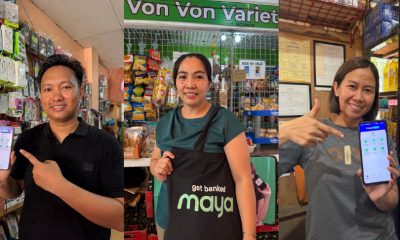
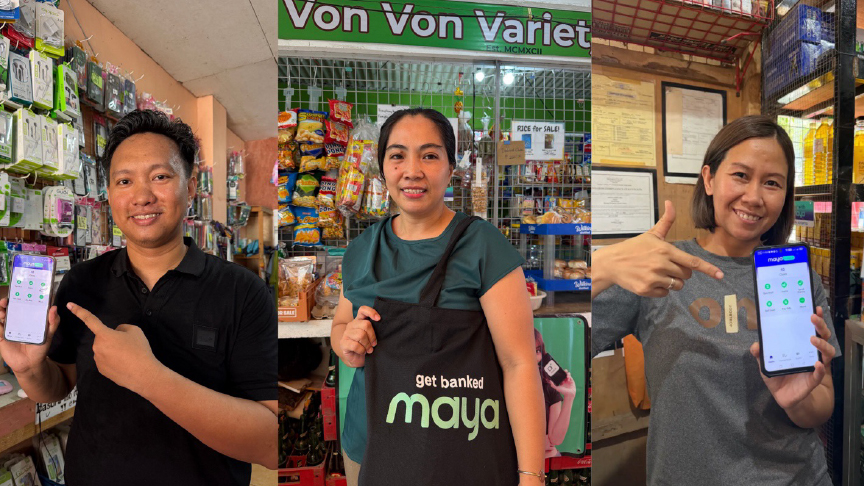
For Ma. Christine Vito, Mohammad Hadji Mahmod, and Von Bindolo, that starting point was a Maya Advance loan of ₱10,000, ₱1,000, and ₱20,000, respectively. Each put that additional capital toward practical business needs: from inventory and everyday operations to services their customers were already looking for.

Over time, those small beginnings opened the door to bigger opportunities. By continuing to transact through Maya Business and responsibly managing their loans, all three were able to access more working capital as their businesses grew, turning their first relatively small loans into millions of pesos in Maya Advance loans utilized over time.

Christine: From a Sari-Sari Store to a Growing Grocery

For Ma. Christine Vito, becoming a business owner wasn’t always part of the plan. After completing an internship at a shipping company, where she gained experience selling dry goods, she became interested in running a business of her own.

Christine and her family eventually opened a small store in Boracay Island. When the property where it stood was sold, they relocated to Sebaste, Antique, where they started again with a sari-sari store.

During the pandemic, the store remained open to serve the community. As more customers came in for mobile load, bills payment, and cash-in and cash-out services, Christine began using Maya Business more actively, and soon found herself needing more inventory to keep up with demand.

She was initially hesitant when she was offered her first ₱10,000 Maya Advance loan, but decided to use it to purchase more products for the store.

“Noong una, natakot akong kumuha ng loan, pero dahil sa Maya Business, nagkaroon kami ng puhunan para tuloy-tuloy na mapalago ang negosyo namin.” (At first, I was afraid to take out a loan, but through Maya Business, we had the capital to continuously grow our business.)

As the negosyo grew, Christine continued putting additional capital back into the business. Since that first ₱10,000, she has utilized more than ₱3 million in Maya Advance loans over time.

What began as a small sari-sari store has since expanded into a mini grocery, with a kitchen and mini warehouse to support its operations. Her family has also purchased a vehicle for the negosyo, growth that Christine built one practical investment at a time.

Mohammad: Making the Most of His First ₱1,000

For Mohammad Hadji Mahmod, the first step was even smaller. After years of working as an OFW, Mohammad returned to the Philippines to help grow his family’s business in Boracay Island. He became a Maya Business user in 2023, offering mobile load, bills payment, and cash-in and cash-out services to customers in their community.

When his first Maya Advance offer came, it was for ₱1,000. Rather than waiting for a bigger amount, Mohammad saw an opportunity to put what was available to work. He used the funds for his load business, helping keep the service running while gradually building up his capital.

As he continued using Maya Business and responsibly managing his loans, he was able to access more working capital for the family negosyo. From that first ₱1,000, Mohammad has since utilized more than ₱2.2 million in Maya Advance loans over time, helping him sustain daily operations, expand his product offerings, and pursue new business opportunities.

“Hangga’t may Maya Business, mas kampante akong patuloy na palaguin ang negosyo ng pamilya namin.” (As long as we have Maya Business, I feel more confident continuing to grow our family business.)

For Mohammad, it’s a mindset that has stayed the same since his first loan: start with what you have, put it to good use, and keep building from there.

Von: Turning Additional Capital Into New Opportunities

Von Bindolo’s journey with Maya Business began before she even took over her family’s sari-sari store. While working in Manila, she discovered Maya Business through Facebook and began selling mobile load to earn additional income through commissions. When she returned to Boracay to take over the family store from her mother, Maya Business became part of how she served customers in the community.

When the pandemic hit and tourism in Boracay came to a standstill, keeping the negosyo running became even more important. Von continued serving customers who relied on the store for mobile load, bills payment, and cash-in and cash-out services.

Her first ₱20,000 Maya Advance loan gave her additional working capital to keep investing in the business during a difficult period.

“Malaking bagay kahit maliit lang ang puhunan, lalo na kapag ginagamit mo para madagdagan ang paninda at mapagsilbihan nang mas maayos ang mga suki. Unti-unti, nakita ko rin na kaya palang lumago ang negosyo namin.” (Even a small amount of capital can make a big difference, especially when you use it to add more products and serve your regular customers better. Little by little, I also saw that our business could really grow.)

Since that first loan, Von has utilized more than ₱2.6 million in Maya Advance loans over time. The additional capital has helped her grow sales and invest back into the negosyo, including purchasing an e-bike for daily operations. Her growing business has also helped support her child’s education.

What started as a sari-sari store passed down by her mother continues to grow into a negosyo that supports both her family and the community around her.

Small Capital Can Go a Long Way

Christine, Mohammad, and Von started with different businesses and different amounts. What they shared was how they chose to use that capital: putting it toward real, everyday needs that could help their negosyo move forward.

As their businesses grew, so did the opportunities available to them. What began with inventory, load, and daily operating needs eventually helped make room for bigger investments: from expanding a sari-sari store into a mini grocery to purchasing vehicles and exploring new sources of income.

Through Maya Business, entrepreneurs can access digital tools and services for everyday business needs, from accepting QR Ph payments to offering mobile load, bills payment, and cash-in and cash-out services. Eligible Maya Business users can also access additional working capital through Maya Advance.

For Filipino entrepreneurs, growing a negosyo doesn’t always mean starting big. Sometimes, it means making the most of the capital you have, putting it where it can make a difference, and building from there.

Because a small first step can eventually take a negosyo much further.

Looking to grow your negosyo with digital tools and services? Apply to become a Maya Center and download the Maya Business app on Google Play and App Store to get started.

Continue Reading

BizWiz

Empowering the next wave of Filipino freelancers in Pampanga

Published

on

At a time of rising costs and economic uncertainty, freelancing has emerged as a growing source of opportunity. As more Filipinos turn to freelancing as a viable long-term career, many are adopting digital tools like the GCash Virtual US Account to simplify cross-border payments.

Recognizing this, the GCash Freelancer Connect, a series of community events designed to bring freelancers based in different cities in the country, made its way to Pampanga for its first regional leg. Attendees gathered to learn from speakers KD Creatives and Dani Jacobe, who led practical sessions on how to diversify income streams, charge more competitive prices, and build greater financial confidence with the support of tools like GCash. Here are key insights shared during the event:

1. Strong relationships create steady opportunities

With more Filipinos entering the freelancing industry, standing out has become a bigger challenge. For Dani Jacobe, building meaningful connections – and knowing how to communicate value clearly – makes all the difference.

“Your goal is not just to find one client. Your goal is to build a system that helps you keep finding and serving clients,” she shared.

What she has learned over the years is that outreach should go beyond simply introducing one’s services. Freelancers should learn to identify problems, offer clear solutions, and create opportunities for intentional conversations from the very beginning.

“Your skill becomes more valuable when you connect it to a specific business need,” she added.

2. Be confident in your worth

For Kyla Dizon, the journey to becoming “KD Creatives” didn’t happen overnight. Before building her online community around content creation and offering digital guides and advice through her platform, she experienced self-doubt and pressure as a young freelancer. One area where that hit hard was in communicating her value to potential clients.

“The truth is, a lot of freelancers are incredibly talented, but still undercharge because they haven’t fully recognized the value of what they bring to the table,” she explained.

The turning point came when she stopped pricing from a place of fear or being scared that clients would walk away because she’d be too expensive and instead, began pricing from a place of confidence. But that confidence, Kyla noted, came only once she fully embraced her personal brand as a freelancer.

“Now, I approach pricing differently — not based on fear, but on the value and experience I know I can deliver,” she explained. During the Freelancer Connect, she urged attendees to use a pricing matrix, which she has made available online, to accurately determine how much they should charge clients for the services they offer.

3. Receiving payments should not feel complicated

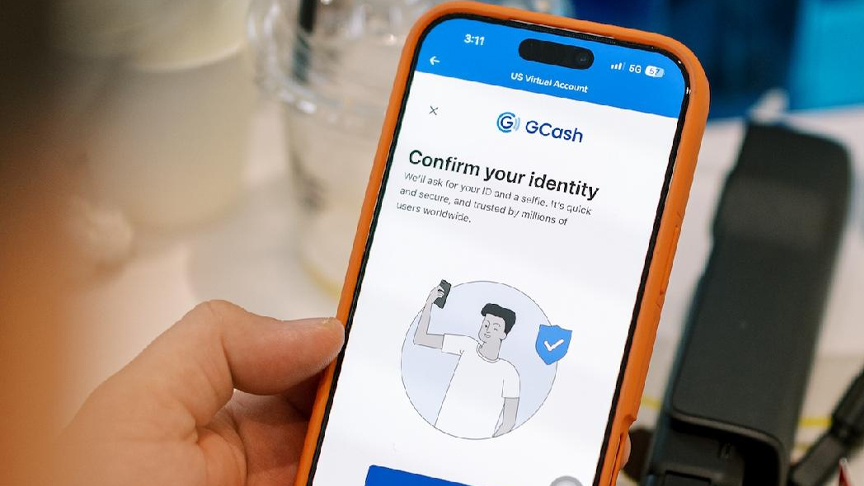
Another common challenge freelancers face is receiving payments, especially from overseas clients, where the process is often inefficient. To address this, GCash has introduced the Virtual US Account, a feature designed to make receiving USD payments easier.

Users can now receive USD transfers directly from US-based clients using their own routing and account numbers, similar to a traditional US bank, within the GCash app. This feature helps freelancers avoid unnecessary deductions, hidden fees, and lengthy transfer processes, while also ensuring competitive forex rates. Users can convert their USD to PHP when it is most favorable for them – they have full control of when they want to withdraw it into their GCash e-wallet.

“We want to ensure that freelancers in the Philippines can receive and manage their money in the most convenient way possible and in a manner that ensures they don’t lose so much of their hard-earned cash. Once in your Virtual US Account, you can access and manage your earnings instantly inside the GCash app – whether that’s converting to PHP, paying bills, buying load, or even growing your wealth through our financial services,” shared Sophia Sison, Product Manager under the International Business Group at GCash.
Create your Virtual US Account today

As freelancing continues to grow across the country, GCash hopes initiatives like the Freelancer Connect can help create more spaces where freelancers feel supported — not just financially, but as a community navigating a rapidly changing world of work together.

Creating your Virtual US Account is easy:

  1. Open the GCash app – Tap US Accounts in the Explore the App section
  2. Tap Continue and verify your information
  3. Complete your account creation

Continue Reading

BizWiz

3 Lessons from women who successfully built careers in freelancing

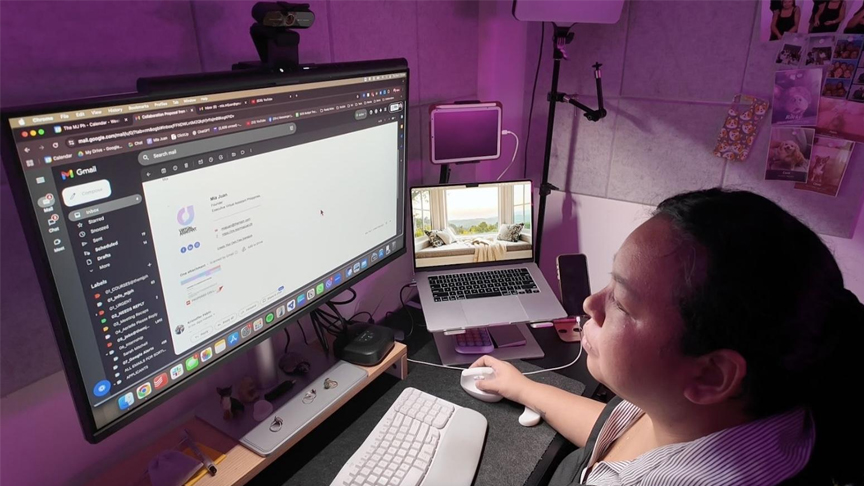
Freelancers face inconsistent income, unpredictable clients, and little guidance on how to navigate it all. For longtime freelancers Mia Juan and Dana Novales, building a career online has meant learning these lessons in real time.
Published

on

 Earning through freelance work has never been more accessible. With a stable internet connection and numerous job platforms, opportunities can come from anywhere – and for many Filipino women, they do. A 2020 study by the Philippine Institute for Development Studies (PIDS) showed that an increasing number of women are engaging in online work because it lets them earn while balancing home responsibilities.

But access doesn’t always mean ease. Freelancers face inconsistent income, unpredictable clients, and little guidance on how to navigate it all. For longtime freelancers Mia Juan and Dana Novales, building a career online has meant learning these lessons in real time. With more women entering the freelancing field, they share three lessons they’ve learned:

1. Build real relationships, not just transactions.

Freelancing can make work feel transactional. You get assigned a task, submit the work, get paid, and then move on. But the most successful freelancers don’t treat work that way. In such an unpredictable field, being remembered matters.

According to Dana, “Real relationships are built on service, not strategy.” Every “Well done!” or “Good work!” can open doors to new opportunities, so don’t waste them. Instead, take an extra step to establish a real relationship with your clients: check in, understand what they need, and find ways to make the process easy for them.

2. Set up systems that work for you.

Handling different clients with different ways of working can get overwhelming fast. For Mia, having systems for your workflow simply makes this easier and helps manage client expectations.

That can be as simple as being clear about what services you offer. “It’s basically saying this is what I can offer and setting a clear boundary of what you do not do. That way, there is no miscommunication of responsibilities, which happens commonly in freelancing work,” she shares. It also helps to have a proper onboarding flow – having contracts, timelines, and payment terms in place before you start, not while you’re already in the middle of the work.

3. Find solutions that work for your peace of mind.

Some challenges only appear once you’re in the midst of them, and for many freelancers, realizing that foreign payments come with fees, delays, and uncertainty is when freelancing starts to feel stressful.

“Earning in USD sounds exciting–until fees, forex, and delays eat into your income,” Dana points out. She shares that this is something she wishes she had known earlier in her freelancing career. “That’s why there is importance in having the right structures in place, especially if you’re a mom who has to think of managing your home, paying your bills, among many other responsibilities.”

That’s why Mia and Dana now use the new GCash Virtual US Account, a feature within the GCash app that lets freelancers receive USD payments from US clients more directly without the usual surcharges. After creating an account, you get your own ACH and Wire Routing Number, which you can give to your clients for direct deposits of your pay.

You can also choose to convert your USD to PHP when you want, depending on live forex rates, which you can see on the platform – giving you control over how much you actually receive. Once it’s in your wallet, you can use it to send money, pay bills, or add to your savings.

Creating a GCash Virtual US Account is easy in just a few steps.

  1. Open the GCash app. Tap US Accounts in the Explore the App section
  2. Tap Continue and verify your information
  3. Complete your account creation

Continue Reading
Advertisement
Advertisement

Like us on Facebook

Trending