Connect with us

BizListing

Thriving by selling affordable steaks in the middle of Baguio City

We checked (for the second time) one of Baguio City’s popular steakhouses: Sizzling Plate.

Published

on

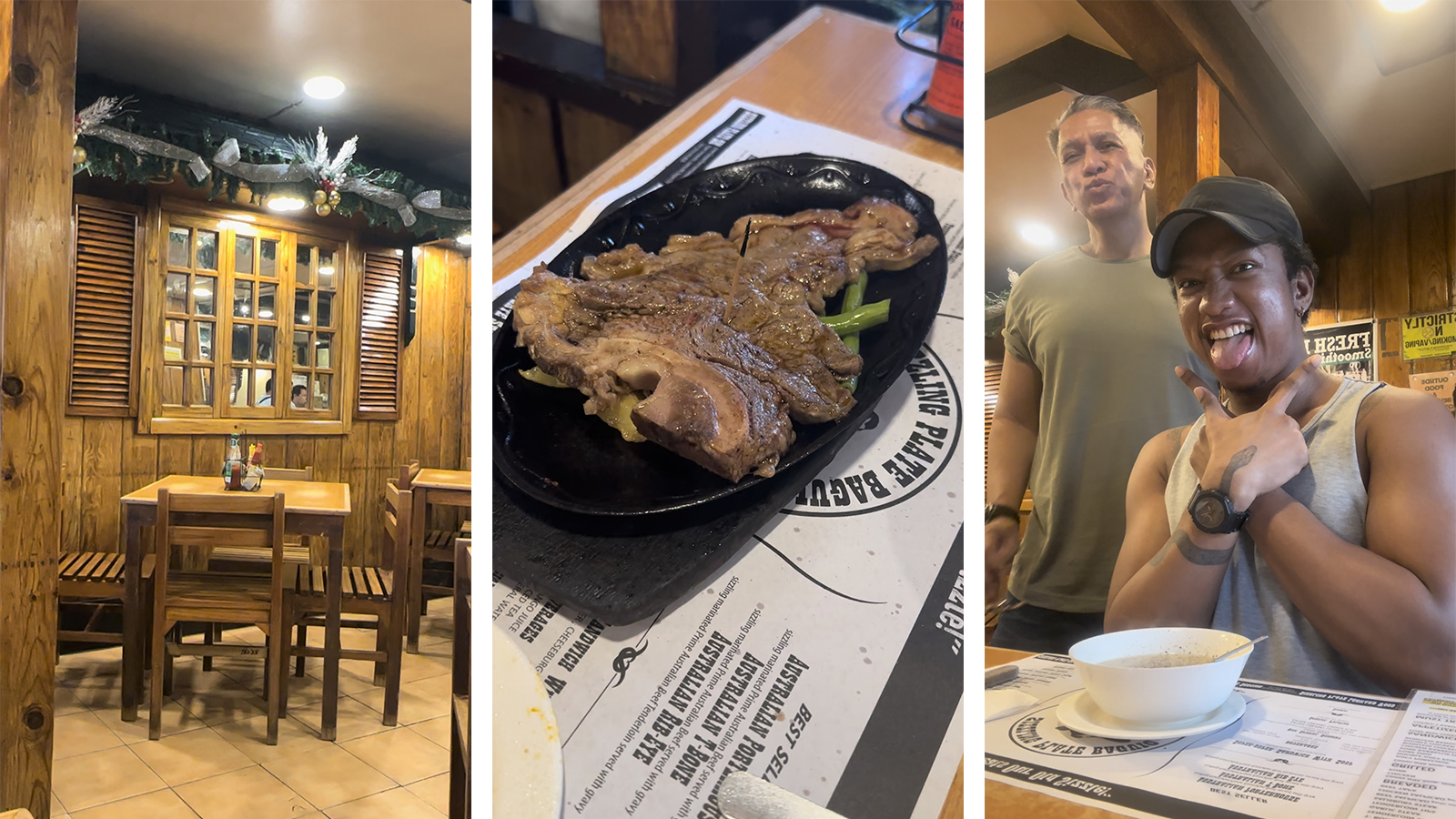
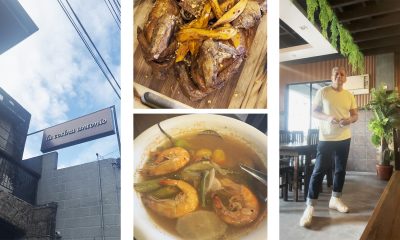
Truth: The first time we visited Sizzling Plate along Session Road in Baguio City, we were surprised. For a not-classy (and some may even say shabby and karinderya-looking) steakhouse, what the place offered were actually better-than-okay food – e.g. the steaks were properly cooked, the fries crunchy, the soup not runny, and so on.

@outragemag Looking for cheap #steaks in #Baguio? We #LGBT ♬ original sound – Outrage Magazine

Truth: Sometimes, for good memories to stay good, don’t revisit to recreate them… which we unfortunately did by revisiting Sizzling Plate during a recent Baguio City trip.

And, sadly, the second time was such a letdown we wondered why we even liked it when we visited it for the first time.

Harsh? Perhaps… but let us explain why…

Una, this place – which was established in 1978 by couple Mike and Edna Anton – is very easy to find, as it sits right in the middle of Session Road, which is in the very center of Baguio City’s commercial area.

Ikalawa, décor-wise, the place looks rustic… like a Filipinized version of some rancher’s diner filled with wooden chairs and wooden tables and so on. Let it be said, however, that this place could use an upgrade – e.g. it looks dated (the “before” if this is to be renovated by Chef Gordon Ramsay in Kitchen Nightmare), has dated stuff (like those flimsy cutlery), and so on.

Ikatlo, the workers are still nice. We remembered some of them from our past visit, and while they – understandably – couldn’t remember all their diners, they were still pleasant while serving (e.g. could explain what’s on the menu, delivered the correct orders, and so on).

Ika-apat, how was the food?

  1. Y’all get free mushroom soup… which is, basically, a watery concoction that tasted like it was made from powder mix. Particularly when Baguio City gets cold, this should suffice to warm you while waiting for your food.
  2. All steak meals came with fries (stuffed under the slab of meat, so that when they reached us, we just got burnt potato slices that were too soggy to be called fries); veggies (though we really just got a few Baguio beans); and Java rice.
  3. The Australian Porterhouse (₱460) was smaller albeit thicker. Meanwhile, the T-bone Steak (₱420) was bigger-looking and yet thinner. Always remember that with sizzling steaks, the meat gets overcooked – i.e. we ordered medium rare, but by the time we ate, the meats were already well done. Also, both steaks served to us tasted too margarine-y… and too chewy to be enjoyable at all.

In truth, Sizzling Plate continues to be really popular. Understandably so because of: 1. it is historic; 2. it’s location (right in the middle of Session Road in the middle of Baguio City); and 3. cheap goods. But – for us – Baguio City actually has more to offer that should be checked, including alternatives to this venue (e.g. the fillet mignon of Café by the Ruins is same-priced, but way, WAY better). So, puwede magtiis here, or go discover is the advice.

And so off we go as we search for more lafangan venues…

Sizzling Plate is located at 86 Session Rd., Baguio City.

BizListing

A Filipino family brand goes global through craft, customization and smart logistics

Founded in the early 1980s by Carlito Atienza, a master tailor in Metro Manila, Caster Sportswear began with a clear mission: to fill the gap for affordable yet high-quality customizable sportswear.

Published

on

In the dynamic world of sports apparel, success demands more than quality—it calls for vision, innovation, and the courage to push boundaries. These values have been at the heart of Caster Global Sports Inc.’s journey to becoming a trusted name in the industry.

Founded in the early 1980s by Carlito Atienza, a master tailor in Metro Manila, Caster Sportswear began with a clear mission: to fill the gap for affordable yet high-quality customizable sportswear. Carlito’s craftsmanship and commitment quickly earned the brand a reputation among discerning clients, including major banks and universities.

For decades, Caster thrived locally, but it was the fresh perspective of the second generation that unlocked its global potential—transforming a homegrown brand into an international player.

Going global

The turning point came with the next generation. Butch Atienza, vice president, Caster Global Sports, brought a global perspective from his experience at a multinational company. He saw that there was a growing demand overseas for the personalized kits his family has been producing for decades. At that time, Caster was well-known for making uniforms for local corporate clients. But expanding internationally meant rethinking logistics and embracing a bigger vision for growth.

Butch researched logistics providers and found FedEx. “We began shipping with FedEx in the early 2000s after finding the promotional box rates really attractive,” Butch shares. “Back then,we were sending five to nine packages a week, until a FedEx representative noticed our volume and visited us to open an account.”

This collaboration, now spanning more than 20 years, lowered the barrier to exporting and helped Caster Global test foreign markets without overcommitting resources. Shipments to the U.S. now take two to five days, shortening the feedback loop between customer and manufacturer.

Standing out in a crowded market

Caster’s competitive edge isn’t simply speed. In a market crowded with about 20 local competitors, the company leans into craftsmanship and customization for differentiation. While many suppliers focus on basic sublimated prints, Caster offers embroidery, tailored designs and one-off recreations. Customers can send a photo and receive bespoke sportswear. This service resonates with buyers in the U.S. and Europe who seek distinctiveness over off-the-rack sameness.

Behind the promise is a disciplined production process. Every order begins with a specifications sheet and sample production before mass rollout- a simple quality-control step that reduces costly mistakes. Investment in new equipment like full-body printers and modern embroidery machines , further improves consistency and throughput. Typical lead times range from two to three weeks for small runs (50–100 pieces) to three to six weeks for larger orders (around 1,000 pieces), allowing the company to serve both grassroots clubs and larger teams.

When errors occur, Caster communicates costs and options clearly, ensuring transparency to customers who have generally accepted the need to cover replacement shipping because of the service’s perceived value. This trust, coupled with responsive customer support, has turnedone-time orders into repeat business.

Scaling a manufacturing business means jugglingcash flow, balancing bespoke work with high volume production, and maintaining consistent quality as demand rises. These challenges shaped Caster’sstrategic decisions: standardizing specifications, documenting workflows, and partnering with a logistics provider that can scale with them.

Lessons from the past, and hopes for the future

Looking ahead, Butch is exploring international franchising and partnerships. Interest has come from clients in Australia, Malaysia, the United States and Switzerland, and the company is studying franchising models and assessing options. Locally, discussions have begun about sponsorships and collaborations with larger sports organizations, including talks around the Philippine Basketball Association.

For Philippine entrepreneurs watching from the sidelines, Butch’s advice is pragmatic: focus on product quality, invest in customer service, and build partnerships that reduce friction when expanding abroad. “Shipping reliably was a game-changer for us,” he says, noting that logistical confidence made it possible to sell beyond the Philippines without compromising service.

From Carlito Atienza’s vision in the 1980s to Butch’s global expansion in the 2000s, Caster Global Sports Inc. proves that Philippine craftsmanship, family values, and strong partnerships can push businesses to thrive in the global market. As they look to 2026 and beyond, this family business built on skills, quality, and innovation is only getting started.

Discover more inspiring stories from entrepreneurs across Asia Pacific on FedEx Business Insights.

Continue Reading

BizListing

Offering Thai food in Tanay, Rizal

Diluting of flavors is common among Thai restaurants in many parts of the Philippines. So the discovery of Kamala Café in Tanay, Rizal was, admittedly, a pleasant surprise because this one’s serious in offering goodies from Thailand.

Published

on

For those heading to Thailand, I always recommend eating local. That is, to avoid eating in restaurants – fancy or not – and try grabbing Pad Thai, for example, from some Thai karinderya or those street vendors in Silom or Chatuchak or wherever. Tourist-centric venues tend to dilute their flavors to accommodate non-Thai taste buds. But Thai cuisine is very distinct, and toning down these flavors remove their being Thai food in the first place.

@outragemag Looking for #thailand #Thai cuisine in #Tanay, #Rizal? We #LGBT checked #KamalaCafe ♬ original sound Outrage Magazine

This diluting of flavors is what’s common when you find Thai restaurants in many parts of the Philippines. And so the discovery of Kamala Café in Tanay in the province of Rizal was… admittedly, a pleasant surprise.

Una, going to the place is challenging for those who do not have private vehicle/s. It isn’t exactly near Metro Manila, and public transportation is hard to come by there.

Ikalawa, make use of the guides in front of the venue. This is essential because this is in some compound, and you may find yourself in the neighboring seafood restaurant instead. This is also important because the narrow path leading to the restaurant can get slippery when wet. You’d need someone to tell you to go slow, go slow…

Ikatlo, the restaurant itself is… modern rustic. You get open-air seating with not-bad views of the largely untouched mountain ranges. But be warned that the place can get cold, and – when raining – water just pours in.

Ika-apat, the people working there were better-than-okay naman, not just knowledgeable about the restaurant and its offerings, but provided requested services (e.g. move the food to another table for the shoots).

Ikalima, how was the food?

  • The Som Tam (₱235) was, actually, Thai-tasting: fresh veggies used, better-than-okay dressing, and so on. If there’s an issue – a very tiny one – it’s the puwede pa to add more oomph by adding more palm sugar and fish sauce. But, yeah, we’d take this over all the papaya salads we’ve so far tried…
  • The Pad Thai (₱325) was a win for me. It’s hard to find one that tastes like those offered in the streets of, say, Bangkok, and this one’s almost there.
  • The not-skinny slices of Satay Chicken (₱365) were properly cooked naman, so that’s good. An issue, for Arthur, is that this is “nothing special”. BBQ chicken lang siya.
  • Tom Yum (₱475) was – indeed – spicy and tangy, but it was also runny.
  • The drinks were the disappointment – e.g. selling for ₱185, the Hot Koko tasted like Ovaltine lang.

Tanay isn’t exactly easily accessible to all, so if you decide to eat at Kamala Café at all, you have to be willing to allocate time, money, et cetera, which everyone is not willing to do. But yeah… this one’s a better-than-okay choice, indeed, for a Thai restaurant. So check out if able to.

But off we go to search for more lafangan venues…

Kamala Café is located at KM54 Marilaque Highway, Brgy. Cuyambay, Marikina-Infanta Highway, Tanay, Rizal.

Continue Reading

BizListing

Selling the best of Bicol food via Small Talk Café

In #LegazpiCity for this #LGBT wandering, checking out what #Bicol has to offer via Small Talk Café.

Published

on

Not all provinces in the Philippines have memorable local cuisines. Some that stand out are Kapampangan, Cebuano, and… yep, Bicolano. We all know, for instance, that gata or coconut milk is widely used in usually-spicy Bicolano food. That’s because many of us have tasted at least some of their offerings, no matter where we may be in the country.

@outragemag In #legazpialbay for this #LGBT wandering, checking out what #Bicol ♬ original sound – Outrage Magazine

And so – while in Legazpi City – we headed to Small Talk Café, this known restaurant offering supposedly authentic and deconstructed delicacies from the Bicol region.

How was Small Talk Café naman?

Una, the restaurant is easy to find. It helps that people know of it, so you can take public transport and – yep – you will be taken there.

Ikalawa, the actual restaurant is… antiquated. It actually looks like someone’s provincial house that’s been converted into a dining place, so don’t expect much design-wise. But at least you get ample seating in a not-that-tight space.

Ikatlo, most of the people working there are women who know the venue’s offerings. There are some half-truths given (e.g. their version of the sili ice cream not properly explained), but overall, they were helpful naman.

Ika-apat, how was the food?

  • The Pinangat/Laing (₱110) was properly cooked, with melt-in-your mouth taro leaves blending well with the coconut milk.
  • The Pasta Mayon (₱275) reminded me of spicy pansit in some Chinese restaurant. Not to everyone’s liking, but, even if sauce-less, it was okay naman for me.
  • The Kandingga or Albay Bopis (₱225) was good naman, but not extraordinary. If you order bopis in some karinderya in Mandaluyong or in Kidapawan or in Vigan, the taste would still be the same.
  • The same can be said about the Sinigang (₱365), which was almost tasteless.
  • The chicken offerings were sorta dry, including the fried chicken (₱200 per piece, or ₱630 per medium serving), and the Adobong Manok sa Gata (₱320). Truth: these weren’t bad naman, but what I remember ay ang dryness of the chicken.
  • Must try for me ay ang Mayon Stuffed Pizza (₱500), which is, basically, calzone with spicy meat filling. If you’re not into spicy food, ignore those sili on top of the pizza; they’re there only as decoration. Filled with cheesy meat, this is very tasty, with the spice level making you want to eat more. This is, definitely, way, way better than the Bicolano (₱475) pizza that, really, is just laing on dough.
  • For dessert, their version of the “sili ice cream” is… deceptive. Red Hot Lava (₱380) is, basically, scoops of vanilla, chocolate and strawberry ice cream topped with pili nuts and slivers of sili. You can make this at home, truth be told.

If you want to eat local in Legazpi City, try looking for some karinderya… or try the likes of Small Talk Café. You may have issues – as I did – with some of what’s there, but it does give you a sense of Bicolano food. No hotel food, I say.

But off we go in search of more lafangan venues…

Small Talk Café is located at 51 Dona Aurora St., Legazpi City. For more information, call 0917 624 9279 or email smoltok_cafe@yahoo.com.

Continue Reading
Advertisement
Advertisement

Like us on Facebook

Trending