Connect with us

BizListing

Champion Bags as smarter plastic choice for a sustainable future

Champion Bags isn’t just a product—it’s a movement. Through campaigns like #BagABetterFuture and #PlasticWithPurpose, Filipinos are encouraged to make small, everyday choices that lead to a bigger impact.

Published

on

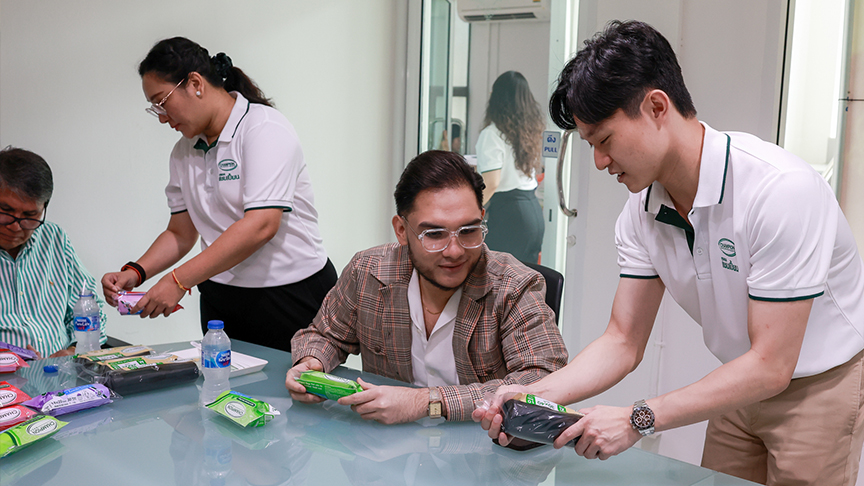
In a world drowning in plastic waste, Champion Bags offers a practical and meaningful way for Filipinos to make a difference. As Thailand’s leading eco-friendly trash bag brand, trusted in over 20,000 stores, Champion Bags finally arrived in the Philippines. The launch was solidified through a contract signing event in Bangkok, marking an exciting step towards a cleaner, more responsible future for Filipino households.

A Mission Rooted in Purpose

Sustainability is not merely a business trend but a personal responsibility for Joshua Abrera Janairo, the founder of Sustainable Strategic and the visionary who introduced Champion Bags to the Philippines.

“I’ve always been an eco-conscious consumer. During my graduate studies at the Asian Institute of Management, sustainability was a central theme, and my professors instilled in me the importance of integrating it into business. Consumers today are more informed than ever, and I believe now is the best time to introduce products that are both purposeful and sustainable,” he shares.

Champion Bags was introduced to Janairo in late 2023 during a meeting with a retail partner, who had seen the brand’s success in Thailand. Recognizing the urgent need for sustainable waste solutions in the Philippines, he took on the challenge of making it accessible to Filipino consumers.

By July 2024, Sustainable Strategic, Janairo’s Singapore-based holding company, focused on sustainable Fast-Moving Consumer Goods (FMCG) distribution secured regional distribution rights for Champion Bags, ensuring that Filipinos have access to an eco-friendly trash bag that truly makes a difference.
Why Champion Bags?

Many “eco-friendly” trash bags available today still use oxo-degradable plastics, which were once seen as a sustainable alternative. However, research has since proven that these break down into harmful microplastics, which pollute oceans, soil, and even enter our food chain. This is why major markets like the EU and Canada have banned oxo-degradable plastics altogether since 2021 and 2024 respectively.

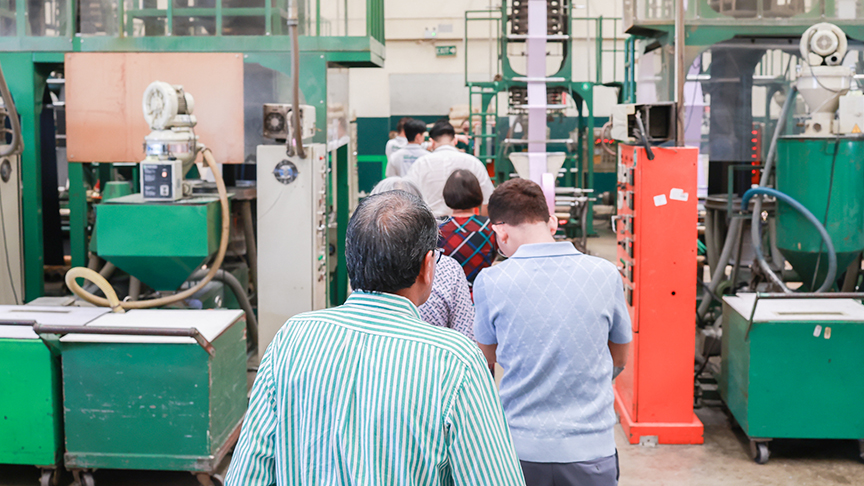
Instead of following the biodegradable route, which requires specialized facilities not yet widely available in the Philippines, Champion Bags takes a smarter approach by using recycled plastics in line with circular economy principles. This means:

  • Less plastic waste – By repurposing existing plastic, Champion Bags helps keep waste out of landfills and oceans.
  • Stronger, more durable bags – Unlike some biodegradable alternatives that easily tear, Champion Bags are designed for reliable, everyday use.
  • A solution that works NOW – Without requiring new waste processing infrastructure, these bags can be seamlessly integrated into the existing system.

“One of the biggest things I’ve learned about sustainability is that it must be adapted to a market’s unique conditions. In the Philippines, we rely on landfill-based waste management. Instead of waiting for large-scale infrastructure changes, we need immediate solutions that work within our reality,” Janairo reveals.
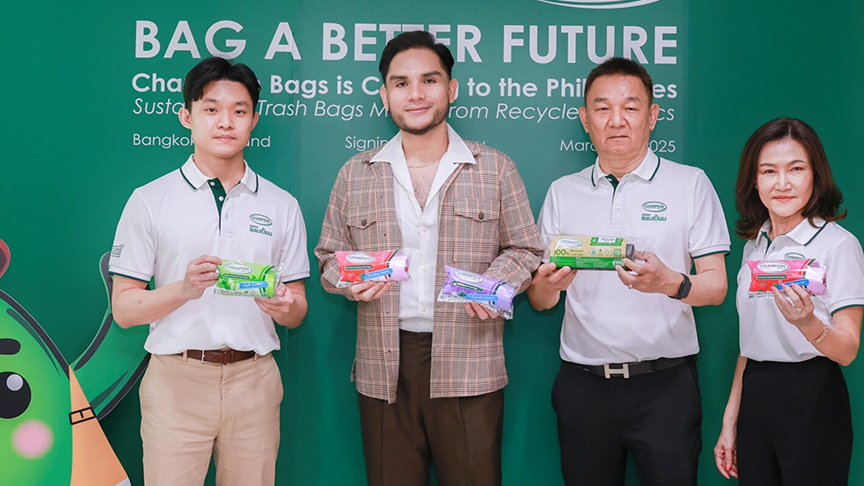
Join the Movement: #BagABetterFuture

Champion Bags is about changing the way we think about waste, making sustainability easy, accessible, and truly impactful.

  • Made from Recycled Plastics – A smarter choice that minimizes environmental impact.
  • Durable & Reliable – Strong, tear-resistant, and leak-proof for daily household and business use.
  • Scented & Unscented Variants – Available in Strawberry, Apple, and Lavender, plus a fragrance-free option.

Champion Bags isn’t just a product—it’s a movement. Through campaigns like #BagABetterFuture and #PlasticWithPurpose, Filipinos are encouraged to make small, everyday choices that lead to a bigger impact.

Champion Bags is now available in major retail stores and online. Make the switch today and be part of the change.

BizListing

A biz promoting eating healthy, thanks to Chef Gerick Manalo

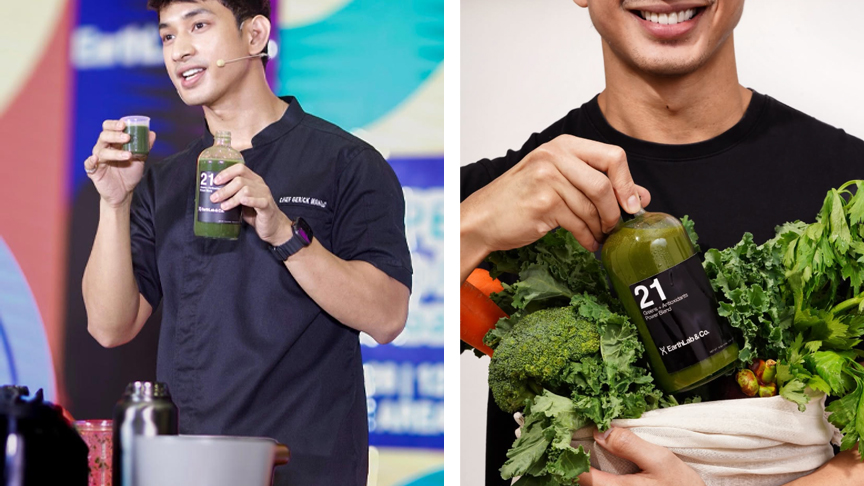
21 Greens + Antioxidants Power Blend combines greens, fruits, antioxidant-rich ingredients, and probiotics. Its development reflected the problem Chef Gerick Manalo had encountered firsthand: a product’s ingredients mattered, but so did the experience of consuming it regularly.
Published

on

A chef who struggles to eat his vegetables might seem like an unlikely person to start a wellness company. But for Chef Gerick Manalo, Founder and CEO of EarthLab & Co., that personal contradiction became the starting point for a business built around a familiar challenge: why is eating healthier so difficult, even when we know what is good for us?

Despite years of experience preparing food for others, Manalo found it difficult to maintain the healthy eating habits he understood professionally.

“As a chef, I could tell you exactly what a balanced plate should look like, how to prepare vegetables, and even make them taste good for other people,” Manalo says. “But when it came to my own plate, I was the one avoiding them.”

That gap between knowing and doing would become central to how he approached EarthLab.

When Knowledge Doesn’t Become a Habit

When his schedule grew busier, vegetables were often among the first things Manalo skipped. He tried blending greens and vegetables at home to make up for what was missing from his meals. The experiment did not last. “It tasted terrible,” he says, laughing. “I was drinking it because I knew I needed it, but eventually, I gave up.”

The failed experiment showed him that nutritional intentions alone were not enough. Taste and convenience mattered if he wanted a routine he could sustain.

“I’ve learned that knowing what’s healthy is easy. Making it a habit is the hard part,” he says. “The challenge is doing those things consistently, especially when life gets busy.”

Making Better Nutrition Fit Real Life

Manalo’s culinary experience led him to approach the problem through taste. A food or drink can offer nutritional value, he reasoned, but people are less likely to return to something they do not enjoy.

“I think the biggest misconception is that eating well means forcing yourself to eat things you don’t enjoy,” he says. “For me, it’s really about finding a way to make better nutrition work for you.”

That thinking shaped EarthLab’s intended audience: people who understand the value of eating well but struggle to make it part of their routine.

“What I felt was missing was something made for real people, not just people who are already obsessed with wellness,” Manalo says. “Make it simple. Make it enjoyable. Make it fit real life.”

He is careful not to position convenience as a substitute for balanced meals. “We’re not here to replace a healthy diet,” he says. “We’re here to make getting more greens easier in real life.”

From a Kitchen Experiment to a Wellness Business

Turning the idea into a product took more than two years. Manalo worked through repeated rounds of formulation, ingredient sourcing, tasting, packaging, and production decisions before introducing EarthLab’s first offering, 21 Greens + Antioxidants Power Blend.

Manalo approached formulation as he would a dish, balancing ingredients, texture, and flavor. But the repeated testing also forced him to consider a different standard of success: whether someone would willingly prepare and drink the blend again the next day.

“For me, taste was non-negotiable,” he says. “If I’m going to ask people to make this part of their daily routine, it has to taste good enough that they actually want to come back to it.”

The resulting 21 Greens + Antioxidants Power Blend combines greens, fruits, antioxidant-rich ingredients, and probiotics. Its development reflected the problem Manalo had encountered firsthand: a product’s ingredients mattered, but so did the experience of consuming it regularly.

Product development also brought the uncertainties of running a business: supplier choices, production costs, failed attempts, and decisions made before he knew how customers would respond.

“There were moments when we questioned whether we should keep going, but I believed in the problem we were solving,” he says. “After more than two years of testing, failing, adjusting, and refining, we finally created something I was genuinely proud to put the EarthLab name on.”

A Founder’s Case for Consistency

The experience reinforced Manalo’s preference for realistic, sustainable habits over sweeping changes to daily routines.

“You don’t have to completely change your life to start taking better care of yourself,” he says.

His own relationship with vegetables has not changed overnight, either. Building EarthLab made him more attentive to his habits, without turning him into someone who suddenly enjoys every vegetable.

“Vegetables and I are in a much better relationship now,” he says. “We’re not best friends yet, but we’re definitely talking.”

He applies the same problem-first thinking to EarthLab’s future. Although he wants the company to grow beyond its first product, he believes any new offering should address a specific consumer need. “Every product should have a purpose and solve a real problem,” he says.

His move into entrepreneurship has also given new meaning to the skills he learned in professional kitchens: discipline, teamwork, and the ability to adapt when plans fail. While his responsibilities have expanded beyond food preparation, Manalo still sees himself first as a chef. “I’m still Chef Gerick,” he says. “I just have a much bigger kitchen now.”

Continue Reading

BizListing

Vietnamese food in San Pablo City’s Pho Viet Nam

When we came across Facebook posts on Pho Viet Nam in San Pablo City in Laguna, we expected to encounter what was experienced in Vietnam (i.e. good food over so-so venue). We expected too much…

Published

on

If you’ve been to Vietnam, you’d know that some of the best places to eat at are in those neighborhood eateries; their versions of karinderya, in a manner of speaking, where locals prep good lutong-bahay Vietnamese offerings sans the classy places of expensive restos. Here, the focus is always the food, never the blings.

So when we came across Facebook posts on Pho Viet Nam, located somewhere in San Pablo City in the Province of Laguna, we sort of expected to encounter what was experienced in Vietnam.

@outragemag Looking for #Vietnam food while in #SanPabloCity in #Laguna? We #LGBT checked #PhoVietNam ♬ original sound – Outrage Magazine

Una, this is not the most accessible place even for those with vehicles from Metro Manila. This is because you still have to travel for over an hour (if you’re lucky traffic-wise), and spend on your gas and the toll and so on.

Note that when you’re also along Apolinario Mabini Street, the resto isn’t apparent. It is located at the back of another resto (Joy), so it is very easy to miss. There is, BTW, a small entry at the side of the resto, which leads to an outdoor parking space.

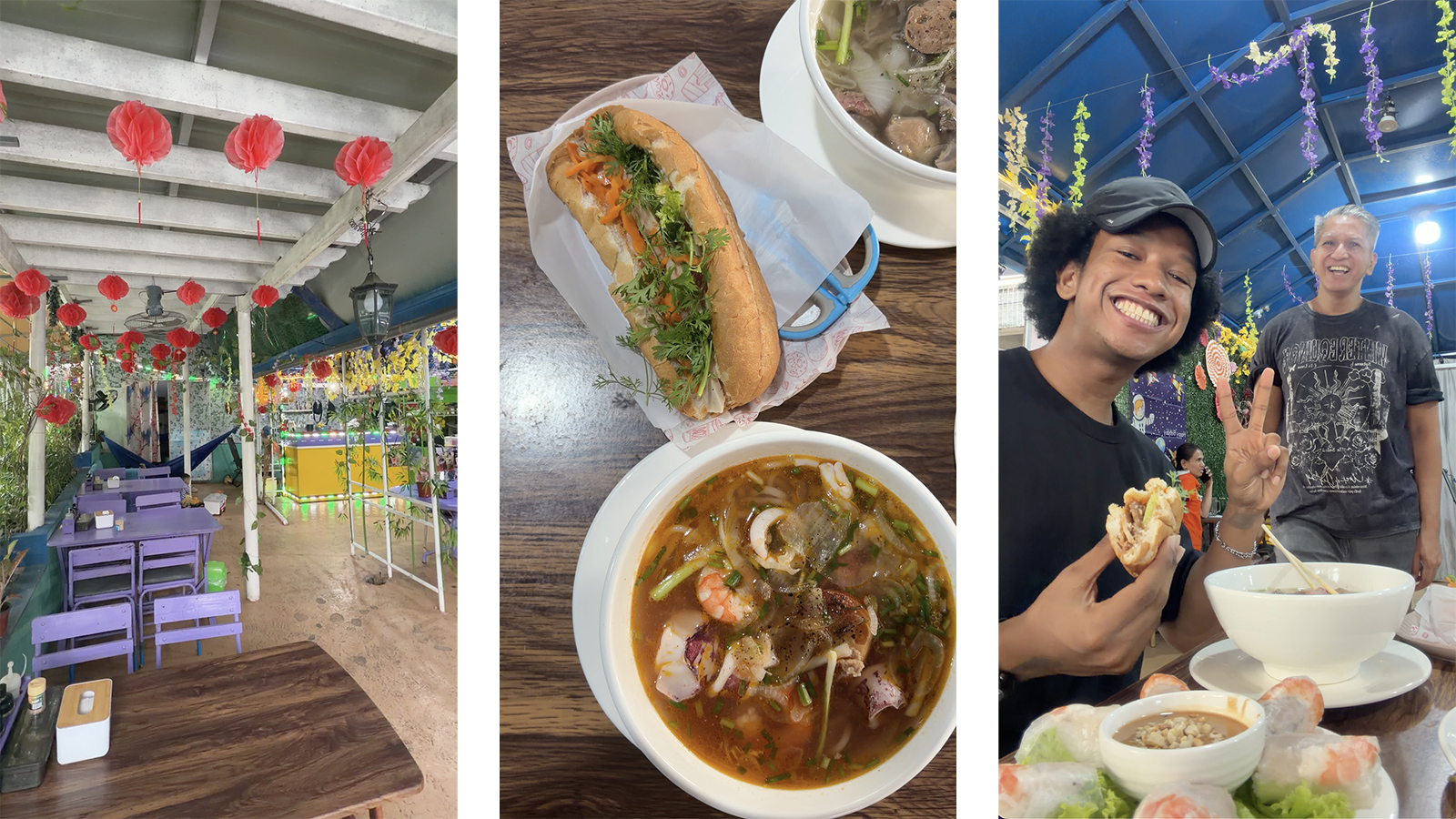
Ikalawa, the actual resto is cheap-looking – e.g. plastic décor, running lights here and there, and so on. Very karinderya; cheap karinderya, for that matter.

Ikatlo, the servers were okay naman; they knew what was on the menu, and – after making quick recommendations – kept you undisturbed to enjoy what you ordered. The orders took some time to be prepped, however; I was even able to order bad-tasting fries from the other resto due to the waiting time.

Ika-apat, how was the food?

Both the ₱245 Beef Noodle Soup and the ₱245 Seafood Noodle Soup weren’t bad naman; but they weren’t good either. You get enough properly-cooked meats, the noodles are sufficient, and so on. Taste-wise, though, they were bland, and no amount of the prepared condiments helped in changing the flavor.

The ₱190 Rice Paper Roll sufficed even if, by and large, it was tasteless. The saving grace: the satay dip since it was rich and nutty and all that.

The ₱160 Meatloaf and Egg Sandwich (the banh mi kep thit va trung) had enough meat naman… and yet was also bland.

Considering the asking prices of this place, you sort of expect a lot, too. Add to that the popularity of the place – e.g. look at all those who dine there, kinukuyog. Alas, the realities when already there are harsher.

Heading to San Pablo to check this place led us to the nearby Dagatan Blvd. surrounding Sampaloc Lake, a must-check place in these parts. So we sort of do not regret heading to San Pablo.

But buod: No, Pho Viet Nam is not worth the dayo; not worth for you to intentionally seek this place out. The food wasn’t bad. But it’s not great, or even good either. It just suffices. And so, particularly for non-locals, the additional expenses for the gas, toll, et cetera make going there not worth it… sorry.

But off we go for more LGBTQIA+ rampa…

Pho Viet Nam is located at 130 Apolinario Mabini Street, San Pablo City, 4000 Laguna.

Continue Reading

BizListing

Focus on good food and good service at La Cosina Antonio

We found our #LGBT selves in #Pila, #Laguna, where we ended up checking La Cosina Antonio.
Published

on

While traveling from Batangas City on the way to Paete, Laguna after an Intersex 101 training workshop, intersex activist Jeff Cagandahan worried where he’d feed us. And then, after a quick discussion with his wife, he suggested La Cosina Antonio, which is apparently a must-check resto in the Municipality of Pila in the province of Laguna.

So we went there, and… how was it for us?

@outragemag #LGBT wandering in #Pila, #Laguna? You may as well try #LaCosinaAntonio ♬ original sound – Outrage Magazine

Una, this is really only convenient to access by locals, or those with private vehicles. Pila, if you must know, is one of the oldest settlements in the Philippines. It is, nonetheless, still largely provincial. And so this place is dadayuhin; you need to intentionally go there as it’s not on the way to major destinations.

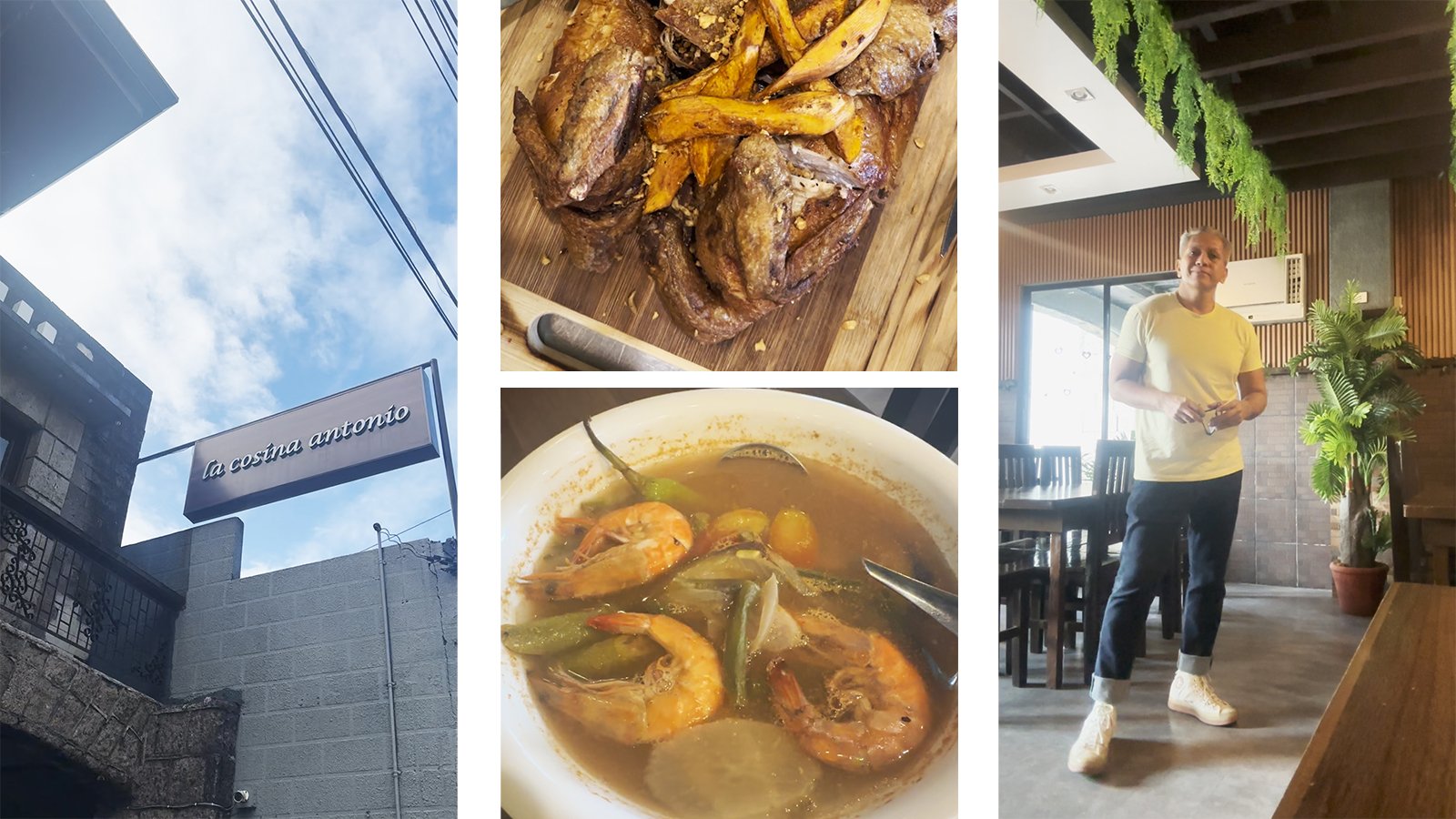
Ikalawa, the actual venue is BIG. This one’s an old house converted into a resto with different parts – e.g. for dining, for drinking complete with a performance space for a band, venue spaces, and so on. La Cosina Antonio is, thankfully, well-kept, so that it’s clean, has updated furniture, and so on.

Ikatlo, the staff was okay naman when we were there, able to discuss what’s on the menu, make recommendations… and then prepare the orders and deliver them fast. Very home-y approach, actually, treating guests as regulars.

Ika-apat, how was the food?

The ₱375 Dinakdakan was actually good, the pork belly crispy, the chopped onions and green chilies fresh, and the calamansi-mayo dressing not overpowering.

The ₱390 Sinigang na Hipon was… so-so, not bad though not good either. Pampainit-tiyan. Though, this has to be said, at least di tinipid in the number of shrimps served.

The ₱560 Garlic Pepper Whole Chicken was good; the meat stayed juicy even if the skin was crunchy.

The ₱770 Crispy Pata was also good; crunchy skin and, yes, malamang pata. There are times when you get Crispy Pata that’s basically just skin and bone, no meat at all. Here, we got meat… thankfully.

This place is popular, true (check their Facebook page, LOL). I can be dismissive and say that because, if in Pila, it’s not like you have lots of choices. But truth be told, it’s also because La Cosina Antonio actually has not-bad stuffs to offer… including the okay venue, okay service, and okay food. So check out if you can… or just join us as we look for more LGBTQIA+ lafangan venues…

La Cosina Antonio is located along JP Rizal St., Barangay Sta. Clara Norte, Pila, Laguna.

Continue Reading
Advertisement
Advertisement

Like us on Facebook

Trending