Connect with us

Strategies

Claiming your business page on review platforms can have unintended effects on customer reviews, study shows

Claiming a page signals to the public that the owner is present, paying attention and potentially available to address complaints. That shift in perception encourages dissatisfied customers – who otherwise might have stayed silent – to voice concerns, seek remedies or demand accountability through the review platforms. 

Published

on

Claiming a business page on an online review platform such as Yelp may result in a sharp decline in ratings and an increase in lengthy, negative customer feedback, according to a study from Florida International University. 

The study, led by Jong Youl Lee, assistant professor of information systems and business analytics at FIU’s College of Business, finds that once a business claims its Yelp page, its average rating falls by more than 10%, driven largely by an influx of one-star reviews and a decrease in five-star reviews. The shift is immediate and persistent, lasting more than a year after the claim date. The study was published in Information Systems Research.  

The likelihood of a one-star review rises by nearly 10% as well. These lowest-rated reviews also become substantially longer, with customers directly addressing owners or managers about service failures. An analysis of reviews shows a clear increase in negative language and a decline in positive sentiment. 

The reason, the researchers say, is rooted in consumer psychology. Claiming a page signals to the public that the owner is present, paying attention and potentially available to address complaints. That shift in perception encourages dissatisfied customers – who otherwise might have stayed silent – to voice concerns, seek remedies or demand accountability through the review platforms. 
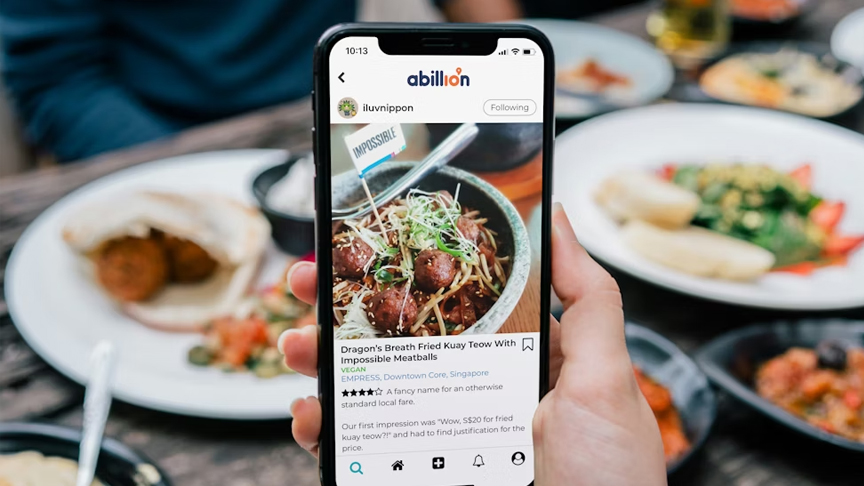
“When customers see the page is claimed, they believe the owner is watching,” Lee said. “That motivates very unsatisfied customers to write reviews they otherwise might not have written, and they tend to be more critical and more detailed.” 

Many review platforms, including Yelp, TripAdvisor, and Yellow Pages, offer business owners the option to claim their pages, which can provide features such as photo control, basic analytics and the ability to respond to reviews. But Lee’s research suggests these perks may come with hidden costs, particularly for small, resource-constrained businesses. 

“Claiming your business page is not costless, even if it’s free of charge,” Lee said. “Businesses need to be prepared to monitor reviews and respond effectively. If they’re not ready to do this, claiming can actually hurt their reputation.” 

Drawing on a large dataset of newly opened popular restaurants in the nation’s 200 largest metro areas, the team analyzed what happened to ratings before and after a business claimed its Yelp page. Instead of relying on simple comparisons, the researchers looked at what happened before and after business owners claimed their online business pages, comparing owners who did so at different times. Using technology that can analyze and interpret written text, they also examined the review texts to measure shifts in tone and topics, and they conducted an online experiment to confirm how customers interpret the “claimed” badge. 

The implications extend beyond the restaurant industry. Any small business that lacks the staff to monitor online feedback may be vulnerable to the same dynamic, Lee said. 

The takeaway for business owners: claim your page when you are operationally ready. 

“Claiming is the very first step that allows owners to use customer management features as powerful tools for service recovery but only if owners are prepared for what comes next,” Lee said.  

Lee conducted the study with Mikhail Lysyakov and Huaxia Rui, both from the University of Rochester.

BizNews

Wine sellers, pay attention: Women more likely to choose wine from female winemakers

Messages like “proudly made by a woman winemaker” increased women’s intentions of purchasing wines, particularly when the label’s artwork reinforced the point with feminine gender cues such as flowers. Women were also willing to pay higher prices for those wines.

Published

on

Promoting women’s ownership in wineries can boost sales among the largest group of wine consumers, who happen to be women.

Messages like “proudly made by a woman winemaker” increased women’s intentions of purchasing wines, particularly when the label’s artwork reinforced the point with feminine gender cues such as flowers. Women were also willing to pay higher prices for those wines, according to the research from Washington State University and Auburn University.

The findings are noteworthy because 59% of all wine purchases in the US are made by women, said Christina Chi, coauthor of the research and professor of hospitality business management at WSU’s Carson College of Business.

Wine is often considered a cultural product, where the winemaker’s identity plays a role in shaping the brand’s image, she said.

Women winemakers, however, are less likely than their male counterparts to include their names on bottle labels or draw attention to their gender. Their reluctance may stem from concerns about prejudice toward their products in the male-dominated wine industry, Chi said.

“Our findings suggest that women winemakers and winery owners can benefit by being more visible,” she said. “The research shows that they can disclose their ownership with confidence and leverage it as a marketing strategy.”

The possibilities include putting “women-made wine” statements on labels or packaging, and retail store displays featuring women-made wines.

Demi Deng, an assistant professor at Auburn who earned her doctorate at WSU, is the first author on the research published in International Journal of Hospitality Management. Ruiying Cai, an assistant professor of hospitality business management at WSU, also contributed.

The new findings build on earlier studies showing that women are more inclined to buy wine with feminine gender cues on the labels. The 2024 research – by Cai, Chi, Deng, and WSU Emeritus Professor Robert Harrington – received widespread publicity. Beverage trade journals carried the story, and women winemakers were enthusiastic about the findings.

“As researchers, we want our work not only to have societal impact, but to have practical significance for the wine industry,” Chi said. “From the response, we saw that women winemakers were following our research and were eager for additional studies about women wine consumers.”

More than 1,000 US women participated in the most recent research, which involved a three-part study.

First, the researchers replicated the 2024 findings about feminine cues on wine labels. Using a fictitious Columbia Valley red table wine, the women surveyed expressed higher intentions of purchasing the wine when the label’s artwork featured a bouquet of flowers versus a masculine portrait. They were also willing to pay $3.50 more per bottle – about $17.75 for wines with feminine labels compared to $14.25 for wines with masculine cues.

In the second phase of the study, a “woman-made wine” statement was added to marketing materials. Women consumers had even stronger purchase intentions for wines with both the statement and feminine artwork on labels, the research found.

In the final phase, photos of women winemakers were further added to the marketing materials. But women were less likely to buy feminine-label wines when the female winemakers were pictured. Rather than focusing on the “woman-made” messaging, consumers’ decisions may have been swayed by whether they related to the individual women portrayed in the photographs, researchers said.

The studies also tested the marketing strategies on wines with masculine labels. Adding a “woman-made” statement significantly increased their appeal to women consumers. And when female winemakers were pictured in the marketing materials, women were willing to pay $3 more per bottle for wines with masculine labels.  

Besides helping women winemakers market their products, Deng said she hopes the research will draw attention to women’s contributions to the industry. In the United States, about 18% of winemakers are women.  

Deng worked as a sommelier in New Zealand before she earned her doctorate. “I actually encountered a lot of women winemakers, but their names aren’t visible in the wine market,” she said.

Continue Reading

Strategies

Digital targeting creeps out customers

When digital personalization crosses perceived boundaries, it triggers a powerful emotional response, which he calls “creepiness.” That response can backfire on digital marketers by materially reducing consumers’ willingness to buy.

Published

on

Years into the grand experiment of personalized digital marketing, most of us have had the experience: You search for a product — or just casually mention it. Suddenly, ads for that exact item stalk you across apps, websites, and social media. The targeting may be technically impressive, but it can feel unsettling.

That uneasy sentiment is the center of new research by Wayne Hoyer, professor of marketing and James L. Bayless/W.S. Farish Fund Chair for Free Enterprise at the McCombs School of Business at The University of Texas at Austin. He finds that when digital personalization crosses perceived boundaries, it triggers a powerful emotional response, which he calls “creepiness.” That response can backfire on digital marketers by materially reducing consumers’ willingness to buy.

The study, conducted by Hoyer and three marketing researchers from the University of Bern in Switzerland — Alisa Petrova, Lucia Malär, and Harley Krohmer — argues that creepiness is not a property of digital marketing itself. Instead, it is a structured emotional episode that unfolds inside the consumer in response to marketing.

The response has two parts: feeling ambiguous about what’s behind a marketing message, then deciding it’s a threatening form of surveillance.

“When consumers are exposed to these ads, they make an assessment of ambiguity, such as, ‘What is this?’ and whether this is intrusive surveillance, such as, ‘Are they watching me?’” Hoyer explains.

“If the answer is yes, this creates a negative emotion that can negatively affect purchase intentions.”

Particular about Privacy

In three studies involving 1,800 participants, the researchers exposed some people to targeted ads for headphones and sneakers — for example, seeing unsolicited ads shortly after talking about the product. Those subjects rated how uncomfortable they felt and why.

The studies compared their reactions with those of control groups that weren’t digitally targeted. The results confirmed that creepiness is real and alienates potential customers.

  • Perceptions of ambiguity and surveillance explained 75% of the emotional discomfort consumers reported.
  • Personalized ads nearly doubled levels of feeling surveilled compared with nonpersonalized ads.
  • On a 7-point scale for intent to purchase, each 1-point increase in consumer reactance reduced willingness to buy by about half a point.

Certain audience segments were especially vulnerable to feelings of creepiness. People who were more skeptical of advertising or more fearful of technological overreach were significantly more likely to interpret personalization as ambiguous and intrusive.

“Consumers do not like to be watched,” Hoyer says. “This is perceived as an invasion of privacy.”

Countering Creepiness: Try Kittens

What can brands do to mitigate feelings of creepiness?

In a final experiment, the researchers tested a variety of remedies, such as transparency about data use, assurances of good intentions, offers of discounts, and charitable donations. They also tried including positive emotional images in ads: pictures of kittens.

Perhaps unsurprisingly, the kittens proved somewhat effective at de-creeping consumer reactions and softening damage to their plans to buy. Offering monetary compensation also helped.

Overall, however, even the best interventions made only limited improvements to purchase intentions. Hoyer says, “Creepiness is robust and difficult to mitigate once triggered.”

This means that prevention is key, he says. It’s more effective to avoid creating bad feelings in the first place than try to repair them after the fact.

“Managers should focus on prevention by designing personalization practices that minimize ambiguity and try to avoid signals of intrusive surveillance,” Hoyer says.

The study suggests developing a Creepiness Level Index as a tool to help marketers track negative reactions to digital ads.

Over the long run, though, the marketing risk might diminish, he adds. “It is possible that creepiness will decline as consumers become more used to personalization and more accepting of AI technology.”

The Phenomenon of Creepiness in a Digital Marketing World” is published in Psychology & Marketing.

Continue Reading

Strategies

When there’s a burst of online social disapproval, what do you do? Leveraging analytics for comprehension and detection

Negative opinions become a battlefield in the spreading phase, and sometimes one perspective emerges as more dominant. When things settle down and get back to normal, that’s when management should revert to prebursting monitoring practices, rather than just waiting for it to happen again.

Published

on

Sexist. Dystopian.

This was how critics labeled a 30-second Peloton holiday ad in 2019 that featured a man giving a woman an exercise bike as a gift. Backlash was so severe that Peloton’s stock fell by about 9%, after social media erupted over perceived outdated gender roles and body image standards.

Researchers describe this kind of reaction as online social disapproval (OSD) — the public expression of criticism against businesses on digital platforms — which can rapidly escalate into bursts of public responses with significant reputational and financial consequences. For instance, in 2023, Bud Light faced boycotts and sales declines following backlash over its partnership with a transgender influencer.

In response, a research co-authored by Associate Professor Jinglu Jiang from the Binghamton University School of Management introduces a digital toolkit designed to help organizations anticipate, interpret, and respond to social media backlash more effectively. The conceptual paper, “Bursts of online social disapproval: leveraging analytics for comprehension and detection,”(opens in a new window) was published in the Journal of Business Strategy.

The toolkit, developed by combining a review of existing research with real-world cases, identified four phases of OSD — preburst, initial burst, spreading and contagion, and recalibration — that explain how backlash emerges and evolves over time.

“The whole point is that online social disapproval is different from traditional crisis management. It’s not linear; it’s more like a cycle, because of how the internet and social media algorithms create different bursting patterns affecting how these kinds of responses can spread,” Jiang said.

“Negative opinions become a battlefield in the spreading phase, and sometimes one perspective emerges as more dominant. When things settle down and get back to normal, that’s when management should revert to prebursting monitoring practices, rather than just waiting for it to happen again.”

Using the four phases, the study offers guiding questions and analytical indicators to give managers more robust capabilities for early detection, response, and recovery:

Preburst: Is there a process to monitor emerging trends within your firm?

Initial burst: Have you identified indicators for OSD popularity?

Spread and contagion: Is a company-specific burstiness threshold defined? Is a structured procedure in place to monitor OSD burst trajectories?

Recalibration: Have situational and long-term impact measures been defined?

For the final phase, researchers said the critical question is not simply whether online activity has subsided, but what lasting imprint the OSD burst has left on the organization.

“In the short term, firms can track immediate market and financial responses, such as sales fluctuations, stock price volatility, or shifts in customer traffic. These indicators provide situational feedback on the material consequences of the burst,” the study stated. “However, analytics also structure longer-term interpretations by highlighting enduring reputational shifts. Measures such as customer satisfaction, online review trends, survey-based reputation indices, and social media engagement reveal whether stakeholder trust is recovering or whether skepticism persists.”

Each business needs to define its own baseline “normality” for how the public responds on social media to different events or situations for this type of toolkit to be effective, Jiang said. The study also cautions that older events can resurface unexpectedly, triggering renewed backlash as past news and content are rediscovered online.

“The moment you observe that initial burst online, you need to be cautious and strategic about how you respond,” Jiang said, “because once it enters the spreading and contentious phase, it can become a social media battlefield that’s more difficult to contain. That’s something any business would want to avoid.”

Continue Reading
Advertisement
Advertisement

Like us on Facebook

Trending